
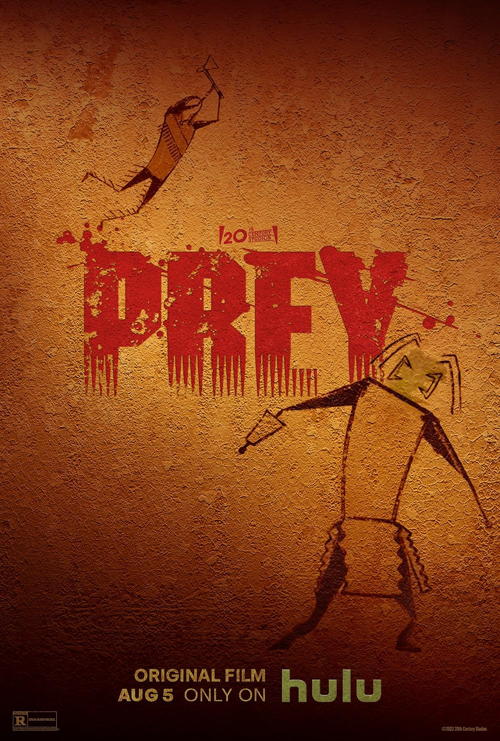
Prey is the kind of big budget Hollywood franchise film that I wouldn’t normally write about. It’s part of the Predator series which began with the film using that title in 1987 featuring Arnold Schwarzenegger as a US commando battling with an alien predator who appears to be on earth simply to find worthwhile opponents for a fight. The first film was a big success but subsequent films have gradually lowered the reputation of the series, though fans have always hoped the next one will restore it. Prey is different from others in the series for two principal reasons. First it raises the question, “Why should Disney, which inherited the series with its takeover of 20th Century Fox, spend a reported $65 million on a film and then dump it on a streamer rather than launching it in cinemas?”. Partly the answer must be the confusion caused by COVID and the overall switch to streaming by the studios generally plus Disney’s own plans in terms of launching its streaming service Disney+. In August 2022 Disney announced that its various streaming services combined (Disney+, Hulu and ESPN+) had more subscribers than Netflix. It seems that the release of Prey worldwide on streaming in that month was part of that move. I haven’t noticed any evidence that the film ever appeared in UK cinemas and that’s a shame because it would look and sound very good on a big screen. I finally managed to see it on catch-up on Channel 4’s streamer, otherwise it is still available via Disney+ and on physical media (DVD, Blu-ray and 4K Ultra HD). Therevis no indication on the Film 4 website as to when the title will be no longer available.
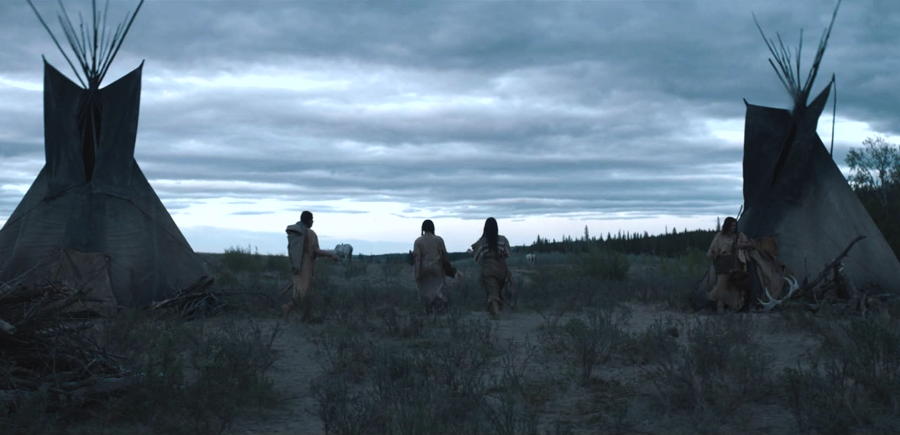
The real reason the film interests me is that it focuses on a settlement of First Nation peoples in North America in 1719 when the interior was experiencing the first incursions by French voyageurs. The warrior who will ultimately take on the Predator is a young Comanche woman, Naru (Amber Midthunder – a member of one of the bands of Sioux and Assiniboine settlements on the Fort Peck, Montana reservation). Naru is determined to be a hunter-warrior like her brother Taabe (Dakota Beavers) and she is mocked to some extent by the young men and sent out to forage for herbs and roots (for medicines and food). But she also practices with her tomahawk and is accompanied by her dog Sarii. During one of her forays into the forest she sees lights in the sky which she takes as a sign of the ‘Thunderbird’ a fabulous creature for many Indigenous peoples in North America. She believes this confirms her desire to be a hunter. The lights in fact signify the arrival of the alien predator.

I haven’t seen the sequels to the original film nor do I remember enough from my partial viewing of that film to be able to explain how this prequel links to characters in the more contemporary-set films but I understand that it does. This historical narrative is pretty accurate in the depiction of Comanche culture in the early 18th century and fairly conventional in its structuring of narrative events. I found several of the sequences to be quite clever and well thought out. There is, of course, an attempt to present the central character as a rebellious young woman who will prove herself in comparison with the male hunters, not necessarily in terms of her fighting skills, though Amber Midthunder has some martial arts training, but certainly in terms of her knowledge of the local flora and fauna and her fighting intelligence. There are no European ‘saviours’ in the narrative. The French voyageurs/trappers prove to be just as much a threat to the Comanche as the alien but Naru is capable of acquiring a flintlock pistol from them which will prove very useful. Her brother recognises her skills and intelligence and the two do combine to face the alien.

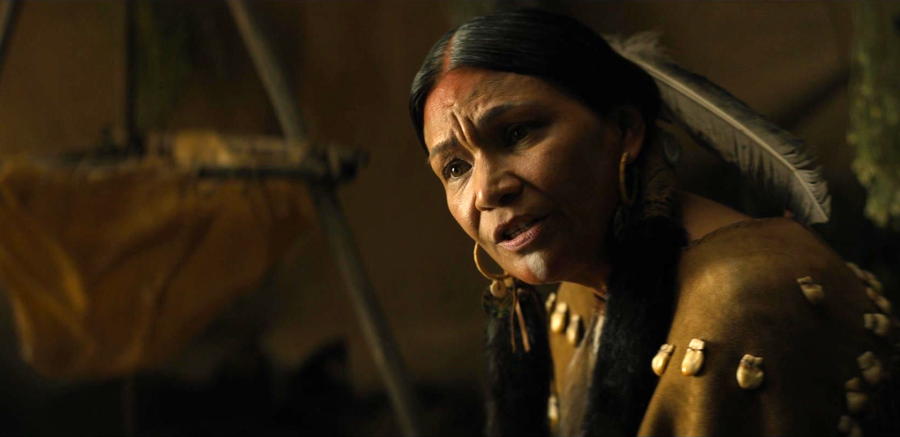
The film was as, far as I can see, entirely shot in Canada on Indigenous/Aboriginal territory outside Calgary – on Stoney Nakoda First Nation land in the foothills of the Rockies. Why did this American shoot go to Canada? Economics must have played a part. The film was supported by various Canadian government aid schemes and industry agencies. Crucially, one of the principal cast members, Michelle Thrush who plays Naru’s mother, is a very experienced First Nations actor born in Calgary with many contacts in Canadian film industries. Also, one of the two co-producers on the film is Jhane Myers of Comanche and Blackfeet heritage. Of course, many American TV and film productions use Canadian locations and studios. It is also common to find Canadian First Nations actors in films made within the US as I discovered researching Wild Indian (France-US 2021) and Jimmy P.(France 2013). The location is perhaps too far North for the Comanche, even in the early 18th century. As I understand Comanche history they were originally located in the Northern plains and gradually moved South as they began to acquire horses and as the bison were slaughtered by the Europeans. My first contact with the Comanche on screen was in the early 1950s when they appeared as the warriors up against Texan settlers in the late 1860s in The Searchers (1956). The horses and the bison have a part in Prey. Once known for their foraging/agricultural prowess and their hunting, the Comanche later became known for their horse culture and trading – often at the expense of both Europeans and eventually Mexicans who were raided for horses.
The authenticity of Comanche culture in this film is important but it is a film made by white Americans in the main, as part of the franchise (even though there are some Indigenous crew members, I think). It was written by Patrick Aison and Dan Trachtenberg based on characters created by Jim and John Thomas. Trachtenberg made the critically lauded horror 10 Cloverfield Lane (US 2016). Cinematographer Jeff Cutter was responsible for camerawork on both films and the work on Prey is particularly good. Sarah Schachner was the music composer on the film and she has scored both films and videogames.
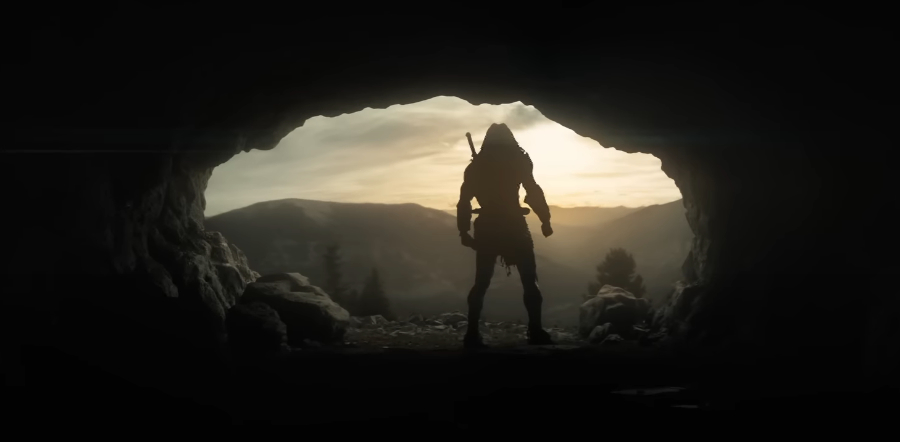
I’m not a fan or a scholar in regard to this form of horror/action adventure and I know that devoted fans have a great deal to say about the franchise as a whole and this film in particular. I think you probably do have to have seen at least some of the other films to understand every aspect of the narrative, but largely this film narrative still works as a one-off. I think the trailer below includes the neat couplet suggesting that the Comanche “Hunt to Live” whereas the alien “Lives to Hunt”. Personally, I enjoyed the film very much and it was great to see a Comanche group in the early 18th century setting behaving in some ways close to how they might actually have been hunting and foraging. I think on a cinema release this might have made $100 million and still have opened big on the streamer a few weeks later.
 itp Global Film
there are weird choices made by film studios sometimes when they imagine that a film may under-perform on general release but might turn a profit from streaming. I think a problem here may be the lack of big names in the cast and the choice of ‘Prey’ as a title rather than something more obvious to the casual viewer like ‘Predator – First Contact’. Nothing has struck me as more unexpected in recent years than the decision by Warner Bros Discovery to entirely scrap the release of ‘Batgirl’ after a few test screenings and not even allow it to go to streaming, where it would probably found an enthusiastic audience for the franchise, preferring to have it as a tax write-down. Apparently by declaring the money spent on ‘Batgirl’ as a loss it reduced the company’s taxable income for the year and thus worked in their favour financially. This however entailed that the completed film could not be shown outside the initial test screenings.
Preparing a film for general release with the additional investment in advertising etc can often be seen as a waste of money when the expectation is that the film will not perform as hoped.
LikeLike
I recognise these arguments but I’m not sure how they apply in this case. We are told by industry commentators that stars are less important today. Not using ‘Predator’ in the title was an interesting decision in that the reputation of the franchise had plummeted after the fourth outing (despite the biggest worldwide box office for the franchise so far) and this one seems to have been initially written some time ago. The concept of a young woman in the lead role might have attracted a new audience (as well as the obligatory moans about ‘wokeism’ of young male Trump/Tate supporters). But it does seem that Disney planned the streaming release well in advance – and it did indeed become the biggest film on stream for the first few weeks in August 2022. The same director is reported to be directing two more films related to the franchise scheduled to appear this year – one a streaming release and the second a cinema release. (See Wikipedia.)
LikeLike