
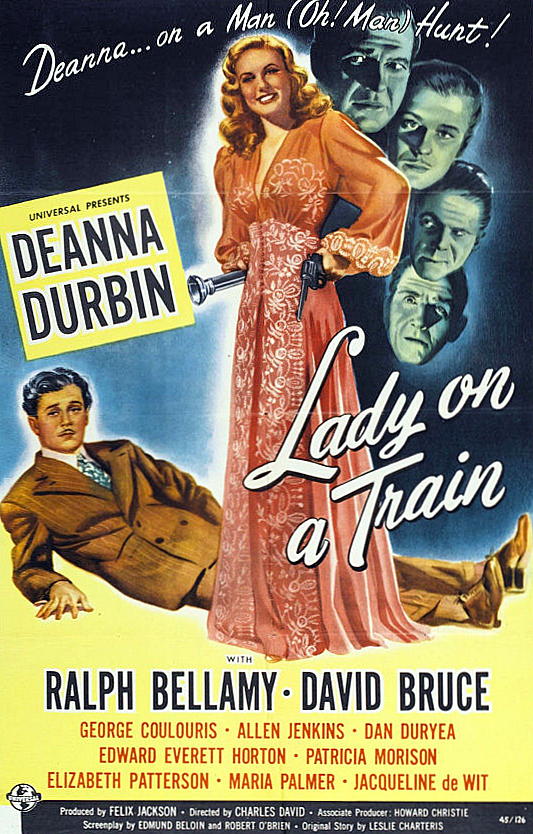
This seems to me an unusual film to find in the Universal Noir, Vol 2 Collection of Blu-rays from Powerhouse/Indicator. Its star is Deanna Durbin attempting to make that difficult transition from teenage singing star to adult ‘leading lady’. She had made her feature début in 1936 in the musical/comedy Three Smart Girls with the film opening soon after her 15th birthday. She quickly became very popular and would eventually be seen as Universal’s biggest asset, helping to keep the studio in the black in difficult times. In 1944 the studio cast her in Christmas Holiday, a Somerset Maugham adaptation that turned out to be a film noir type narrative directed by Robert Siodmak. She played a nightclub singer whose husband (Gene Kelly) is serving a life sentence in prison. Lady on a Train was the second attempt to use Durbin’s star appeal in a second ‘adult’ role. This time the original story was by Leslie Charteris, the British-Chinese author best known for the creation of Simon Templar – ‘The Saint’.

Lady on a Train opens with the incident which gives the film its title. A wealthy young woman, Nicki Collins from San Francisco, is on a train nearing Grand Central in New York when it stops for a moment. She looks up from her mystery novel and thinks that she sees a murder through her carriage window. When she arrives to be met by one of her father’s employees (the wonderfully fussy Edward Everett Horton) she gives him the slip and tries to interest the police in what she’s seen. She doesn’t get very far with them so determines to pursue the case herself which leads her to the author of the mystery novel she was reading on the train, ‘Wayne Morgan’ (David Bruce) and then to an eccentric family comprising a recent widow and two grown-up sons played by Ralph Bellamy and Dan Duryea. The family also seem to be connected to a nightclub owned by George Coulouris where much of the plot plays out.
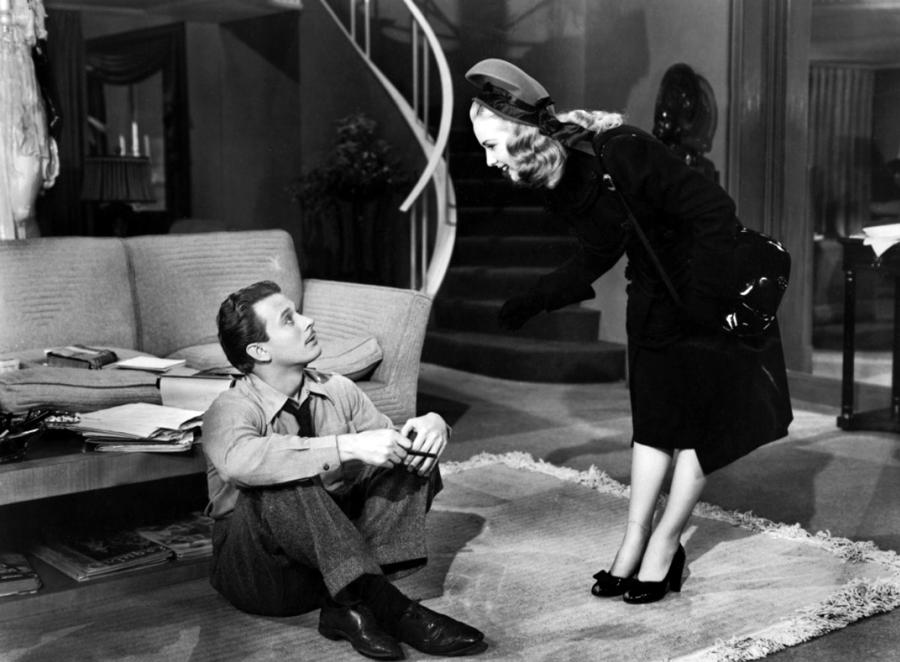

The plot conveniently allows for the possibility of Deanna Durbin singing in the nightclub and placing herself in danger. Will the mystery writer or one of the two brothers prove to be her saviour? All this takes place during Christmas week in New York, complete with snow and festive scenes which contrast with the family’s gothic mansion in spacious grounds outside the city. I don’t think I’ve seen Deanna Durbin in a film before, although I knew of her status. She turns out to be a vivacious young woman, full of energy. Her trained soprano voice is impressive, but not what I really want to hear from her performing Cole Porter’s ‘Night and Day’ in the nightclub. However, the narrative relies more on her energy and determination as a character and she certainly delivers on that score.
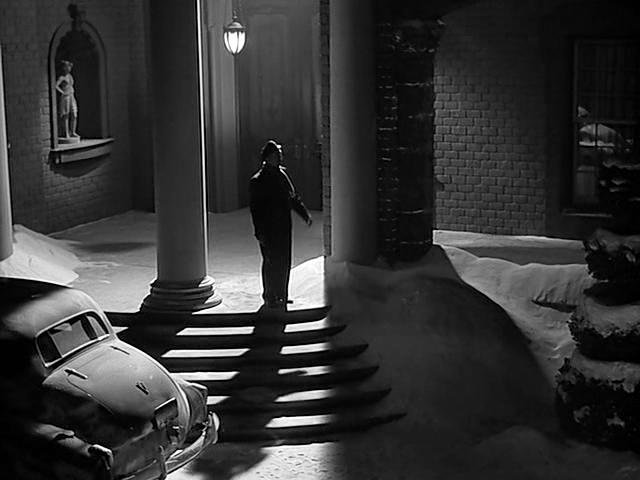
I did find the film engaging and entertaining but the question of what kind of film it is remains throughout. I don’t think it is a film noir despite some of the typical noir cinematography which, of course, appears in most films of the period. Tonally and in narrative terms this is a form of murder-mystery/adventure/romance/comedy genre mix. Nikki is a strong character but as José Arroyo in his blog entry suggests she is something of a spoilt rich kid who doesn’t think much about anybody else. (He also points out that she wears a wide range of dresses and jewellery and there are today Pinterest sites celebrating her style.) This isn’t her being malicious, it just never occurs to her that the consequences of her actions mean that someone else might suffer. She possibly got her air of superiority from her British-born parents or perhaps it is simply there because of Charteris? The male characters are rather bland apart from the George Coulouris character – I’m sure he can’t be the first villain with a white cat. The film was directed by the French filmmaker Charles David who later married Deanna Durbin. Her career ended in 1948 and her marriage to David took her to France and a life of domestic bliss with seemingly no regrets about leaving Hollywood. The music is by Miklos Rosza and the cinematography by Woody Bredell. It may not be a noir but I’m glad I’ve seen this and got a sense of Ms Durbin’s talent.


 itp Global Film