
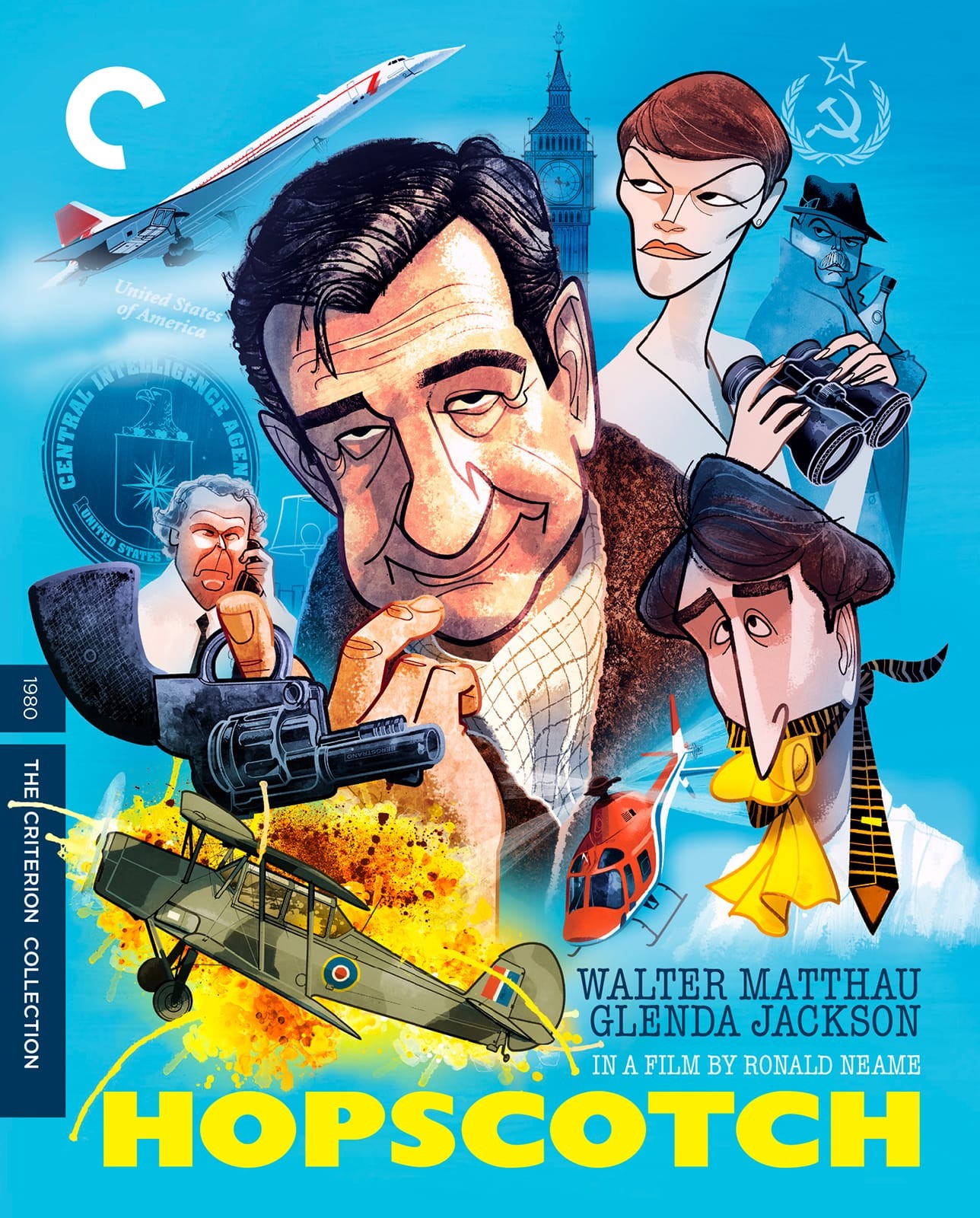
In my search for reasonable quality prints of Glenda Jackson films for a study day, I came across this entertaining spy film comedy co-starring Jackson and Walter Matthau. I have no memory of the film’s release in the UK so I didn’t know what to expect. It turned out to be very enjoyable and also intriguing in terms of genre and institutional placement. The film opened in the UK in on Boxing Day 1980 and was generally welcomed by the popular press even if dismissed by Tom Milne in Monthly Film Bulletin (December 1980). I should say at the start of this piece that Ms Jackson is really only a supporting player in terms of her screen time and ‘agency’. This is very much a Walter Matthau movie and he carries it off with aplomb.
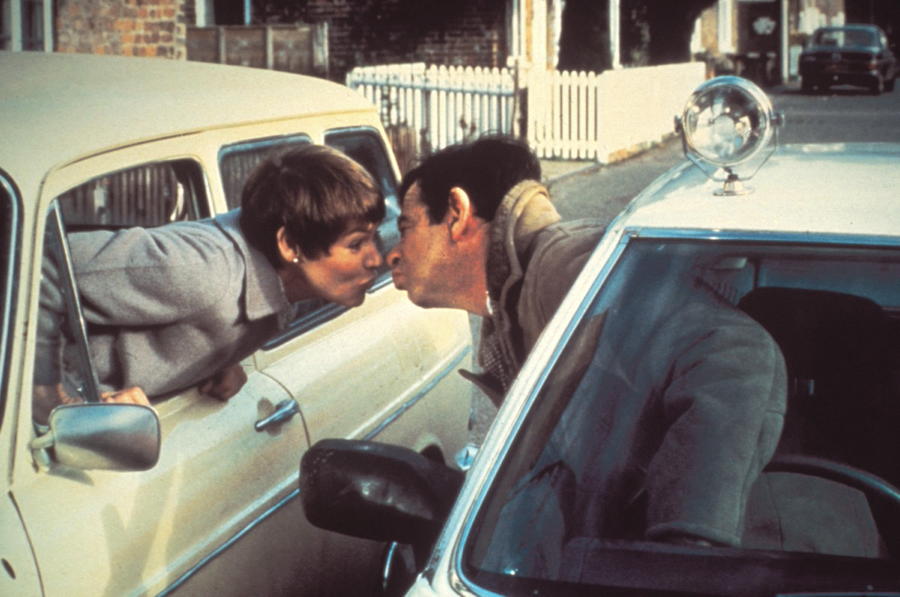
In the UK press Glenda made a couple of familiar statements as part of the promotion of the film. She said that she was paid pretty well for work that was not onerous from her point of view. But she also needs to enjoy the work and she clearly enjoyed working with Walter Matthau. They had previously had some success with House Calls in 1978 directed by Howard Zieff, a hospital set romantic comedy. That film generated a TV series with Wayne Rogers and Lynn Redgrave in 1979. House Calls was referred to as the first time Glenda Jackson worked on a Hollywood-set production. She claimed to have turned down lots of dollars offered for rubbish parts. The other point she makes is that the British film industry in 1980 didn’t have the investment to make the kinds of films that Hollywood offered. For this reason she jumps at chances to play in interesting UK TV parts and Christmas 1980 saw her fifth outing with Morecambe and Wise. On this score though it is important to note that Hopscotch was a form of American ‘runaway production’ shot by Arthur Ibbetson and directed by Ronald Neame. It was also co-written by Brian Forbes with music by Ian Fraser so there was significant UK talent in the production. Locations included the US, Bermuda, France, Germany and Austria. I suspect Glenda didn’t have to go to Los Angeles at any point. She was happy working on Broadway but I don’t think she was keen on LA.

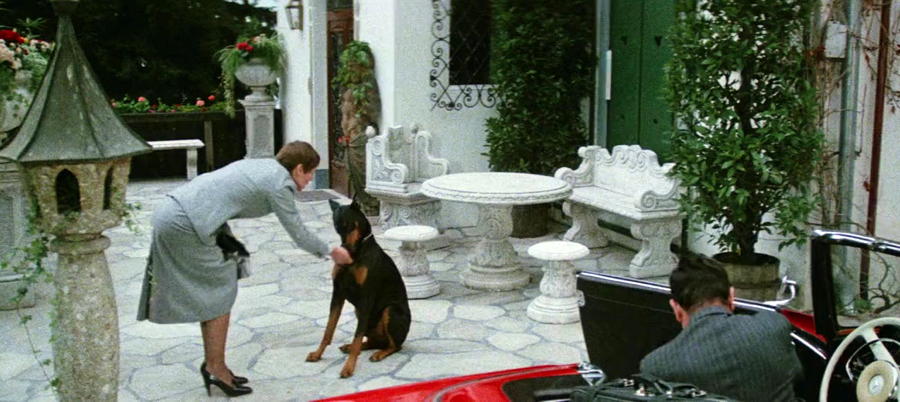
Walter Matthau plays Miles Kendig, a CIA agent who at the start of the film is in Munich disrupting a Soviet operation in the city focused on an exchange of information in a beer hall. Kendig completes the operation successfully but decides to leave the local KBG chief Yaskov (Herbert Lom) alone on the basis that he is a ‘known’ enemy and preferable to an ‘unknown’ who would replace him if he was ‘taken out’. Before he returns to Washington Kendig looks up Isobel (Glenda Jackson) in Salzburg. She was once a CIA agent but is now ‘retired’ as a wealthy widow and pleased to see Kendig. But on his return to Washington Kendig is summoned by his boss Myerson (Ned Beatty), furious that he let Yaskov go. Kendig is taken off overseas duties and in effect retired from frontline duty and assigned to a filing clerk role. Kendig is not amused and sets out to teach Myerson a lesson. Thus begins a game in which Kendig moves around Europe drawing Myerson and his operatives into a series of traps. What Kendig creates is not unlike a game of hopscotch. I was intrigued to discover that hopscotch is an ancient and virtually global game. Kendig offers clues to his whereabouts and literally hops from one location to another with the CIA and later other intelligence agencies in pursuit. He becomes a freelance spy aided and abetted by Isobel. His final play is to write what he knows about the contemporary spying business and to post it chapter by chapter to all the leading national intelligence groups before engineering his own ‘disappearance’.
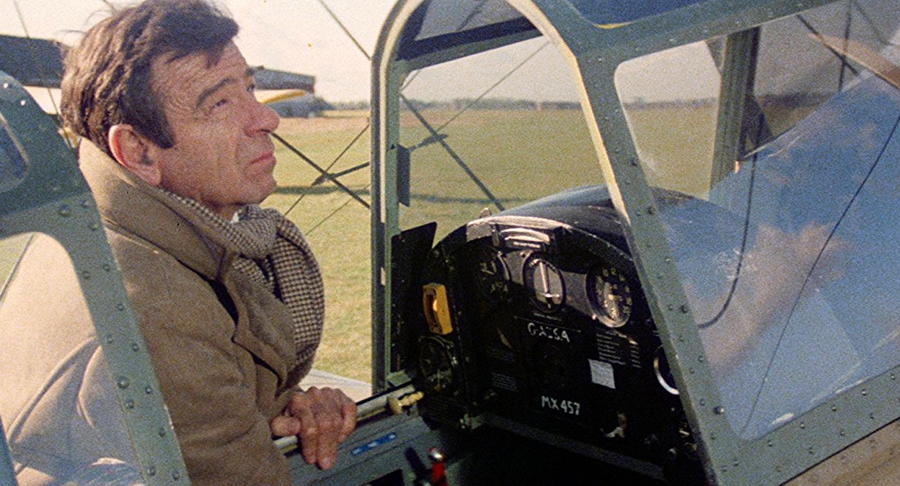
Kendig’s successor is Joe Cutter (Sam Waterston), an admirer of the older man and reluctant to join Myerson in hunting down Kendig when he starts his game, but he’s young and deferential. At least he’ll be there to see what happens. The original property was a novel by the American writer Brian Garfield who wrote the original Death Wish movie in 1974. The script was then completed by Garfield with Bryan Forbes, the British actor/writer/director/producer who in the early 1970s had run EMI studios after the takeover of ABC. I’m intrigued by the similarities between Hopscotch and Charley Varrick (Don Siegel, US 1973). Basically, both narratives are about the ‘little guy’ played by Matthau (who is physically tall but not seen as athletic) who gets one over against all his enemies. Crucially also this involves a climactic scene in which Matthau uses a light aircraft. This in turn leads me to another 1980s movie, also directed by Don Siegel, namely Rough Cut (1980). This is another ‘American’ picture, but this time solely shot in the UK and Europe and starring Burt Reynolds a successful jewel thief who teams up with Lesley-Ann Down, also a jewel thief but being used by David Niven’s Police Inspector as bait to catch Reynolds. Again Reynolds hoodwinks his pursuers using an aircraft. This film has a twist in the tail, but overall Reynolds is very entertaining as the thief who ‘wins’.

Hopscotch was a commercial success with solid box office returns, though as an Avco-Embassy release with complicated financing outside the major studios it might not have made the profit the producers expected. The success of the film as a spy ‘caper’ comedy is arguably down to Ronald Neame’s highly competent direction and Matthau’s own comic sensibility. He and Neame seemed to have adapted the script as they went along to emphasise the comic elements and to downplay the drama. Matthau also seems to have been behind the use of Mozart pieces on the soundtrack which ‘lighten’ the adventure of the ‘game’. As for Glenda, she was very much a star supporting player. In the screen-time that she gets she is very good, looking stylish and delivering the dialogue with real snap. This was an unusual film, especially for the time period. It’s a spy film in which nobody dies and it appears to have won over older audiences relieved to have found a grown-up entertainment film at a time when violence was increasing at the expense of wit. For Glenda Jackson, however, this would be the last of her mainstream American cinema productions and she would move on to smaller British and European films and TV in the 1980s.
I did eventually find a good quality trailer for the film but it does give away many aspects of the plot so BEWARE:
 itp Global Film