

Edna O’Brien died on 27th July aged 93. The Guardian carried a full page appreciation and an obituary on Monday, but I’m not sure how well she is remembered as a writer of novels, short stories and plays as well as film and TV scripts, mainly adaptations of her own stories but also at least one example of working on another writer’s text. Her last script, an adaptation of her 1999 novel Wild Decembers, was produced for an Irish TV movie in 2009 but otherwise her work was generally used in the 1960s, 70s and 80s. I looked in my archives and could only find one of the films associated with her work. I have seen at least two others but they only exist in very poor quality online versions.
The work that first brought O’Brien to the attention of critics, readers and eventually filmgoers was the trilogy of novels in the early 1960s first known as The Country Girls. This work focused on two young women, Kate and Baba who graduated from a convent school in rural Ireland and then made their way to Dublin. The Country Girls was the title of the first novel in 1960. It was followed by The Lonely Girl in 1962 and it was this novel that was adapted for the 1964 film titled Girl with Green Eyes and which deals with Kate’s affair with a married man while she is in Dublin. The third novel, Girls in Their Married Bliss (1964) is a slightly different account in its narrative style, dealing with the girls after they move to London.
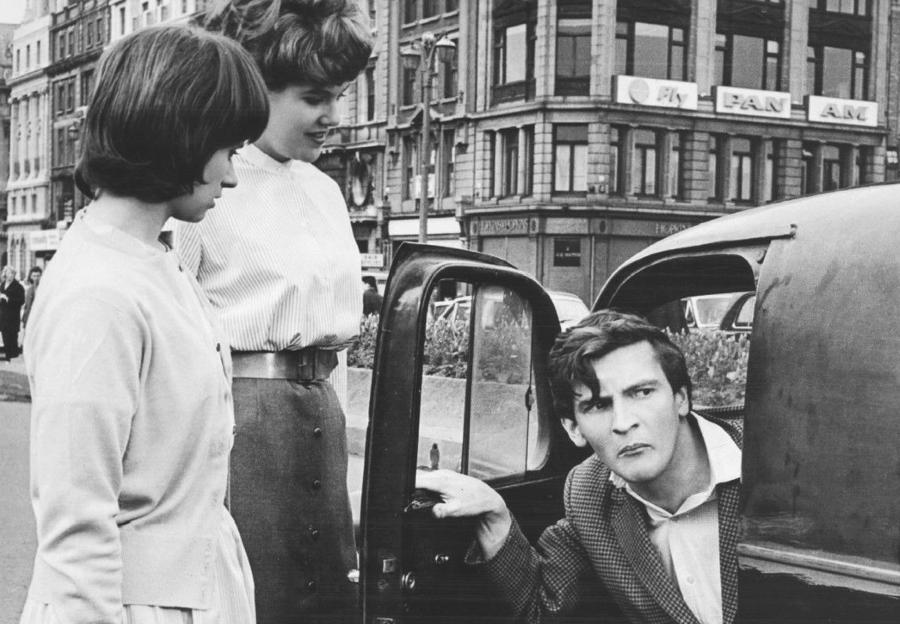
What was important about the trilogy at this time was O’Brien’s bravery in taking on the Catholic Church in Ireland and a very conservative establishment through the simple process of exploring young women’s lives and their sexuality. The books were banned in Ireland at a time when many young people travelled to England to escape their own societal demands. Of course, it wasn’t so different in London if you ended up in the Irish enclaves of Cricklewood or Watford. It’s difficult now, especially with the growing numbers of young Irish writers, actors and directors making such a splash on the international stage to understand just how difficult it was in Ireland in the 1960s. O’Brien with her husband and children moved to London in 1960 and through her husband she had contact with the publishing world. The trilogy was then written in London.

If a film was going to be made of O’Brien’s work in the early 1960s it was always most likely that it would be by Woodfall Films and that it would star Rita Tushingham. Woodfall was the company founded by Tony Richardson and John Osborne with producer Harry Salzman to make an adaptation of Osborne’s play Look Back in Anger in 1959. Director Tony Richardson was the driving force of the operation and he followed up his first success with A Taste of Honey in 1961. One of the most important films of its time, this adaptation of the play by Shelagh Delaney starred Rita Tushingham as the schoolgirl who faces all the taboos of English society in breaking away from her single parent mother. She becomes pregnant by a Black sailor in Salford and then lives with a gay man in an attempt to set up a home for the baby due soon. Delaney was a child of the Irish diaspora in Salford and wrote her first play at the age of 19. Tushingham was herself 19 when a Taste of Honey came out and 21 when she played Kate in Girl with Green Eyes. In many ways she was just as much a ‘face’ of the 1960s as Julie Christie (and the two played together in Dr Zhivago in 1965). Five of her 1960s films could be said to explore the changing position of women in British society in the 1960s. As well as A Taste of Honey and Girl With Green Eyes, Tushingham starred in Basil Dearden’s A Place to Go (1963) and Sidney J. Furie’s The Leather Boys (1964). She was top-billed in both films and she represented the young British working-class girl in these two London-set social realist drama-romances. In 1965 she was top-billed again in The Knack, returning to Woodfall for the surprise winner of the Cannes Palme d’Or for Richard Lester in which she’s a wide-eyed Northern lass in a satire on Swingin’ London.
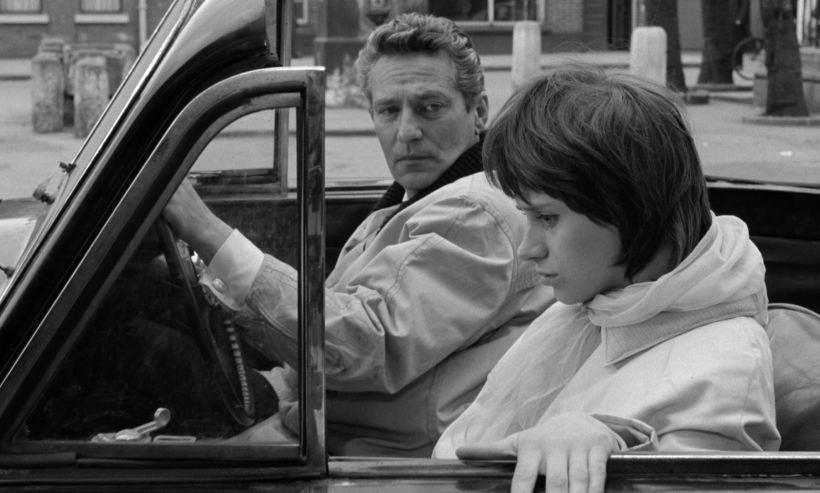
As O’Brien’s ‘country girl’ in Dublin, Rita Tushingham as Kate was joined by Lynn Redgrave as Baba and this pairing would be repeated in Smashing Time (1967), an absurdist comedy musical satire, this time in colour and featuring the pair as Northern lasses in a London they can’t comprehend during its ‘Swingin’ phase. This would be for the same director, Desmond Davis, as Girl with Green Eyes. Davis was making his first feature as a director on the O’Brien adaptation. He had been in the industry since the mid 1940s having studied photography and cinematography at Regent Street Polytechnic (now the University of Westminster). He was drafted into the British Army Film Unit in 1945 and learned his trade as a camera operator in the 1950s ending up at Woodfall as an operator on Tony Richardson’s films, including A Taste of Honey. During the shoot of Tom Jones in 1963, Richardson tossed a copy of O’Brien’s book to Davis saying “You wanted to be a director. OK here’s your film.” (Elaine Dundy’s book Finch, Bloody Finch, p 270 Michael Joseph, 1980) At this point Edna O’Brien was in London, having fled from her persecutors in Ireland and Davis somehow managed to work with her on a script. O’Brien was coming to the end of her marriage to Ernest Gebler at this point. He was also a novelist and one website suggests he also had an input to the script. Peter Finch, then at his peak as an actor was cast as the older man. Davis was concerned at first about how the two leads would gell, thinking Tushingham might be nervous but she was the star of the moment and as he says “they were both clowns” and they got on well. The main problem was Finch’s drinking which could change his behaviour alarmingly. But he never drank on set, only at night and somehow could always work the next day.
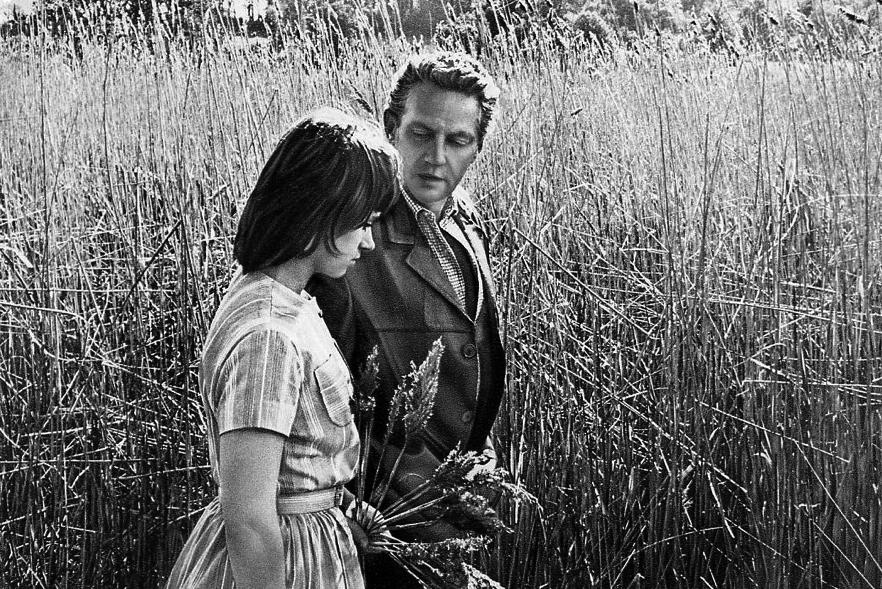
O’Brien’s story for The Lonely Girl was quite straightforward as a narrative so I don’t think my revelations here are really spoilers. Kate and Baba have a room in a boarding house in Dublin. Kate works in a grocer’s but Baba is supposedly at secretarial college. Baba is the more ‘sophisticated’ and attracts young men. On one of their forays into the countryside with one of Baba’s young men, the girls meet Eugene Gaillard (Peter Finch). Kate is intrigued to learn that Eugene is a writer and later she sees him in a Dublin book shop. It’s Baba who persuades him to join them in a teashop but it’s Kate who later writes to him and invites him to tea in the same place a little later. She doesn’t invite Baba and the meeting goes well. A friendship begins and eventually Kate goes with him back to his house in the country. The point here is that Kate is not a victim. She’s shy, she’s romantic but she’s intelligent and clear about what she wants and initially at least he responds because he finds her interesting despite first making assumptions about a convent girl. Eventually of course she will discover that he has a wife who is in America – and planning to divorce him, he tells Kate. There is also a child with her mother. Eventually too, Kate’s father will discover that she has been seeing a married man and she will be hauled home and the local priest will give her a lecture. Ironically, a sexual relationship with Eugene will not be fully consummated until after her father’s intervention. In the end it will be her who breaks up the relationship and she will join Baba in moving to London.
For a first-time director, I think Davis handled his actors very well. From the Woodfall team he knew he had John Addison as music composer and he took a fellow member of his Woodfall camera team, Manny Wynn as DoP. Overall the footage of Dublin and the countryside of County Wicklow are beautifully presented. The film’s title comes from a letter that Kate and Baba wrote to Gary Cooper as schoolgirls. Baba has blue eyes says Kate and we assume that Kate’s are green. The film is in B+W, however, as were all Woodfall films in the 1960s apart from Tom Jones and the later The Charge of the Light Brigade (1968). It’s also in 1.66:1, still common at this time. Davis and Wynn present montage sequences of the Kate-Eugene relationship in ways I think were quite novel. They are shown in brief clips in different locations and dressed differently but the dialogue appears continuous, as does the music score. Some audiences perhaps found Rita Tushingham too ‘quirky’ if not a little ‘weird’. My feeling is that she was simply different but still remarkably attractive and able to change her image quite easily through different hairstyles. It’s noticeable in this film that despite Dublin seemingly ‘behind’ London at this stage, in the latter part of the film she wears outfits of the time in 1963-4 very effectively. Lynn Redgrave was just a year younger than Rita Tushingham but far less experienced in film work (although experienced in stage productions) and this was just her second film after a small part in Tom Jones. She had her breakout role in Georgy Girl (1966).

Girl with Green Eyes was initially given an X Certificate by the BBFC in the UK – presumably for the rather chaste bedroom scenes. It is now rated ‘PG’. It was ‘Unrated’ in the US, meaning it was probably only seen in arthouses. Andrew Sarris writes a ‘sniffy’ review in the Village Voice, November 5 1964 deeming it “another sub-nouvelle vague exercise in the Woodfall tradition”, but admits that Tushingham “carries the lead with a socko star performance, and her glorious ugliness is very much of its time.” “Finch underplays for his first endurable performance he has given for years” but “The rest of the cast blathers in the broadest dialect farce style and good riddance to it”. I’m not sure how many Irish films Sarris had seen at this point. Despite this, the film won a Golden Globe for Best English Foreign Language Film and a National Board of Review Award for Director Desmond Davis. In the UK, Monthly Film Bulletin‘s critic ‘B. D.’ is similarly down on the Woodfall ‘style’ but is more aware of the authenticity of O’Brien’s dialogue and her view of Irish country people. I enjoyed the film very much, mostly for Rita Tushingham’s performance but also for the images of Dublin – the days when potatoes were 4 shillings for a stone (14 lbs)! I suspect it is the best film based on Edna O’Brien’s books but there is television material that I haven’t seen which might be better. Even so this is a fitting tribute to her talent and her bravery.
 itp Global Film