
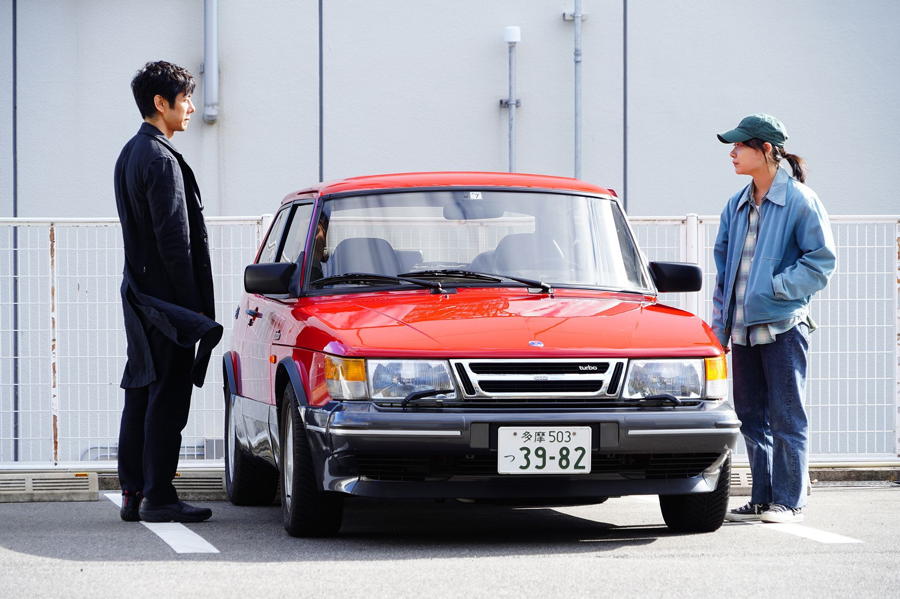
These notes were written originally for a Zoom Event in February 2022 discussing Drive My Car and have since been extended and re-edited.
The filmmaker Hamaguchi Ryûsuke
Hamaguchi seems to have arrived in international cinema with a bang and almost out of nowhere. His recent films have been shown at the most prestigious film festivals, going on to win prizes. To be nominated for Oscars and win ‘Best International Feature’ without seemingly having ‘paid your dues’, especially as a non-American, is even more unusual. Drive My Car is a three-hour feature with a script developed from an adaptation of a short story by Murakami Haruki. The title refers to an arrangement that sees actor-director Kafuku Yûsuke, required to use a driver to take him from his hotel to a theatre in Hiroshima where he is directing a multi-lingual production of Chekhov’s Uncle Vanya.
Of course, Hamaguchi (born in 1978) hasn’t come from nowhere. Japan’s film and television industries don’t work in quite the same way as those in the West. Hamaguchi stumbled into working in the commercial film industry without any training after completing his first degree. This wasn’t successful but he eventually went to film school where his professor was the well-respected director of horror films and melodramas, Kurosawa Kiyoshi. As a film student Hamaguchi made both short films and feature-length films as part of the new film school’s programme linked to another school in South Korea. Unlike young filmmakers in more commercial industries who might make familiar genre films, most of Hamaguchi’s films take something from his experiences as a student filmmaker when he also shot documentaries through an organisation helping communities recover from the Fukushima nuclear disaster. He first appeared outside Japan as the director of Happy Hour, a five-hour film about four women who are friends meeting in the Japanese city of Kobe. When one announces she is starting divorce proceedings, the others begin to reflect on their relationships. The film developed out of an arts project and a workshop with non-professionals. It was shown at international festivals and was well-received.
Hamaguchi’s first commercial feature was Asako I and II released in 2018. It was followed by Wheel of Fortune and Fantasy and Drive My Car, both released in 2021, the first winning the Silver Bear at Berlin and the second winning three prizes at Cannes including Best Script. It’s noticeable that although the films are in some ways quite different, there are sometimes similar elements that run across two or more of the three films. As examples, a young woman in Asako I and II is an actor whose performance in a Chekhov play is critiqued by another character and in Wheel of Fortune a younger man uses his older married lover in a scheme to undermine his teacher. However, each of Hamaguchi’s films have different sources and different writers (alongside Hamaguchi himself).
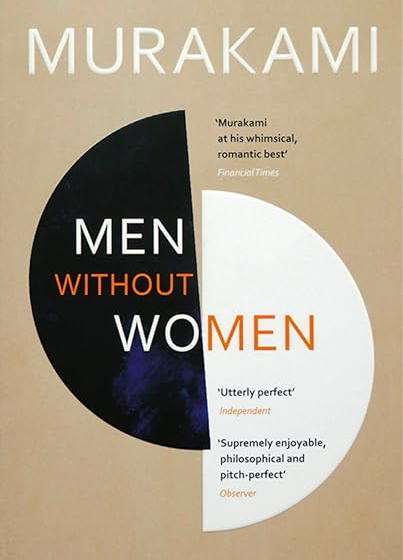
Murakami Haruki (born 1949)
Murakami is possibly the best-known Japanese writer by readers outside Japan. This could be connected to his own interest in Western cultures and the fact that he has been translated into other languages more consistently than other Japanese writers. Murakami writes both novels and short stories. He has been credited with eighteen film adaptations. Most have used short stories and some have been non-Japanese productions. As well as Drive My Car, three other films have had wider international recognition: Tony Takatani (Japan 2004), Norwegian Wood (Japan 2010) and Burning (South Korea 2018). Murakami’s Western influences include popular music – three Beatles song titles are used in titles – and jazz music. Note also, the car used by ‘Mr Kafuku’ is a left-hand drive Saab in a country where right-hand drive cars are used for driving on the left. At the end of the film, the driving is on the right in South Korea.
The Murakami short story collection that includes ‘Drive My Car’ is actually titled Men Without Women (2014). As well as the ‘Drive My Car’ story, the film script uses the central idea from a second story ‘Scheherazade’ (with the concept of a woman telling stories, taken from The Arabian Nights). A third story, ‘Kino’, offers a kind of metaphor for the ‘psychological journey’ the central character is making and how he might be feeling. (In the short story ‘Kino’ is the name of a man who is divorced from his wife and Hamaguchi used this in thinking about Kafuku’s story.) Hamaguchi says that adapting Murakami is always problematic because of the mix of realism and fantasy that is found in his stories and because he writes about the inner lives of characters, a mode which is difficult to translate to the screen.
Theatre and performance
When Japanese cinema began in the late 1890s films were tied to theatre much more closely than in the West. Traditionally, there were three kinds of Japanese theatre. Noh is the oldest dating back to the 14th century, involving tableaux and the use of masks in a very stylised form of drama requiring highly skilled actors. Kabuki is the looser, still stylised but more ‘popular’ form developed in the 17th century. Early Japanese films were often adaptations of kabuki narratives and some film companies grew out of kabuki companies, owning both kabuki theatres and cinemas. Bunraku also developed in the 17th century as a form of puppet theatre. Around the time of the birth of cinema two new forms emerged. Shinpa was concerned with the modernising of the Meiji Restoration period and new plays, more like Western melodramas, explored social issues and the challenges of the modern world. Shingeki also appeared at this time with Japanese companies staging forms of ‘experimental’ theatre then becoming popular in the West. Chekhov and Ibsen were two of the most often adapted Western playwrights. In Murakami’s story, the Chekhov play is described as being a version from this period.
In the classical Japanese cinema of the 1950s, both noh and kabuki performances appear in films and, as the title of his 1963 film An Actor’s Revenge suggests, Ichikawa Kon explored the world of kabuki in some detail. Hamaguchi’s choice of Chekhov and Ibsen (in Asako I and II) is an indication of a 21st century concern with a more globalised world of art, cinema and music. In an interview in Filmmaker magazine (2019), Hamaguchi says that “I am not really necessarily interested in performance, per se, but in emotion”. Kafuku, as the director in the film, makes a similar reference during the rehearsals for Uncle Vanya. He is referring specifically to a scene between a Taiwanese actor speaking Mandarin and a Korean woman using Korean sign language. They communicate directly but more through facial and body movements than dialogue. This is a crucial part of the film but difficult to discuss.
The whole rehearsal and performance for Uncle Vanya in Hiroshima operates on several levels in the film. First it is a multi-lingual production with several sets of surtitles for public performance. This refers both to communication on the stage and to a fascination with language in other parts of the film (e.g. the meanings of Japanese personal names). It also refers to the idea of an artistic tradition being developed across East Asia. The actors have auditioned from Taiwan, the Philippines, Hong Kong and South Korea as well as Japan. We also see Kafuku prepare to travel to a conference in Vladivostok, reminding us how close Japan is to Eastern Russia. The Korean connection is important, not just because Hamaguchi had worked on a student film in Korea but because of the long and sometimes difficult history of Koreans living in Japan (the half million Koreans and their families who have been long-term residents in Japan form the biggest ‘minority’ in Japan). It appears that originally the film was to be set in the Korean city of Busan, but COVID forced it back to Japan. Even so there is still a Korean scene (or one I’ve taken to be in South Korea). I’ve seen suggestions that the success of South Korean cinema from the late 1990s has made some Japanese creatives, critics and possibly audiences wonder if Japanese cinema is falling behind in some way. It is noteworthy that Hamaguchi intended to make his film in Busan and that after the pandemic Kore-eda made his film Broker (2022) in South Korea with the leading Korean actor Song Kang-ho.
The rehearsals and performance of Uncle Vanya also act as what is sometimes termed a mise en abîme. There is a ‘play within a film’ and we could choose to relate ideas about how the actors in Uncle Vanya ‘perform’ and the ways in which the characters in the film then behave towards each other in the other parts of the film narrative. This is especially so in the case of Kafuku-san and Takatsuki, the young actor playing Uncle Vanya. Kafuku is also seen performing in Waiting for Godot, as well as engaging with Takatsuki and Oto (Kafuku’s wife) in the telling and re-telling of the tale of the girl who breaks into the house of the boy she desires.

Hamaguchi’s statement
If you want to know about how Hamaguchi approached the production, you can access the film’s press notes on: https://www.janusfilms.com/films/2040
Hamaguchi suggests three reasons why he made the film. First, he remembered the short story and the intimate space of the car in which he had himself had conversations. Second, the theme about acting interested him and third the character of Takatsuki Koji who challenges Kafuku with “If we hope to truly see another person, we have to start by looking within ourselves”.
Outline Plot (no spoilers)
Kafuku Yûsuke (Nishijima Hidetoshi) is a highly respected theatre actor and director in Tokyo, recognised for his work across East Asia. He is married to Oto (Kirishima Reika) who works as a writer in television. The couple appear to have a peaceful life but when Oto dies suddenly, Yûsuke is left with unanswered questions and regret over his inability to truly understand her – and his unwillingness to try. This preamble is covered in a pre-credit sequence.

Two years later, still struggling with Oto’s death, Yûsuke accepts an offer to direct a production of Uncle Vanya in Hiroshima. He drives to the theatre in his beloved fire red Saab 900, where, upon arrival, to his surprise and disappointment, he learns that for legal reasons, he will be forced to let Watari Misaki (Miura Toko), a young chauffeur concealing a traumatic past of her own, drive his car.
Rehearsals move forward and eventually Yûsuke and Misaki settle into a routine, with the Saab increasingly functioning as an unexpected confessional for both driver and passenger. Less comfortable for Yûsuke, however, is the decision he has made to cast as his lead Takatsuki Koji (Okada Masaki) a handsome young TV actor with an unwelcome connection to his late wife.
As the premiere approaches, tensions amongst the cast and crew rise, and Yûsuke’s increasingly intimate conversations with Misaki force him to confront uncomfortable truths, and to unravel haunting mysteries left behind by his wife.
Possible readings of Drive My Car
This is a long film of nearly three hours with several complex relationships and a great deal to absorb on a single viewing. Even after working on the film for three days with the chance to re-watch parts of it, I still felt unable to grasp all it has to offer. Several of the reviews I’ve read are either mistaken in recall of the plot or, I think, not always aware of the meanings generated on screen. I think people need to discuss what they think they’ve seen and to listen carefully to what others think. Some comments on the film suggest that the viewer was bored or thought that the film dragged in places. I can only say I felt fully engaged at all times. Perhaps we all need to think about what we would have said/done faced with some of the things experienced by Kafuku Yûsuke. I experienced the same question after watching Wheel of Fortune and Fantasy released in the same year in Japan.
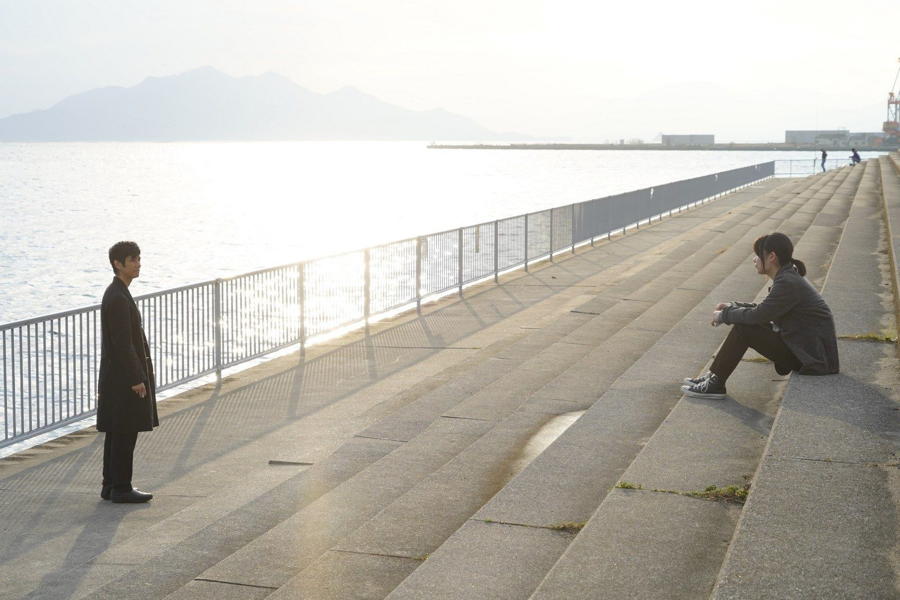
I think one way to think about the narrative is to recognise that there are a series of relationships in the film between a man and a woman and one between two men. They are not all necessarily sexual relationships and in some cases, the same person is in a relationship of some kind with more than other person. Secondly we have Hamaguchi’s statement about his interest in emotions (rather than ‘performances’) and we also know that Uncle Vanya as a narrative offers another layer within the main narrative. Thirdly, the central idea behind the narrative is that Kafuku Yûsuke and his driver slowly develop a close relationship based on the interchanges between them as Misaki drives. Hamaguchi says he’s not quite sure why conversations in a car should become more intense but it strikes me that one reason might be that the two participants don’t sit opposite each other, face to face. One at least must watch the road and the passenger may look out of the window. It may be easier to broach difficult topics when you don’t have to face the other person directly.
I re-iterate that there is a lot in the film and much of it I have not mentioned here directly so there are no spoilers as such. I realise that I haven’t mentioned two other aspects of the film’s production that are important. One is the cinematography of Shinomiya Hidetoshi and the other the music by Ishibashi Eiko. There was an initial plan to use the Beatles song, but rights were a problem so a Beethoven string quartet was used. There will be more on Ishibashi in my post on the latest Hamaguchi film, Evil Does Not Exist (2023). Hamaguchi has also spoken about his writing process and the melding of the three Murakami short stories but he also worked with a third writer, Ōe Takamasa. Drive My Car was the second film by Hamaguchi to receive an award just over a year after Wheel of Fortune and Fantasy won the Silver Bear in Berlin. It confirmed he had ‘arrived’ on the international stage.
 itp Global Film