
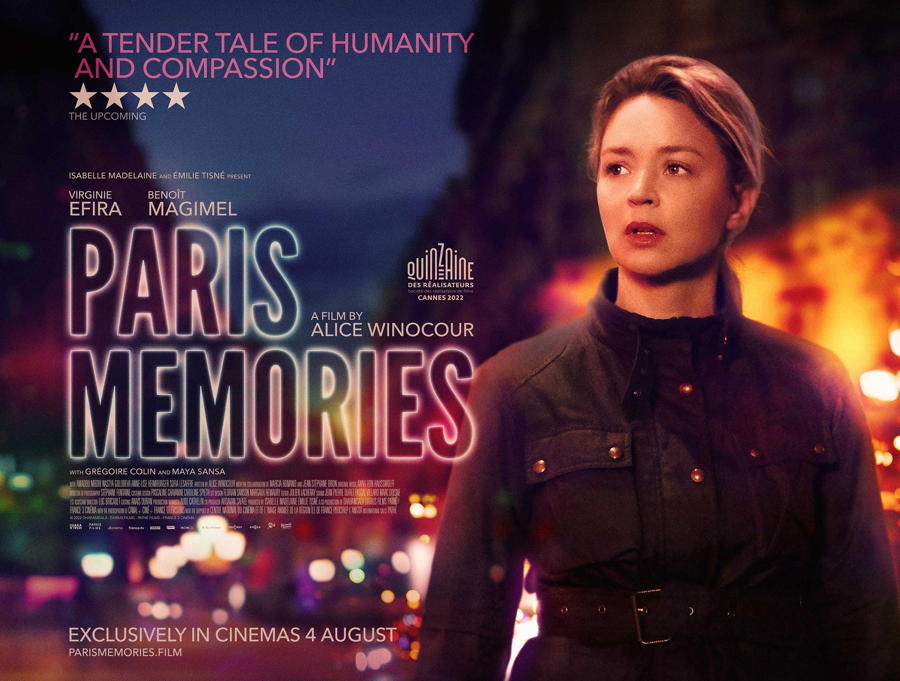
I’m not sure why I decided to rent this film on Blu-ray and I was slightly worried to realise that it was directed by Alice Winocour because I had been disappointed by her 2015 film Disorder. But I was reassured by the presence of Virginie Efira in the lead for this more recent film. She is my French actor ‘du jour’. I’m also a fan of Grégoire Colin. In the event, I shouldn’t have been worried at all. This is an unusual but intriguing film that packs a strong emotional punch in dealing with a subject that is not addressed by many feature films and certainly not with the ‘Humanity and Compassion’ highlighted by a quote on the poster above.
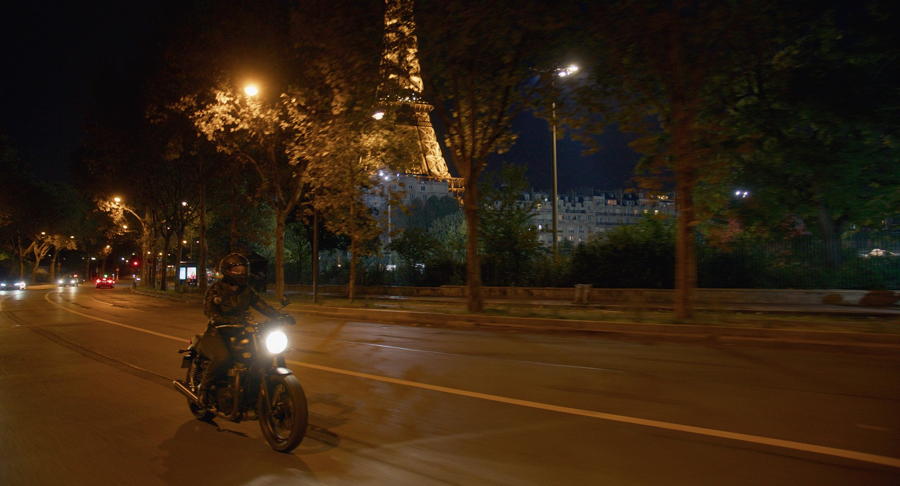
Mia (Virginie Efira) is a translator of Russian, having learned the language first from her mother and we see her working on an interview on French radio. She nearly always wears her leathers to ride a powerful motorcycle (a Triumph, no less) through the Paris streets and we see her arrive at a brasserie with her partner Vincent (Grégoire Colin) for a meal but it is interrupted when Vincent gets a phone call. He tells Mia he is needed at the hospital where he works, presumably as a senior doctor. He leaves and Mia prepares to ride home to their apartment. A heavy downpour forces her to stop and enter a large bar/diner, ‘L’étoile d’or’, near the Place de la République. She just wants a quiet drink while she waits for the rain to stop and she observes several of the people on the nearby tables. But tonight this busy bar/diner is the target for a terrorist attack. At the first shot, Mia and most of the rest of the patrons dive beneath their tables. We never get a clear view of the gunmen, mainly only their legs and feet. In all the chaos Mia crawls to find a place of safety before passing out. We then see her being examined by a doctor. She has a scar from a bullet wound and eventually we realise that this is a few months later. On her way home from the clinic she gets off the bus close to the Place de la République and enters L’étoile d’or. She is surprised to discover that there is a meeting of some of the survivors of the attack and relatives of those who died. Mia has been staying with her mother outside Paris during her recuperation and she has been unaware of the online forums and social media groups discussing the incident in which many people died. She realises that she has no memories of what happened or of the short time before the first shots were fired.
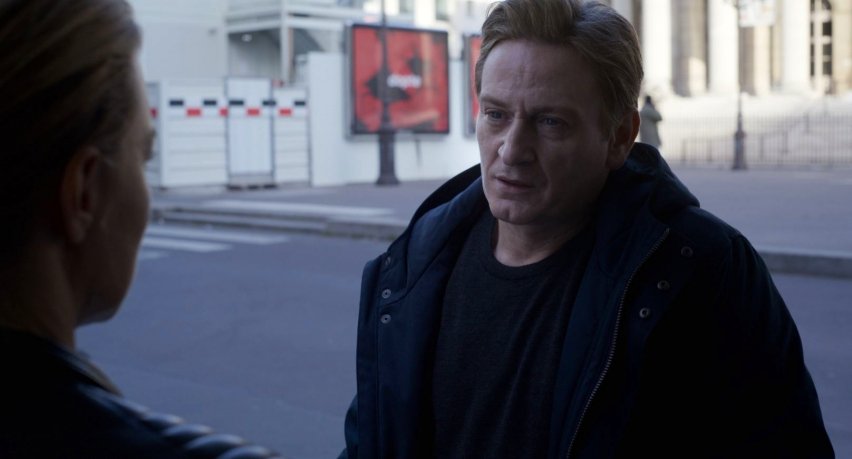
I won’t spoil the narrative any further and instead make more general comments about the film. At this point in the story, the narrative becomes a ‘quest’ as Mia meets several different people and tries to piece together what happened. She learns that she will be able to remember at least parts of what happened as time goes on, especially through conversations with other survivors and the relatives of the dead and injured. Three or four of the people she meets provide clues and one in particular remembers seeing her. Thomas (Benoît Magimel), a few years older than Mia, was celebrating his birthday with some office colleagues. Now his leg is shattered and is undergoing re-construction. He seems to have quite detailed memories of the night, and of seeing Mia. But Mia eventually discovers that she did find a safe place (after she was wounded) and that somebody held her hand until the police and emergency services arrived. But who was it and how can she find out what happened to them? This becomes the main quest but Thomas and a couple of others are also important and, unsurprisingly perhaps, Mia’s relationship with Vincent becomes strained.
The script by the director and two collaborators, Jean-Stéphane Bron and Marcia Romano, benefits from research into Post-traumatic Stress Disorder (PTSD) – see the bilingual Press Pack on the Unifrance page for the film. One example is the concept of ‘a diamond at the heart of a trauma’ so that someone may find something of great value in searching for memories of what caused the trauma. Winocour refers to other advice given to her by psychiatrists:
They also explained the phenomenon of the flashback, or involuntary recurrent memory, which is very different from conscious memory and from the classic cinematographic flashback. Here it means that mental images suddenly and involuntarily surge up and invade your consciousness, dazzling your mind like a kind of psychic break-in, and causing you to relive a past traumatic experience. (from the Press Notes interview)
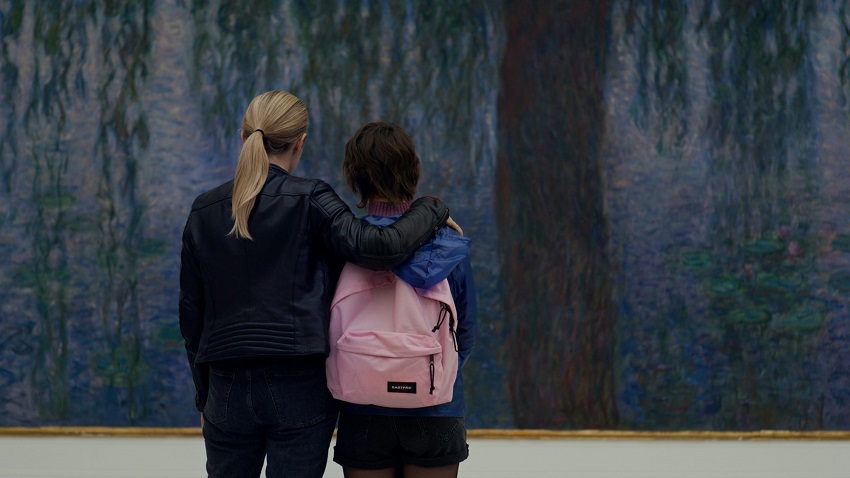
One of the people Mia befriends is Félicia (Nastya Golubeva), a young architecture student who lost her parents in the attack. The two women visit the Musée de l’Orangerie to look at Monet’s presentation of eight paintings as an installation that the artist gifted to France on Armistice Day in 1918 to symbolise peace. The most important piece of advice Winocour was given is that you can’t recover memories by yourself. You have to talk to others with the same experience and they will help you to remember. The film was inspired by the attack on the Bataclan music venue in 2015 when the director’s brother was trapped in the building and texted his sister not to phone him in case it gave away his position. One of the other techniques the director used was to have some of the survivors of her fictional attack describe what they can remember as a voiceover (or a stream of thoughts) and one speaks more directly to camera. This was the only aspect of the film that didn’t totally work for me but the intent is good and it might work better on a re-watch.
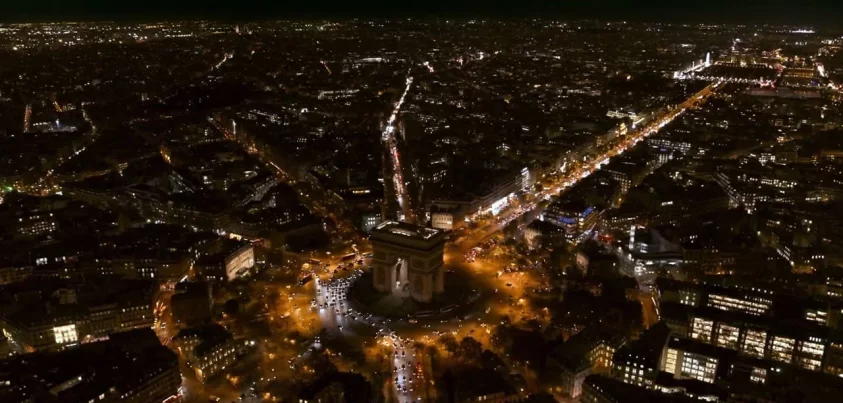
The film’s French title is Revoir Paris and this has a slightly different meaning of, literally, ‘See Paris Again’ which is not the same thing as ‘memories of Paris’. After the attack Mia leaves Paris to stay with her mother. When she sees Paris again it does not look the same. The camerawork by Stéphane Fontaine offers us a range of cityscapes and several drone (?) shots looking down on the city. Winocour again:
I wanted to shoot the real city, but I also wanted to integrate it into my fiction. I wanted something both raw and hypnotic. There’s a high-angle shot of Paris where the boulevards seem like wounds on fire. Paris is also a character in the film because the city was wounded in the flesh, we all felt that. [i.e. after the 2015 attacks]
Sound too is important. The film’s score is by Anna von Hausswolff, a Swedish-based music composer who produces music in churches but mixes the sacred with Gothic, post-metal and punk with organ music, drones and powerful bass lines. I found it unsettling and ominous. It’s also important that the director chooses to present multi-racial Paris, although very often many of the migrant peoples in Paris are invisible, working in the background. There is a line of dialogue in which a Senegalese man working in the kitchens at L’étoile d’or says “If the Senegalese, the Malians and the Sri-Lankans went on strike, there’d be nowhere to eat in Paris”. There is a certain kind of documentary feel to Mia’s journeys through the city and again in the Press Notes she tells us that she thought a lot about Agnès Varda’s Cléo de 5 à 7 (France 1961) when she was thinking about photographing Paris and the scenes in the brasserie and L’étoile d’or as well as the street scenes did remind me of the earlier film. In the end, everything depends on Virginie Efira’s performance. She won a César for her acting in this film and it was well deserved. She is capable of communicating so much by tiny glances. This is a many layered film and I’m happy now to re-assess my view of Alice Winocour’s direction and to think about seeking out her other films. Looking back on sequences from the film, I notice how important are some of the small details of mise en scène and how certain actions are given time to work properly. Just one example would come from Mia’s gaze out of the window of a borrowed apartment looking down onto the Place de la République as city workers clear away the shrine of candles and flowers marking the tragedy of the attack. This is indeed a remarkable film and I won’t spoil the ending, only observe that you won’t turn away in despair.
The Blu-ray disc I watched was only a bare bones affair but the film is available on streamers such as Apple, Amazon, Sky and Curzon. I recommend it highly.
 itp Global Film