

This somewhat ironically titled film (co-produced with funding from Scottish Screen!), was first seen at Berlin back in February 2024 and has been touring UK and Irish cinemas since May 10th, released initially on 36 screens by Altitude. I think it opens in the US this month. Watching it on a big screen was an affecting but also slightly puzzling experience for me. It’s puzzling because the British Film Institute’s major screening project featuring many of Powell and Pressburger’s films and several related screenings took place from November 2023 to February 2024, though I notice that a new print of one of the best films from The Archers, The Small Back Room (UK 1949), has only just been released. If the documentary had come out a few moths earlier, many of the films it discusses would have been available in cinemas courtesy of the BFI.
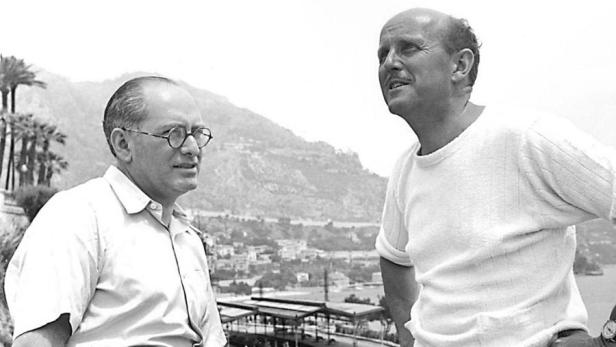
This 130 minute documentary has a very simple structure. Martin Scorsese plonks himself down in front of the camera and proceeds to tell us about his discovery of the films of The Archers (the company title adopted by the partnership of Michael Powell and Emeric Pressburger in 1942) as a child on TV in New York in the late 1940s/early 1950s and of his love and admiration for the films ever since. Scorsese’s narrative is punctuated by clips from most of The Archers films as well as some archive material of the pair at work and interviews with various collaborators as well as the duo themselves. Scorsese is a great raconteur and he points to ways in which his own filmmaking has been inspired/influenced by the work of P & P in various ways. He was close to Michael Powell from the late 1970s and he played a central role in the restoration of Powell’s reputation with the re-release of Peeping Tom, the notorious 1960 film which shocked British critics and in a sense ended Powell’s career in the UK. He also introduced Powell to his editor Thelma Schoonmaker who would marry Michael Powell in 1984. The only real downside to Scorsese’s central role in the film is that it inevitably means that there is more about Powell than Pressburger. As I watched the film, which moves more or less chronologically through the films of The Archers, I did wonder how the documentary’s director David Hinton would handle the fact that as Scorsese worked through what he termed ‘peak Archers’ from Colonel Blimp in 1943 to The Red Shoes in 1948, the last portion of the film would be about a comparative decline. But it isn’t of course because Scorsese becomes part of the story as it focuses more on Powell, especially after the partnership ended with the production of Ill Met By Moonlight in 1955.

If you know the work of Powell and Pressburger, I’m sure you’ll enjoy watching the film and do see it in a cinema if possible. If you are a young filmmaker or film studies student, you couldn’t have a better guide than Martin Scorsese to introduce you to P & P. I’m something of an obsessive in my interest in both Powell and Pressburger but for what its worth The Archers made the most exhilarating British films of the 1940s and are still not properly recognised outside the English-speaking world despite their very outward-looking stance. But I’d offer just a slight word of warning to prospective film students. Scorsese offers a great introduction but he’s not the only important figure in the restoration of the reputation of P & P as great filmmakers and his view of British film history is limited in scope. There is plenty more to discover, including the one important film that isn’t included in this documentary, One of Our Aircraft is Missing (UK 1942) – the excellent Blu-ray of that film from the BFI also includes some of the duo’s wartime documentary work.
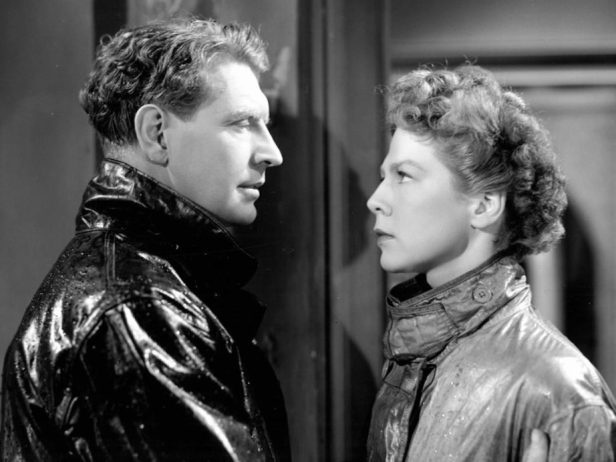
Why are P & P worth our time in 2024? Scorsese does suggest some very good reasons why contemporary cinema audiences as well as filmmakers should take notice. He argues that they were like experimental filmmakers working in the commercial mainstream. David Hinton directed a South Bank Show documentary in 1986 when the first volume of Michael Powell’s autobiography was released. You can read an interview with him, discussing Made in England, on the Eye for Film website. If you want a more personal memoir which adds some spice and adventure to the making of the films, Michael Powell’s two volume autobiography is a must read – as long as you take it with a handful of salt for some parts (A Life in Movies, 1986 and Million Dollar Movie, 1992, both from Heinemann). If you want to know more about Pressburger, his story is told by the film director Kevin Macdonald in Emeric Pressburger: The Life and Death of a Screenwriter, London: Faber & Faber, 1994. Both Powell and Pressburger had filmmaking careers before and after their partnership. Made in England is now streaming in the UK and is available to rent or buy from most of the usual streamers.
 itp Global Film
Roy picks up on the main aspects of the documentary. It does not give due credit to Pressburger. This is a common stance. In many partnerships the director is privileged over other contributors.
And I would have appreciated a contribution from Ian Christie who is an unrivalled proponent of both filmmakers.
LikeLike