
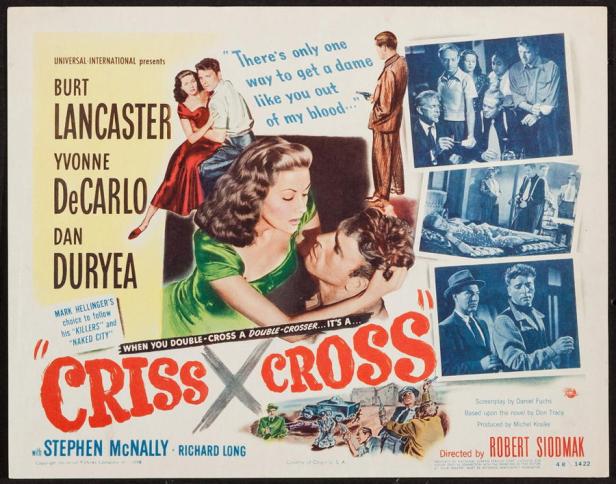
Criss Cross is a very well regarded picture, a ‘classic’ film noir, available on Blu-ray (Eureka/Masters of Cinema in the UK). It is directed by Robert Siodmak and on one of two critic/scholar commentaries included on the disc, Adrian Martin explains that for him this is Siodmak’s best film. I have to confess that I did have a few problems with the film but I recognise the overwhelming critical and scholarly praise and I can see that I need to think carefully about my reading.

The film stars Burt Lancaster, whose début had been as the central character of Siodmak’s earlier film The Killers (from the Hemingway short story) in 1946. That film had been produced by Mark Hellinger for Universal-International. It also had a music score by Miklós Rósza who again featured on Criss Cross but Hellinger had died relatively young in December 1947 so the producer at Universal-International was Michael Kraike. The other notable name on the credits of Criss Cross was Frank (Franz) Planer, the Austrian émigré cinematographer. Criss Cross was adapted from a novel by Don Tracy and the screenplay was by Daniel Fuchs.
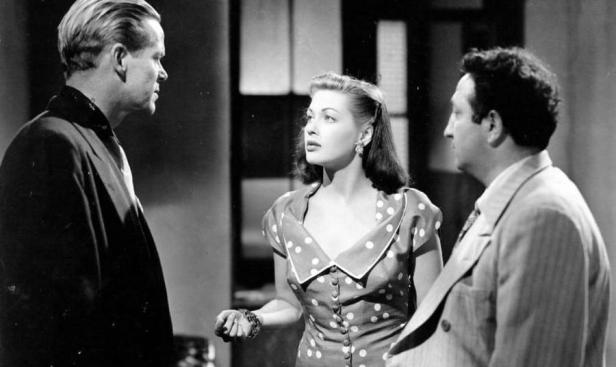
As the film opens, Steve Thompson (Burt Lancaster) is in a car park with his ex-wife Anna (Yvonne De Carlo). They appear to be planning something. They separate and next we see them together in a bar/club owned by Slim Dundee (Dan Duryea). Steve seems to be angry and a fight breaks out between him and Dundee (who is now Anna’s husband). Eventually it becomes clear that Steve, Anna and Slim’s gang are involved in planning a robbery of an armoured truck carrying payrolls. Steve is the ‘inside man’ as one of the truck guards. But after what we heard in the opening scene are he and Anna going to double-cross Slim? Instead of moving directly to the robbery the narrative then features a long flashback introduced by Steve’s voiceover. This fills in a large amount of background. It starts with Steve arriving back in Los Angeles after some time spent away following his split with Anna. We get to see his home situation and learn more about his relationship with Anna. This will eventually lead back to the robbery and then its aftermath. We should also note that there are a number of other characters including Steve McNally as Detective Pete Ramirez, someone who has known Steve for a long time as a friend and tries to steer him away from trouble. This is a familiar role in noirs. Finally, the fifth name on the poster is Richard Long as Steve’s younger brother. In narrative terms he offers the a contrast to Steve. Why is his name on the poster? I think it’s just because he was a juvenile lead at Universal at the time and might been known to a segment of the younger audience.

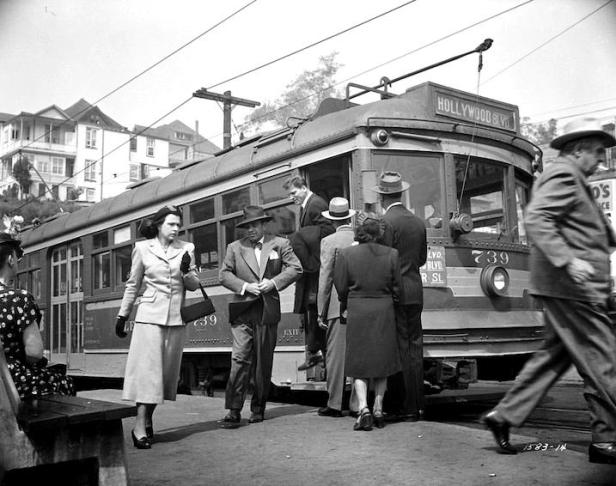
So why is the film so highly praised? This clearly is a film noir and it follows a classic plotline. There is a ‘doomed man’ and a femme fatale. The ending is cynical. The man returns to his home city after time away and there is a flashback at the centre of the narrative. The three central performances are strong and there is an interesting array of minor characters, especially among the members of Slim’s gang. The bar features a dance floor and at one point a young Tony Curtis dances with Anna to a live performance by. But perhaps most of all, the photography is very strong with very distinctive compositions using both studio sets and locations around Los Angeles such as Union Station and the Bunker Hill district with its Angel’s Flight funicular railway.
The initial critical response was mixed but as interest grew in film noir after the 1970s revival, Criss Cross gradually began to attract supporters. This comment by Eddie Muller, the TCM presenter and noir expert who has done much to create interest in films like this is revealing:
Stupidly, I used to think there was something missing at the core. But it keeps getting better every time I see it. De Carlo in the parking lot pleading straight to the camera might be noir‘s defining moment. (From Muller’s Top 25 films noirs – he lists Criss Cross at No. 2)
I feel much the same way as Muller though I wouldn’t rate the film so highly. I did feel that the film was structurally similar to Out of the Past 1947, which for me is the best example of ‘classic noir‘. But I find the Robert Mitchum-Jane Greer doomed romance to be much more affecting than Lancaster-De Carlo. Having said that, I have the feeling that De Carlo’s performance will grow on me. I haven’t seen her in many other films and perhaps she was unlucky in the way her career panned out. I am normally a fan of Burt Lancaster but I didn’t enjoy his performance here as much as I usually do. On the other hand I do note that his physicality still attracted attention. One review I read commented that no actor ever wore a vest (‘undershirt’) as well as Lancaster. Similarly, as much as this was a highly professional job by Robert Siodmak, I’m not convinced by the script and especially by the sequences around Steve’s family. I note that the original novel was adapted again for a Steven Soderbergh film, The Underneath (1995) and that film seems to simplify the family narrative.

I really did enjoy Planer’s cinematography which is not as stylised as John Alton but creates a Los Angeles world just as effectively. I’ll take a rain check on the Siodmak question until I can watch a few more of his films and I’ll re-assess the Lancaster-De Carlo pairing. My current noir investigations continue.
 itp Global Film