

Anthony Mann endured a period of five years between 1942 and 1946 in which he made five features for the B units of Paramount, Universal and RKO and five more for the Poverty Row studio Republic. He learned his craft as a director, but he was generally assigned projects with poor story ideas and scripts and actors, some of whom were, in his words, barely able to deliver the lines in the script. Most disheartening was the lack of resources because of low budgets. This meant limited studio time and limited film footage to expose. Yes, he became skilled at shooting quickly, but he had no chance to develop his own ideas. All of this finally began to change in 1947. Desperate is now seen as a classic film noir. Although it is only 73 minutes in length, Mann this time had a new element of control. He had come up with the original story, working with Dorothy Atlas (whose husband Leopold would write Raw Deal for Mann in 1948). The final script had extensive changes and was completed by Harry Essex and Martin Racken, but Mann still felt he was invested in the production.

Mann was back at RKO but now had a cinematographer assigned with something to prove. George E. Diskant had been at RKO since the early 1930s working with camera crews but not making it to the role of DoP until 1946. He would prove his worth over the next few years, primarily on the films of Nicholas Ray and also with Ida Lupino. He’s one of our heroes and he offers Anthony Mann something new in the form of film noir lighting and compositions for certain scenes. Mann was also fortunate in having a leading man with real promise. Steve Brodie had all the qualities to become a leading man but he never made it to A List star status. Max Alvarez (see below) makes the observation that Brodie was handsome but not distinctive and that he had all the skills but not the charisma of a major star. Desperate was an unusual film for Brodie because he had the lead. He appeared in supporting roles in two of RKO’s best-known films noirs, Crossfire and Out of the Past (both also 1947) but he then remained as a support through dozens of B Westerns and crime films before also appearing in TV series. In Desperate he is up against one of the great heavies of late 1940s Hollywood. Raymond Burr as a young man often played older, partly because of his weight, and here he is gang leader Walt Redak. Another key element is the presence of Jason Robards Sr. who plays the cop, ‘Ferrari’ investigating the case. He’s reminiscent of the quirky policemen who turn up in French polars, the later version of Série noire-based films. He reminds me of the older detectives in Jean-Pierre Melville films like Le cercle rouge (France 1969).

The fourth benefit for Mann on this shoot was the opportunity to get out of the studio and briefly shoot on both the city streets and on rural roads. Mann would eventually become well known for his presentation of locations and this was a breakthrough of sorts. The film takes place somewhere in the mid-West. Steve Randall (Steve Brodie) has been married to Anne (Audrey Long) for only four months and he has started work as a self-employed truck driver, hoping to earn a decent living to support his wife. He doesn’t know yet that she is pregnant with their child. She is about to tell him tonight but a phone call tempts Steve with a $50 fee. He is being conned into working for Walt Redak who appears to know he is desperate to earn money – a previous connection between the two men is suggested but not spelt out in detail. Everything then goes wrong and Steve finds himself escaping when the police arrive. He ends up being chased by the police and by Redak’s men.

The ‘young couple on the run’ is a familiar genre element of romance thrillers such as Hitchcock’s 39 Steps (UK 1935) and in films noirs like Detour (1945) and Gun Crazy (1950). At first Steve and Anne seem to be the loving young couple, innocent but threatened, of the romance thriller but their difficult situation soon means Steve has to take chances which increase the danger and when he learns about the pregnancy he becomes more desperate. Redak is intent on finding Steve and Anne and forcing Steve to confess to a serious crime he didn’t commit in order to save Al Redak, the gang leader’s ‘kid brother’ in custody and facing a possible death sentence. The narrative is paused for several weeks when Walt Redak is injured and Steve and Anne have a chance to make a new life, but Redak returns to the fray and a final showdown is inevitable.
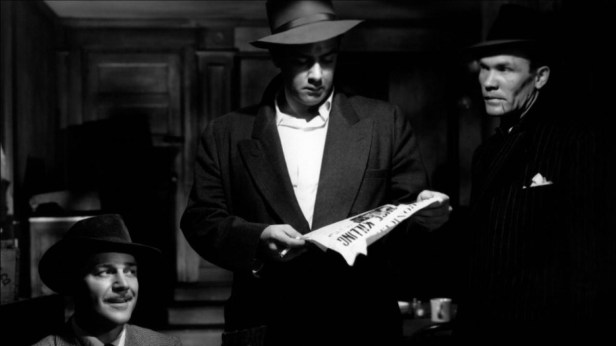
Mann shot a lot of film for a 73 mins feature, ensuring he got exactly what he wanted. This seems to have been possible at RKO where control over stock used was less tight than at smaller Poverty Row studios such as Republic. Max Alvarez suggests that the budget for Desperate was $234,635, considerably more than Poverty Row budgets, but it restricted the shooting time allowed to 27 days with just four days for location work. The lighting budget was cut from an initial $14,381 to $10,285. As Alvarez notes, this supports the view that studio cost-cutting was perhaps a factor in the move to ‘dark cinematographic styles in black and white crime movies’ in the 1940s. The film also seems to have had several problems with Joseph Breen’s office at the Production Code Administration (PCA). This included references to ‘gangsters’ and the number of men in Redak’s outfit as well as the types and extent of the violence and the depiction of a police officer being shot. RKO seems to have ignored several of the PCA warnings but even so, pressure from the PCA must have made shooting more stressful.
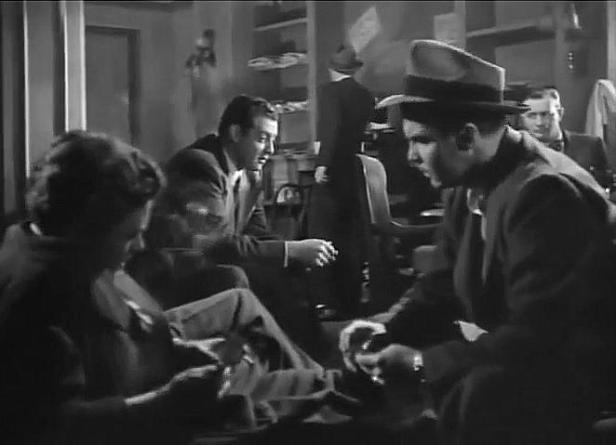
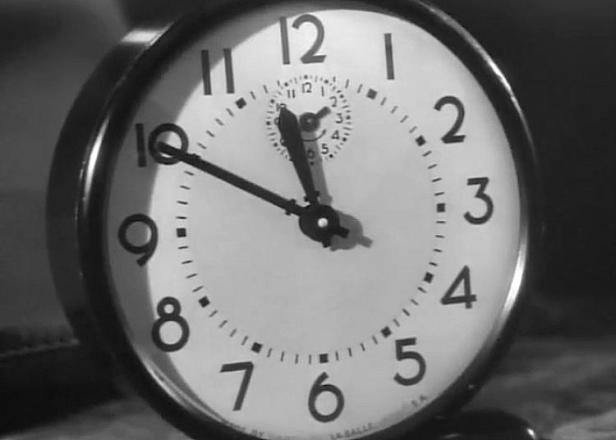
Anthony Mann can be seen as exploring certain kinds of set-ups which had the potential to become ‘more’ than simple conventional scenes in a crime film. Early on in the narrative we see a scene shot in depth to include all the gang members. Towards the end of the chase we see a confrontation between Steve, Reynolds and Redak, who wants to kill Steve at the precise moment his kid brother dies in prison. In an expressionist montage, Mann and his editor Marston Fay create a standoff with the clock ticking loudly and Paul Sawtell’s music score adding further tension.

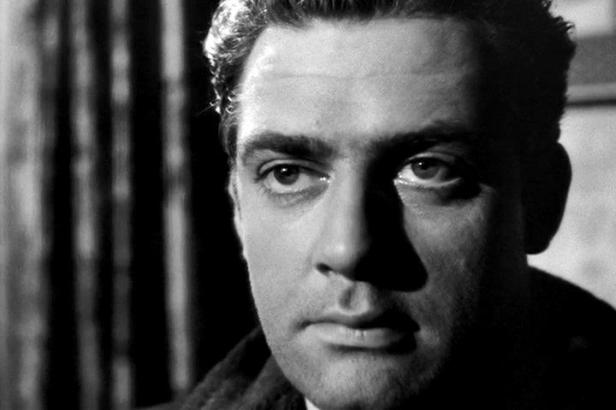

But this isn’t the end of the narrative. I won’t spoil what happens but it involves one of the classic ‘staircase’ sequences now firmly associated with noirs.
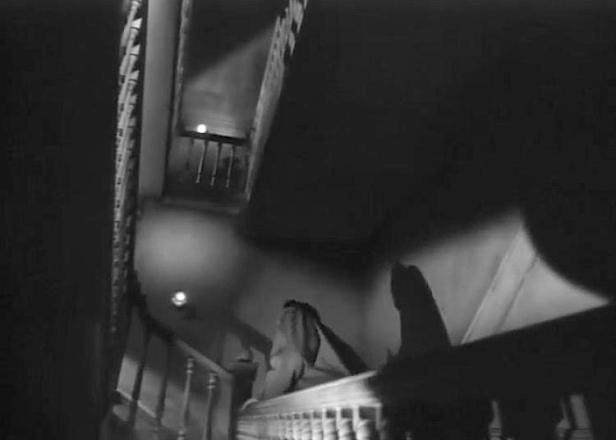
Desperate was a significant breakthrough for Mann. Given the resource restrictions, it isn’t just another crime narrative but instead it displays enough visual flair, tight exposition and exciting set pieces to suggest that he was on the cusp of creating films that would be remembered. Desperate proved to be a film that in retrospect would be seen as a key film noir title. At the time of the film’s release in 1947 it was treated like any other B picture released by a major studio. There were some routine suggestions to exhibitors about how to promote it but generally it was lost in double bills dependent on the A picture involved. Mann would return to the smaller studios, this time to PRC for Railroaded! his next feature. Little did he realise, however, that PRC’s status was about to change with its takeover by more ambitious owners and that escaping RKO as it fell into the clutches of Howard Hughes was perhaps the best move. But that’s the next part of the story. Desperate is available in watchable prints online.
Here’s the early scene in which Steve takes the job and Redak involves his younger brother:
Reference
Alvarez, Max (2014) The Crime Films of Anthony Mann, Jackson, Miss: University of Mississippi Press
 itp Global Film