
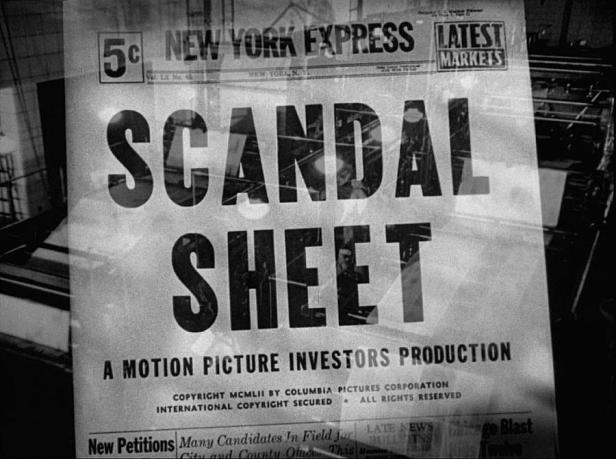
Directed by Phil Karlson and based on a novel by Sam Fuller, Scandal Sheet is a story about a sensationalist newspaper operation that turns into a crime thriller and has been argued to be a film noir. Visually it is very fine, courtesy of Burnett Guffey’s camerawork, but not particularly noirish except for a few street scenes. However Fuller’s story certainly feels like a noir narrative. But whatever categorisation you choose this is an 82 minute humdinger of a movie that deserves anyone’s attention.
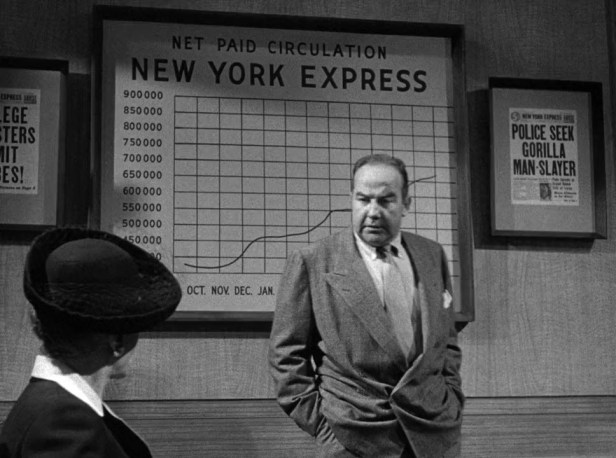
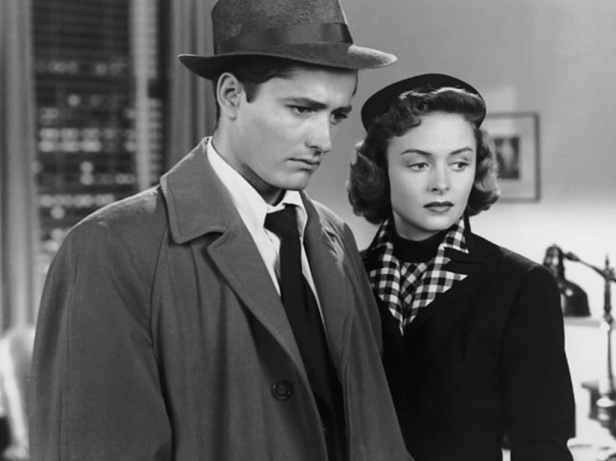
Broderick Crawford is top-billed as Mark Chapman, a newspaperman who has been appointed editor by a struggling New York paper, the New York Express. Much to the dismay of traditional ‘respectable’ board members of the newspaper company, Chapman soon boosts circulation with sensationalist reports of murders and scandals. As the narrative begins his latest wheeze is to put on a dance competition for ‘Lonely Hearts’. He hopes to generate several stories from the event and offers prizes for the first couples to agree to marry. John Derek plays Steve McCleary, the very young and handsome chief reporter with his sidekick photographer (Henry Morgan) who turn up like bad pennies at every murder and become public enemies for the local police. Steve’s also Chapman’s protégé. To match McCleary, Donna Reed plays Julie Allison, the daily feature writer who still believes in the human interest stories of a responsible newspaper. McCleary fancies his chances with Julie but she despairs of him. Finally, there is Charlie Barnes (Henry O’Neill) the paper’s former star writer who once won a Pullitzer Prize but who is now an alcoholic drinking in the roughest and cheapest bars. Julie still has time for Charlie but Chapman and McCleary treat him like dirt. It’s a very simple but powerful set-up, a typical Sam Fuller story.

Everything appears to go well for Chapman until one of the lonelyhearts recognises him. There is clearly something in his past. I won’t spoil what that is but the whole narrative takes a turn and instead of being the chaser, Chapman becomes the chased. One of Chapman’s dilemmas when it looks like he is in danger of becoming a ‘person of interest’ is whether or not he should allow Steve to follow up the story. Steve is a good reporter but he’s also the protégé and perhaps a kind of surrogate son? And what of the disgraced reporter, Charlie Barnes? What does he know? Steve will usually ignore him but Julie will try to get him back working for the paper.

The film is short for a Hollywood feature and it’s made by Edward Small Productions. It’s one of two such films made by Small with Phil Karlson as director in 1952 – the other is Kansas City Confidential. Both films in 1952 might have been seen as B films. I find this quite problematic since Scandal Sheet is a much higher quality offer than most of the A pictures of the time in terms of performances, camerawork and editing – it moves at a rapid pace and I found it genuinely exciting and thrilling. Columbia, one of the so-called ‘little three’ in the 1930s and 1940s was known for some of its quality Bs and it is the distributor of this film.
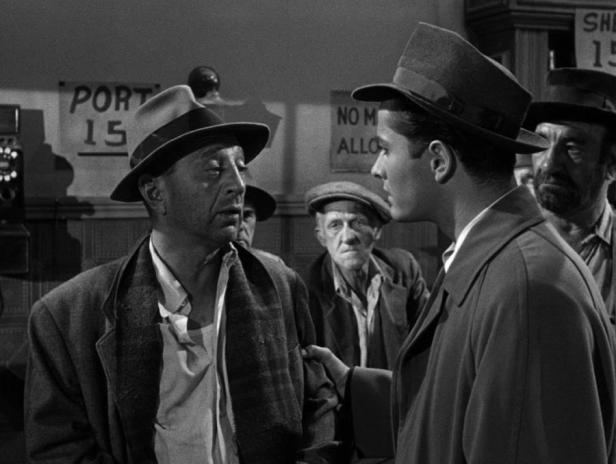
The three stars of the film are each cast within what I think is their typical star persona. Broderick Crawford is big, loud and angry. He was best known for All the King’s Men (1949) and Born Yesterday (1950). From the mid-1950s he appeared in many TV productions including all 156 episodes of Highway Patrol (from 1955-59). I think I last saw him playing the title role in Larry Cohen’s The Private Files of J. Edgar Hoover (1977). John Derek is still the ‘pretty boy’ here. He was Broderick Crawford’s son in All the King’s Men and his other key roles were with Humphrey Bogart, who ‘discovered’ him and selected him for the young killer in Nick Ray’s Knock on Any Door (1949, made by Bogart’s company Santana) and with James Cagney in the Western Run for Cover (1955), again directed by Nick Ray. His other roles, however, tended to be leads in Bs for Columbia then Paramount. McCleary must be one of his bests parts. Donna Reed was typed for ‘purity’ and she was frustrated by this. I remember her as the nurse who treats John Wayne and becomes his love interest in John Ford’s They Were Expendable (1945). Otherwise her most high profile appearances were opposite James Stewart in in Capra’s It’s a Wonderful Life (1946) and in Fred Zinneman’s From Here to Eternity (1953) in which she plays a prostitute a role which won her an Oscar for best supporting actor – but this still didn’t prevent the typecasting in later roles. In the late 1950s she became a very successful star on TV with her own show. She was a few years older than John Derek and her costumes in this film sometimes make her seem older. Reed had some interesting political activist views. Despite being a Barry Goldwater-supporting Republican she was anti-war over Vietnam and anti-nuclear re energy.

The fourth star of the film is the triangle of Karlson, Guffey and editor Jerome Thoms. Together they create the fast-moving and fast talking world of the newspaper industry, swooping in on innocent victims of McCleary’s reporter’s voracious appetite for a good story. New York as a city full of life and conflict certainly comes across in the scenes in streets and bars. I watched Scandal Sheet on a Blu-ray from the UK label Powerhouse/Indicator, a double film Blue Ray in fact, coupled with Douglas Sirk’s Shockproof (1949), both films written in part by Sam Fuller. The disc is very well presented and has prompted me to consider other films noirs from Powerhouse/Indicator.

 itp Global Film