

After watching Sweet Dreams (Italy-France 2016) I found two more Marco Bellocchio films on MUBI. I watched them both in quick succession. The Traitor was released in the UK in the summer of 2020 between two lockdowns when I still wasn’t visiting cinemas. It’s a long (152 mins) mafioso biopic with a standout central performance by Pierfrancesco Favino, playing Tommaso Buscetta, the first major mafioso to decide to co-operate with Italian prosecutors in 1984. As such, it is an exciting (and very bloody) genre picture with several flourishes of ‘difference’ that take it beyond familiar ‘rise and fall’ gangster pictures. It was first shown, in competition at Cannes. Some reviewers have bracketed it with Scorsese’s The Irishman as a veteran director’s late entry into the genre stakes. There is a Wikipedia page on Buscetta’s ‘true story’ also covered in a documentary film Our Godfather (UK 2019).
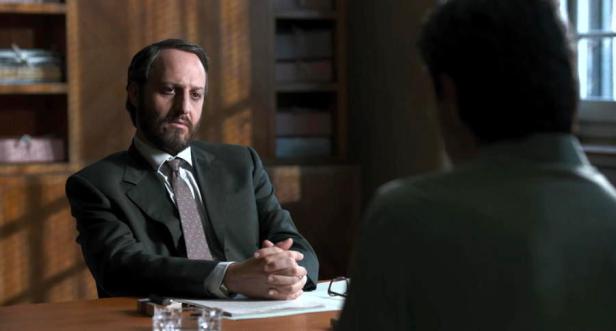
Do we need yet another mafiosi film? Does sticking reasonably close to the truth in a form of biopic add anything to what we might already know about the workings of the Sicilian mafia? I think the answer is yes, but it’s a qualified yes. Several reviewers have decided that the film is possibly less accessible to audiences outside Italy simply because of the large numbers of significant figures in the story and the difficulties of delivering so much information onto the screen, even in a long film. I think there is something in this argument and there were certainly several moments when I felt overwhelmed. But as an example of what a skilled filmmaker can achieve, The Traitor is very impressive. It just needs more than one viewing to fully appreciate it.
The narrative begins with a celebration in Palermo which marks the festival of Santa Rosalia in September 1980. It’s also a meeting of the Palermo ‘bosses’ – the heads of the main families of the Cosa Nostra running the drugs trade in Sicily. Buscetta is there with his extended family (he was married three times and eventually had eight children) but he’s only a ‘soldier’ and can’t join the actual meeting. Ironically he is also known as ‘Boss of two worlds’ as he is now living in Brazil, though his sons from earlier marriages are still in Palermo. All this information is presented through on-screen captions, dates and locations being offered throughout the film in large, bold text. The party scenes are themselves very ‘busy’ and the mise en scène tells us quite a lot. The musicians and the ‘security’ personnel are wearing white keffiyehs, referring to Sicily’s Arab past. Buscetta is alert to the signs that this meeting signals a coming war rather than the ‘peace’ that the bosses suggest. The sequence ends with a group photograph (see the poster above for part of the image) which enables Bellocchio to freeze-frame and add names to all the principal characters. There are a lot. Molly Haskell in her Film Comment review references the ball in Visconti’s The Leopard (1963), another narrative that signals the decline of one form of power before the rise of another.

Buscetta is soon back in Brazil but in Palermo the murders begin as the dominant bosses wipe out the other families. Bellocchio puts up a running total in large white numerals in the corner of the screen and they click over rapidly soon reaching 100 and then 150. Buscetta is eventually extradited back to Italy and at this point with many in his family murdered, he decides to co-operate with the Italian authorities in the form of Judge Falcone (Fausto Russo Alesi). The two men get on well but the judicial process is slow. The first major trial runs 1984-6 in Palermo involving many of the bosses. Then a later trial in Rome looks at the ties to politicians. Eventually Buscetta is sent the US under ‘witness protection’ with his wife and children. There is a coda which makes a reference back to Buscetta’s teenage mafioso. He dies of cancer at the age of 71 having put in train a process which sees the prosecution of over 300 mafiosi.
There is no doubt that this is Buscetta’s story. It only covers twenty years or so of his life but we do learn some salient points about his earlier life. He’s no saint and he has certainly killed under orders. But he believes in a code of behaviour, which has been tossed aside by the bosses. When one boss queries why he wants to live in Brazil and not benefit from the Palermo drugs trade he replies that he prefers to spend more time making love than making money. Another point is that he was the last of seventeen children in his family. The film can’t deal with his early life – unfortunately, because it seems to have been quite eventful. He lived in Argentina as well as Brazil and the US I think. Pierfrancesco Favino is very charismatic in the role.

The strengths of the film seem to me to be mainly the relationships between the men and the melodrama of the operation of the Cosa Nostra as a whole. I did think about the role of the women. As I watched the film I recognised how they were generally marginalised but I felt that they were being recognised in some way. However, I’m now struggling to think of examples of how that is done. Christina, Buscetta’s Brazilian wife is a strong character as played by Maria Fernanda Cândido. She stands out because she is not Sicilian. Collectively the wives of the bosses make a big display in the court scenes in Palermo. Buscetta’s relationship with Falcone is key to the whole narrative. The other relationship that stands out is that between Buscetta and Salvatore Contorno (Luigi Lo Cascio), the boss who sides with Buscetta. Partly it stands out as Lo Cascio is the only other actor next to Favino that I recognised from his lead roles in the films The Dinner (Italy 2014) and The Ties (Italy 2020). But also, Contorno, a physically small man, refuses to use Italian in court and sticks to Sicilian dialect. It confounds the judges but confirms the ‘outsider’ status of Cosa Nostra. He also ends up in the US where he starts as a car salesman, still speaking only Sicilian! But most of all, I think, Bellocchio’s skill is evident in the orchestration of the two major court scenes in their amazing settings, first in Palermo and then Rome. If these are not the ‘real’ locations, they represent a triumph for the set builders.
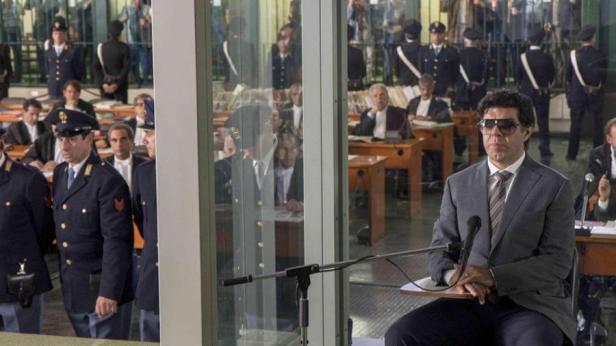
I think this film is streaming widely on major platforms and I recommend it – but you will need to rewatch a few key moments and perhaps do a little research to gain a clear understanding of what actually happened in the first major legal battle between the Italian state and the Sicilian mafia.
 itp Global Film