
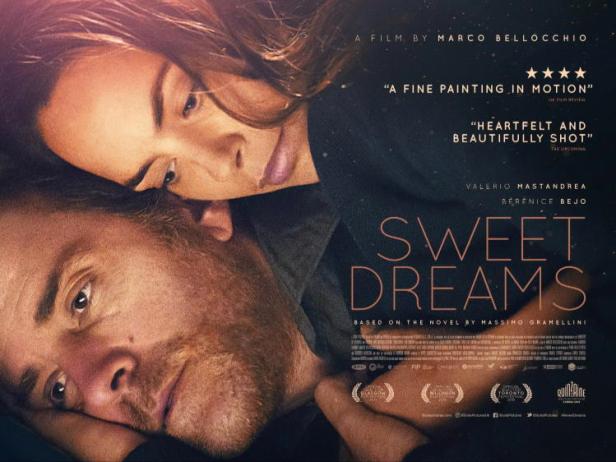
Marco Bellocchio is one of the most prolific and critically acclaimed of all Italian filmmakers but I think I’ve only previously seen one of his films, Vincere (Italy 2009). I therefore began watching this film without too many expectations. I later re-read my review of Vincere which might have changed my approach. Sweet Dreams is a film which has clearly divided audiences and I think that is primarily because it is a melodrama (a type of film familiar in Italy, but bewilderingly for me, not understood by many Anglophone audiences) and it is an old man’s film. Bellocchio was born in 1939 and he is still directing films in his 80s and if anything increasing his output. I’m old enough and well-disposed to melodrama, so I found the film engaging as well as provocative in thinking about memories and childhood.
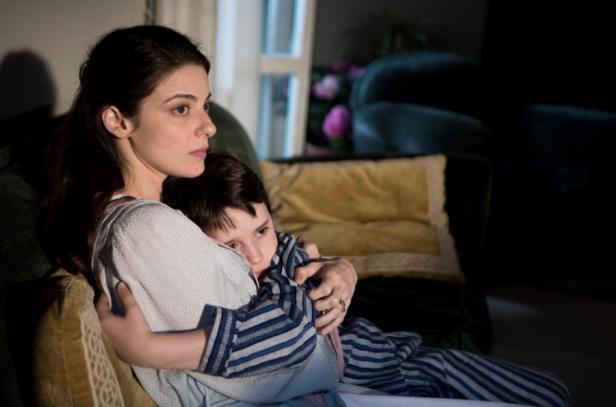
The title given to the English-subbed film seems to work slightly differently to the Italian title. Fai bei sogni via Google translates as ‘Have beautiful dreams’. This alternative emphasises that it is a line spoken by a mother to her young son. The film is an adaptation of an autobiographical novel by Massimo Gremellini and the script was written by Bellocchio with Valia Santella and Edoardo Albinati. At the age of 9 in 1969, young Massimo loses his mother. She tucks him up at night but the next day he learns that she has died from a sudden heart attack. This sudden loss will haunt him over the next thirty years. He will only learn what actually happened that night after his father’s death. This isn’t a spoiler since the narrative is not linear – it is established very early on that Massimo, now 39, is about to clear the family apartment in Turin. The narrative will continue to switch between Massimo’s early years (when he is played by Nicolò Cabras), his young adolescence (Dario Dal Pero) and finally as the adult Massimo (Valerio Mastandrea) during the 1990s.
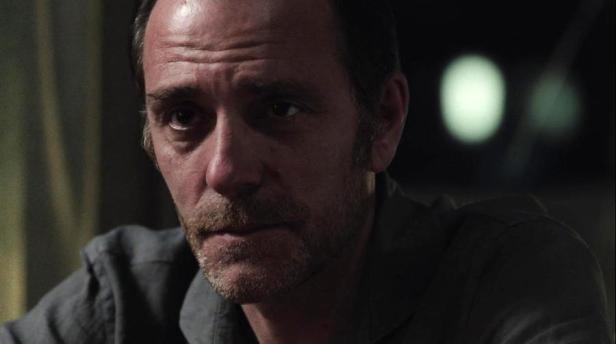
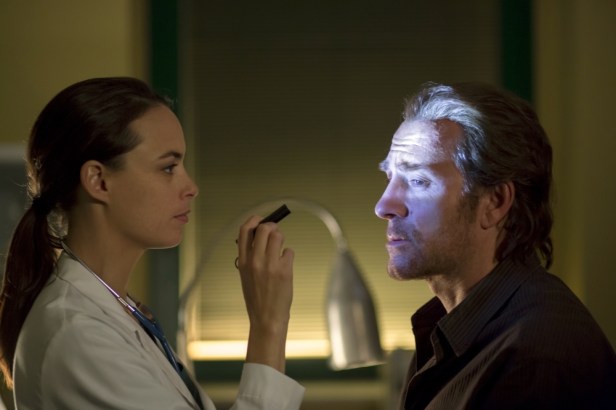
Non-linear narratives are often unpopular because they force the audience to work harder. But in this case, the narrative is not hard to understand. It has been very carefully organised so that it all fits together quite neatly, once you have sussed out the connections. In a melodrama, music is very important alongside a complex mise en scène and a focus on emotional relationships. The opening and closing song of the film, which is also featured in the narrative of Massimo’s new relationship in the 1990s, is an intriguing choice. Listed in the credits as ‘Night Twist’ it appears to have been written (and performed?) by David Mindel, a British writer, composer and arranger, in 2009 as a retro twist record. I think that The Twist dance craze lasted longer in Europe than in the UK/US but this may be simply a reference to Massimo’s mother’s own younger self as she dances with her son to the music she may have loved several years earlier. The Twist was most popular in the period 1959-62. Played by Barbara Ronchi, Massimo’s mother clearly enjoys games with her son but at other times appears sad and withdrawn. But for Massimo she is everything and remains so in his memory. Reading across reviews I see the familiar national typing applied to Italian men – they love their mothers, who are saints, but all other women are, if not ‘whores’, at least to be ogled and propositioned. In this sense, Massimo remains wedded to his mother’s memory until he meets a beautiful doctor played by Bérénice Bejo. My own view is simply that Italian cinema abounds with beautiful women. This film is a familiar Italian-French co-production so I wasn’t surprised at the appearance of the very wonderful Emmanuelle Devos as the mother of one of Massimo’s school friends. Unfortunately it is a small cameo role but it emphasises Massimo’s pain a few years after his mother’s death – so much so that he lies and tells people his mother is away visiting.
The other national typing is that as a traditional Catholic country, there is a form of conspiracy to keep death as a mystery rather than talk about it directly. The influence of the church, including at school, confuses the young Massimo who wants her back or alternatively to meet her in heaven. As a child, he and his mother watched a French TV series based on the figure of Belphégor, a supernatural character featured in several films or TV series. In despair the child turns to Belphégor, the phantom, for comfort. In the Press Notes for the film, Bellocchio explains his deep interest in the source novel and his adaptation like this:
This story struck me hard, deeply, because I saw many themes that I have often faced in my films. Family, mothers, fathers, the home in various time periods over at least 30 years, over a time of radical change in Italy. The changes in Italy are literally seen from the windows of his home . . .
One of the things seen by Massimo through his window is the Torino FC stadium, one of the few interests he and his father have in common. Torino suffered a tragedy in 1949 when most of the players and staff were killed in an air crash. The team were, in the 1940s, perhaps the most successful club in Italy but though they had moments after the crash they have never returned to the top for long and are now usually behind their city rivals Juventus. Nevertheless, Massimo became a fan and went on to be a sports journalist. Journalism and writing forms another narrative thread and it turns out that Massimo’s obsession with his mother’s memory carries through into this as well. In contemporary society there is a form of emotional ‘currency’ that can be exploited in both social media and the popular press and Massimo is perhaps not prepared for it.
I was surprised to discover that the writer of the original novel appears to have been criticised for a perceived move towards populism but this isn’t present in the film’s Massimo. Sweet Dreams strikes me as a sensitive exploration of the trauma that family and church engendered by not finding ways to tell Massimo the truth. I would recommend the film highly. It is streaming on MUBI, which also carries two later Bellocchio films, The Traitor (2019) and the documentary Marx Can Wait (Italy 2021). I’ve only just discovered these because of the odd way in which the films are presented on streamers. I’ll certainly be checking them out. Sweet Dreams is available on some of the main streamers in the US and the UK so shouldn’t be hard to find.
 itp Global Film