

David Leland died on Christmas Eve at the age of 82. I’d like to mark his passing by remembering some of his film and TV credits. His scripts and the films he directed all had for me a remarkable vitality and sympathy for young characters making their way in the world and older characters on the margins.

I first came across him because of his scripts for a season of school/youth dramas on ITV under the title of ‘Tales Out of School’. The importance of these TV plays/films is emphasised by screenings of each film (all between 70 and 80 mins in length) at the National Film Theatre before transmission on across four summer weeks in 1983. Each film had a different director so Leland’s was the underpinning ‘authorial voice’, though the directors each had their own approach. The standout film for many was Made in Britain, directed by Alan Clarke and shot by Chris Menges. It made Tim Roth an instant star as the skinhead would-be fascist. It was very tough for TV and I note that the Network DVD box set I bought a few years ago is certificated ’18’ – pretty rare for a TV series. I used this film extensively in my teaching and also one of the others in the season, R.H.I.N.O. (‘Really Here in Name Only’). This is about a girl who consistently truants from school and it was an unusual UK TV film in 1983 in featuring a Black schoolgirl. I last used this film in relation to Steve McQueen’s ‘Small Axe’ film Education (UK 2020) which deliberately attempts to represent the look of a TV play of the 1980s. (McQueen himself would have been a 13-14 year-old Black child in a London school that summer, I wonder if he saw the film on TV?). R.H.I.N.O. was directed by Jane Howell and again shot by Chris Menges. Margaret Matheson was producer for all four films. Deltha McLeod plays Angie, the girl at the centre of the narrative. Angie in effect ‘excludes’ herself from school, registering in the morning and then doing more interesting and possibly more interesting activities during the day.
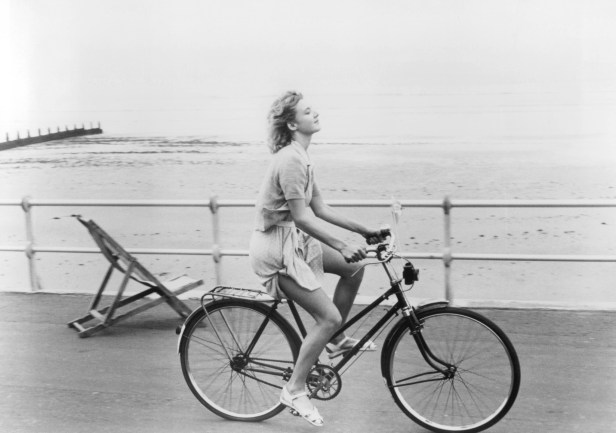
Leland had been an actor and then theatre producer before he first became involved in moving image production. He was the director at the Crucible in Sheffield in 1975 and he commissioned and produced Victoria Wood’s first play Talent. In my book that is reason enough to remember him but it is his role in writing and directing films which got him the most exposure. In 1986 he wrote the first script for Mona Lisa, ultimately directed by Neil Jordan in 1986. Ryan Gilbey suggests that Leland’s script was tougher and nastier than the one used in the finished film. See this Guardian Obituary by Ryan Gilbey. Mona Lisa features the great Bob Hoskins as a minor criminal who comes out of prison after conviction for a job he didn’t do. He gets a job as a driver for a stylish young sex worker played by Cathy Tyson. His only friend is Robbie Coltrane’s garage/workshop owner who helps him in his fight with the evil ‘Mortwell’, a terrific Michael Caine creation. In this film and with his two scripts for Wish You Were Here and Personal Services (both 1987) Leland continued to shake up a sad British industry in a state of decline. Wish You Were Here was Leland’s first attempt at directing a film and it made a splash at Cannes with a stand-out performance by its young lead Emily Lloyd. Set in a seaside town in the early 1950s Leland drew on stories told to him by Cynthia Payne who was prosecuted in 1980 for running a brothel catering to older ‘respectable men’ in her house in Streatham. Wish You Were Here drew on her teenage years and Personal Services on her experiences with the brothel. The latter film was directed by Terry Jones who Leland had met during his stint at the Crucible and it starred Julie Walters as Payne. Both films were played as comedies.
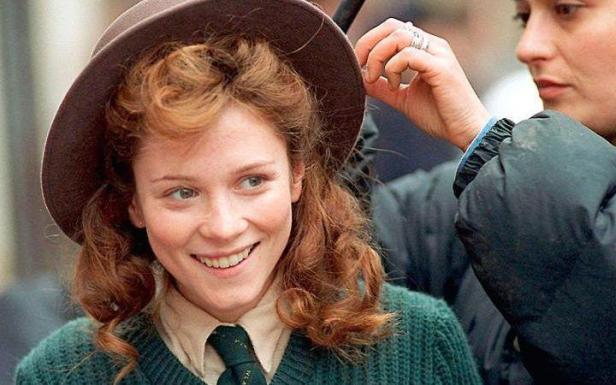
My own favourite film from Leland, which he wrote and directed was The Land Girls in 1998, an adaptation of a novel by Angela Huth about three ‘Land Girls’ during the Second World War posted to help out on a farm in Dorset. It starred Rachel Weiss, Catherine McCormack and a young Anna Friel in a ‘comedy melodrama’. The film was generally ignored or criticised but I thought it was very enjoyable and quite moving. Leland co-scripted the adaptation with Huth and it is clearly in line with his earlier work. Across his career a clear pattern emerges of a concern to represent young people, especially young women and in a couple of cases young people of colour. Each of these representations also engaged with social class and opportunities for working-class youth in the UK. David Leyland’s was an authorial voice we could do with today and I think of him alongside Ken Loach, Shane Meadows, Alan Clarke and early Lynne Ramsay.
 itp Global Film
Am developing a piece on Leland, well done for getting this out. I’m focusing on his two films with Payne, who I developed a friendship with years back. I know that some of today’s film-makers, like James Marsh, hark back to Leland, but it’s a real shame we don’t seem to develop such voices today.
LikeLike