
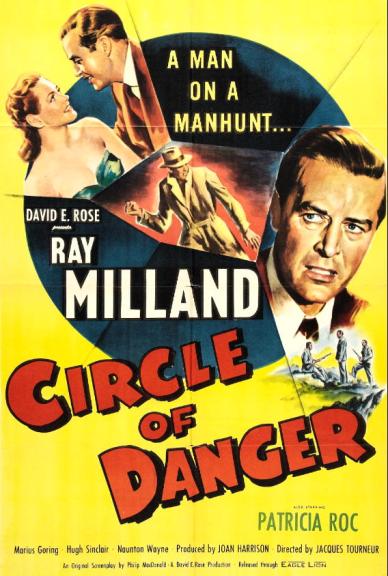
Although this is a conventional post-war drama (thriller is possibly pushing it too far) it is interesting because of its director and crew and unusual mix of British actors. As far as I can see it was made as an independent UK production from Coronado Productions, run I think by the American David E. Rose (not to be confused with the David Rose the British producer who was the first head of Film on Four). Coronado made British films with American stars in the lead roles. Some were set outside the UK, others featured American characters coming to the UK. Circle of Danger was produced by Joan Harrison who had gone to Hollywood with Alfred Hitchcock as a secretary and had developed a career as a writer and producer. This 1951 film has Ray Milland as the Hollywood star and it is directed by Jacques Tourneur. The film was distributed by RKO in the UK and Eagle-Lion in the US.
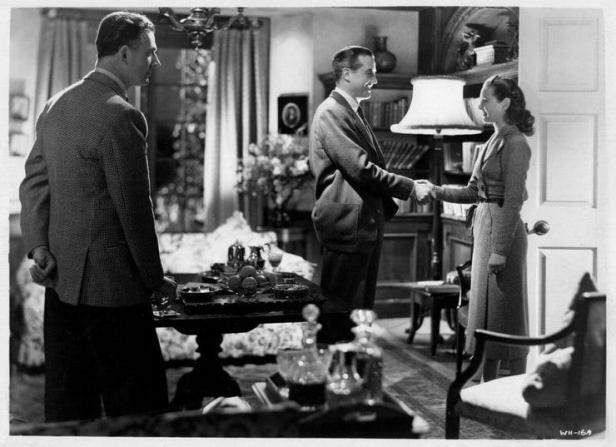
Milland (who was born in Wales) plays Clay Douglas an American whose wartime experience was in the Pacific War. As the narrative begins he has just learned that he has earned enough money to complete his mission – to find out how his younger brother, his only close family member, died during a British commando raid in Brittany just before D-Day. The brother had joined the British army in 1940. The main narrative is then set in the UK as Douglas tries to find the men who served with his brother and especially those who were with him on the raid in which he was killed. Douglas soon realises that he is not being told the full story and that each of the contacts he makes seem reluctant to speak about the raid. He travels to Wales to a pit village and then to the Highlands of Scotland to meet the officer in command of the raid. The remaining contacts are then to be found back in London. The narrative includes a romance in which Douglas attempts to win over Elspeth (Patricia Roc) a children’s author and illustrator who lives on the Highland estate but who also has a flat in London. In one of several connections, Roc, one of the leading British stars of the 1940s, had been directed before by Tourneur on the Hollywood Western Canyon Passage (US 1946). (Rank sent some of its contracted stars to the US as part of its policy of developing links directly with American studios.)
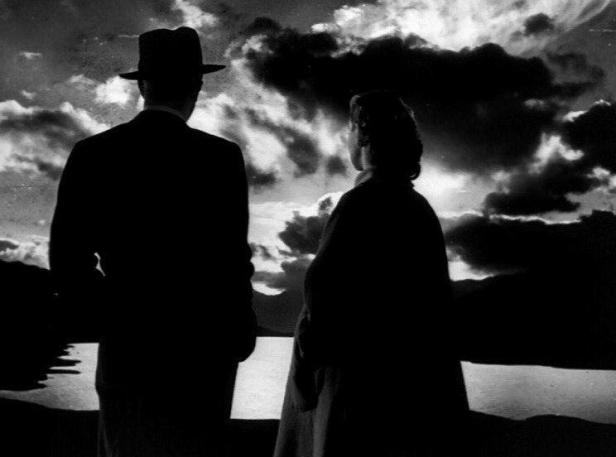
IMDb lists Dartmoor as a location, presumably standing in for Northern Scotland and Isleworth as the London Studio. There are various other locations but they may well be in the South West as well rather than the London they claim to be. Cinematography is by Oswald Morris, a major figure in UK cinematography here early in his career as DoP and his operator is Arthur Ibbetson. Gilbert (Gil) Taylor is credited with ‘additional photography’. All three were active across British shoots, including major successes over the next twenty-thirty years. Australian editor Alan Osbiston was an equally successful crew member in this period. The music score is by the Canadian Robert Farnon. Tourneur is a very interesting figure as the director. He never really received the full recognition he deserved and in the 1950s he was forced into a range of relatively low budget pictures. He had come to the fore working for the Val Lewton ‘B’ unit at RKO in the early 1940s making both Cat People (1942) and I Walked With a Zombie (1943) but had various triumphs on later films such as Out of the Past (1947) and the aforementioned Canyon Passage before his return to the UK for the wonderful Night of the Demon (1957). His skill as a director is on show here, complemented by the performances, the camerawork and the dialogue of Philip MacDonald, an experienced and prolific writer of novels and screenplays in both the US and the UK. However, the narrative is in the end not very exciting or particularly interesting about what was still a live issue in 1951.

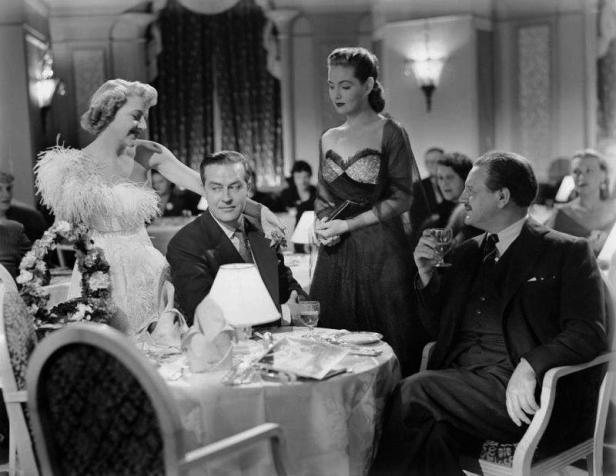
Monthly Film Bulletin‘s reviewer in June 1952 concedes that the “backgrounds are authentic” (even though the locations appear to be ‘stand-ins’) but argues that Milland plays the kind of American that English women are expected to fall in love with. Even though there were more difficulties in transatlantic travel in 1951 there were plenty of Americans in the UK yet this film seems intent on emphasising every ‘cross-cultural’ exchange between Douglas and the English, Welsh or Scottish characters he meets. He is presented as ‘brash’ and ‘loud’ and perhaps too quick to take offence. Most of the Englishmen appear ‘stuffed shirts’ as far as he’s concerned. There is also a tedious joke, repeated several times in which Douglas is unable to understand UK currency, i.e. £sd. These kinds of criticisms were also driven by the practice in British cinema of bringing in minor American stars or ‘B’ list stars to play in British films because the audience was thought to favour Hollywood style. And yet some of the casting decisions do seem to try to liven up the exchanges. Putting aside Edward Rigby as a Welsh coalminer, the most striking character is ‘Sholto Lewis’ played by Marius Goring who is third-billed. Playing at his most camp, Goring reminds us of his role as the Heavenly Conductor in Powell and Pressburger’s A Matter of Life and Death (1946). In this case he is a ballet choreographer and director following on from his position as the second in command of the Commando group after Hugh Sinclair’s Major McArran. These two men are perhaps the most likely to know what happened to Douglas’ brother. But there was also a third officer on the raid, whose job was to impersonate a German radio announcer. He is played by Naunton Wayne, probably best remembered as partnered with Basil Radford as ‘Charters’ and ‘Caldicott’, a pair of bumbling cricket fans appearing in films like Hitchcock’s The Lady Vanishes (1937) and Carol Reed’s Night Train to Munich (1940). Wayne brings some of this persona with him in his role as ‘Reggie Sinclair’ who was the ‘outsider’ on the commando raid and is now a second-hand car salesman, not averse to conning Douglas for a few pounds but also perhaps more likely to tell the truth about what happened? Wayne’s role is ‘enhanced’ by partnership with Dora Bryan as ‘Bubbles’ the nightclub singer. Bryan like Wayne often combined comedy and dramatic roles, albeit in a very different social class context.
Chris Fujiwara the American film critic, writer and programmer wrote a book on Jacques Tourneur and his films in 2001 in which he makes several observations about this film. He notes for example that it is difficult to tell who the assumed audience for the film is. I’ve noted already the tediousness of the repeated misunderstandings between Douglas and the people he meets, based on familiar social types. I imagine American audiences might struggle with Wayne and Bryan. He also makes a good point about the fluidity of the camerawork but then spoils it by suggesting that the film looks a lot better than the average British film of the period. I don’t agree with the implication that British films are badly photographed, but I do agree that the film looks good (with its three British camera inputs). A second Fujiwara point is that Douglas is himself something of a mystery. It’s not completely clear why he has saved money to make the trip and what he hopes to achieve if he does find out the truth about his brother, though we are given some clues. The presentation of the character is not without ambiguity, Douglas is played by a Welshman, albeit one with American experience. There is discussion of his Scottish heritage and Elspeth is keen to tell him about the evil Douglas clan members who led Mary Queen of Scots into danger. Fujiwara argues that the conversation and the camera both sometimes slide away from the ostensible purpose of a scene as if there is more to Douglas than the quest he proclaims.
I think that for me, the tension in the narrative comes partly from the ‘romance’ between Douglas and Elspeth. I wasn’t convinced by the attraction between the two. I also found myself wondering about the theme of the film – the search for truth about a wartime incident and why the film didn’t explore film noir ideas. The consequences of coming back from the war with ‘issues’ or unresolved questions is certainly a strong element in British noirs. If it was a noir narrative, the role of Elspeth would be more defined, either as a supporter or betrayer of Douglas, perhaps. The ending of the film feels changed and we suspect that Tourneur was possibly deprived of the logical ending and stuck by his producers with the conventional. Fujiwara suggests that it is reminiscent in some ways of Lang or Hitchcock in the 1940s, though he also suggests that Renoir’s The River (1950) is similar with its American seeking some kind of spiritual goal in India.
I like Tourneur a lot and I’m planning to watch a few more. I’ve discussed the flaws in this film but I still think it can be enjoyable to watch. I watched the Network DVD with its very good transfer of film materials but I think the film will also be available online.
 itp Global Film