
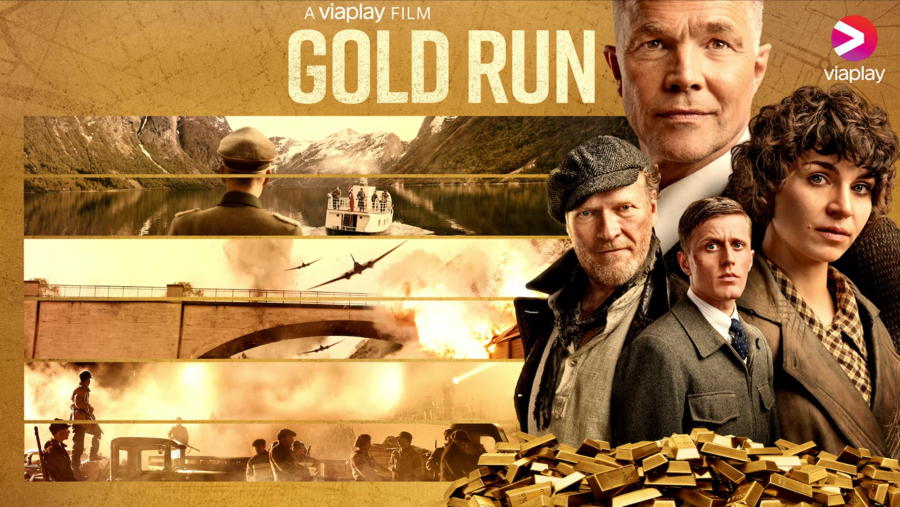
Now available on BBC iPlayer for a year, Gold Run is a Norwegian film made by 74 Entertainment and the Swedish streamer Viaplay, a company that appears to have grown rapidly and entered many national markets recently but has now pulled back to concentrate on ‘core’ Nordic markets. Gold Run is an action film based on a true Second World War series of events that have been ‘spiced up’ as popular entertainment. A friend recently told me that she was fed-up of Second World War films and in the UK it does seem to be the case that many such films in recent years have been branded as nostalgic or even Brexit-supporting ideological vehicles. I think this is sometimes unfair and inaccurate but it is interesting that in other European countries we have seen films which explore several different aspects of wartime experience and which have proved popular in their domestic film and TV markets.

Gold Run reminds me of the earlier Second World War film, Max Manus (Norway-Denmark-Germany 2008) in that it is based on real events at the moment of the German invasion of Norway in April 1940. Max Manus goes on to tell the overall story of the exploits of its titular character throughout the war, whereas Gold Run confines itself to the first few days of the invasion. Essentially, the story is about the attempt to move Norway’s gold reserves out of the country at the very moment when the invasion begins. Norway had only a small population in 1940 for quite a large country and the Norwegians hoped that British and French military forces would come to their aid in order to deny the German invaders gaining access to ports and the resources of Northern Norway in particular. The Allied forces did appear but they were ill-prepared and forced to withdraw. Norway finally fell completely under German occupation by early June 1940, but a government in exile was quickly established in London and that’s where the gold was initially heading.
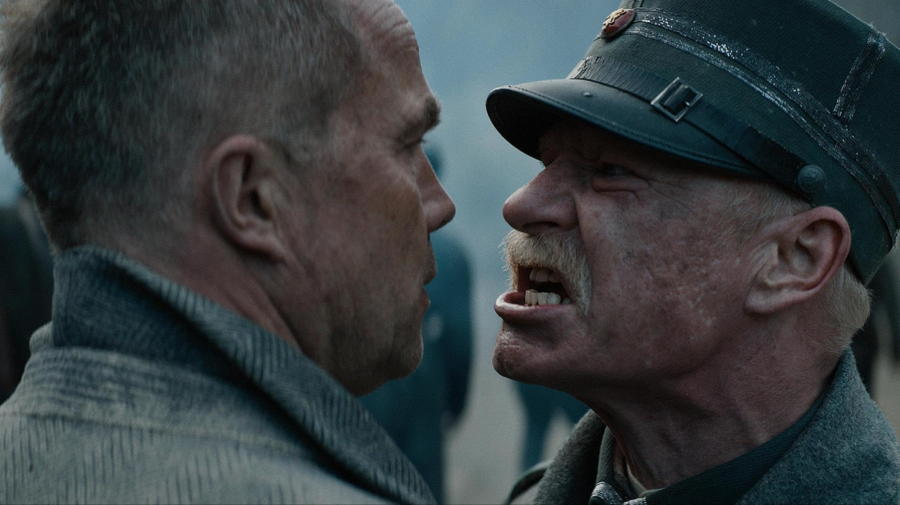
This film is in one sense a tribute to a group of brave Norwegians who accomplished a difficult task in wartime and the end credits follow the convention of telling us what happened to three of the principal characters over the course of the war. But overall it is a popular entertainment, driven by conventions. It is slightly difficult to comment from a UK perspective since I didn’t recognise many of the actors, although research suggests that they have been in Norwegian and international films and TV that I have seen in the UK and others might be stage actors in Norway. The lead character is Fredrik Haslund (Jon Øigarden), a senior official at the Norwegian Central Bank who is also a Labour Party member. He is directed by the Minister of Finance (of the Labour government) to transport the nation’s gold reserves to safety. This means finding trucks and eventually a train and a ferry to keep ahead of the invading Germans in the hope of finding a British warship in a Northern port. One of the recurring conflicts throughout this journey is Haslund’s meticulous recording of each box of gold bars (weighing 53 tons tons) which frustrates the Norwegian Army major whose small attachment of soldiers accompanies the gold. He, not surprisingly wants the gold unloaded and loaded for the next part of the journey as quickly as possible.


The narrative ‘personalises’ the story by focusing on Haslund’s family. His wife and child have to be left behind to make their own way to neutral Sweden. His younger sister Nini (Ida Elise Broch) is with the family and she becomes the female lead as a younger and more glamorous woman who has experience of war in Spain and is therefore suited to more dangerous missions. The Haslunds are ‘real’ characters, as is Nordahl Grieg (Morten Svartveit) who was a celebrated poet, novelist and war correspondent who had joined the Norwegian military. These three characters are the ones whose biographies appear in the end titles. Other characters include a kind of comic duo in the form of a rather ‘wet’ young bank employee who finds a truck for the gold driven by an older rougher character and the officer in charge of the German forces chasing the gold. He appears to be a kind of pantomime villain. In a sense, it is these latter three characters and the application of all the CGI which lets the film down for me. The Germans are far better equipped and trained and enjoy air superiority. Yet they still can’t capture the gold and despite air attacks and heavy gunfire, all the Norwegians appear to survive. On the plus side the photography of the fjords is stunning and to some extent makes up for all the CGI – the German aircraft in particular fail to represent any Luftwaffe aircraft I’ve ever seen. The film is directed by Hallvard Bræin who photographed The Troll Hunter (Norway 2010), an enjoyable horror satire which did make it to the UK.
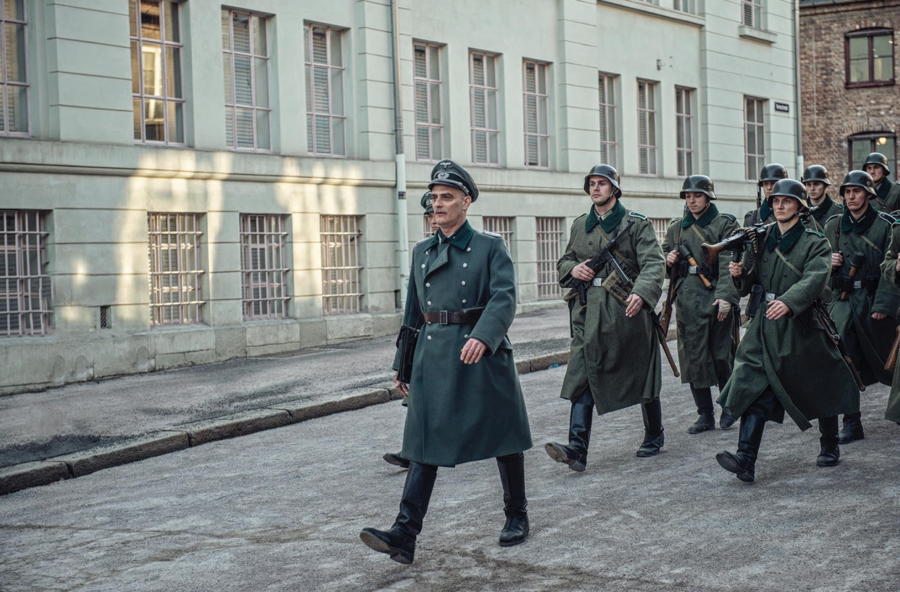

No doubt the film would be read differently by the Norwegian audience and indeed by a wider Nordic audience but it is interesting to find a film about an important Norwegian ‘national narrative’ – the Norwegian king is briefly seen boarding a British ship along with some of the gold. The historical events are described on this Wikipedia page. The film appears to have been released online via local streaming services in several international territories as well as on iPlayer in the UK.
 itp Global Film
I watched the title on the television channel. It is entertaining, though as Roy notes, fairly conventional. And the CGI is fairly obvious. I was frustrated that we did not get more of the back stories; especially of Nini and Nordahl. I have not come across a Norwegian supporting the Spanish republic, though it makes sense. It was not clear to me what exactly was Nini’s role in defence of the republic?
LikeLike