
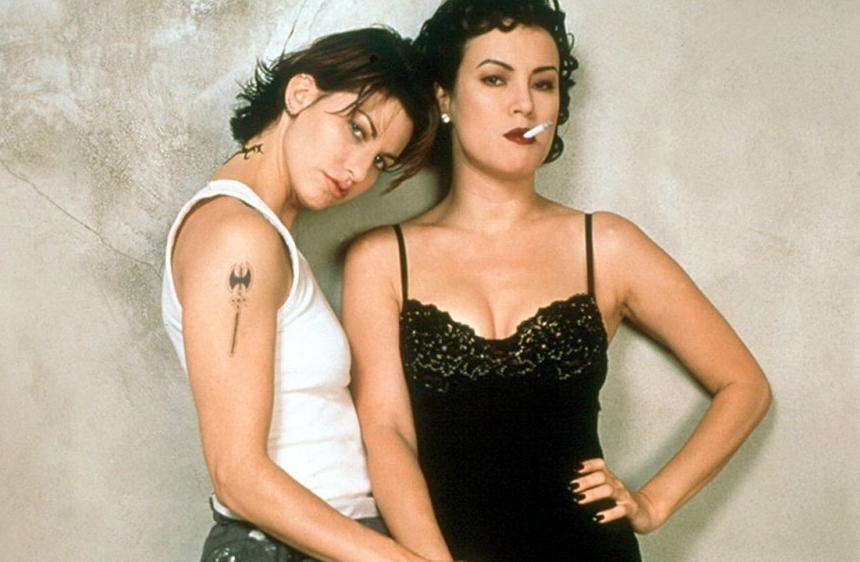
MUBI is streaming this film in one of its strands entitled ‘Bound By Desire: Erotic Thrillers’. So far, there are just three films in the strand but MUBI seems to have placed other films which might be included under this title in different strands, a good example being Jane Campion’s In the Cut (Australia-UK-US 2003), perhaps her most controversial film which received many negative reviews at the time but seems to be gradually building a critical following. As is its wont, MUBI lists Campion’s film under three different strands but not ‘Erotic Thriller’. Yet in several ways In the Cut might be considered a form of ‘erotic thriller’ which is the title of an essay included in the ‘Bound by Desire’ strand. The concept of the erotic thriller does seem to keep resurfacing every few years and I think it’s an intriguing concept that should be more widely discussed, but first, back to Bound which I remember being released and highly praised at the time. I couldn’t get to see it then so I’m glad to have the opportunity now.
Bound is an independent film produced by the Dino De Laurentiis Company and Spelling Films and distributed in the US by Gramercy during the period when parts of the film industry were in flux – Gramercy was part of the process that saw Universal being bought by Seagram and Spelling Films by Viacom (Paramount). For that reason the film may not have got all the distribution promotion it deserved. IMDb suggests a production budget of $4.5 million (though Wikipedia cites $6 million) and a worldwide gross of $7.3 million (incl. DVD etc.). I think it should have made more. The film was the debut feature for the Wachowskis who were brothers then but are now Lily and Lana. They wrote and directed Bound and the industry recognition that followed helped them to make The Matrix three years later.
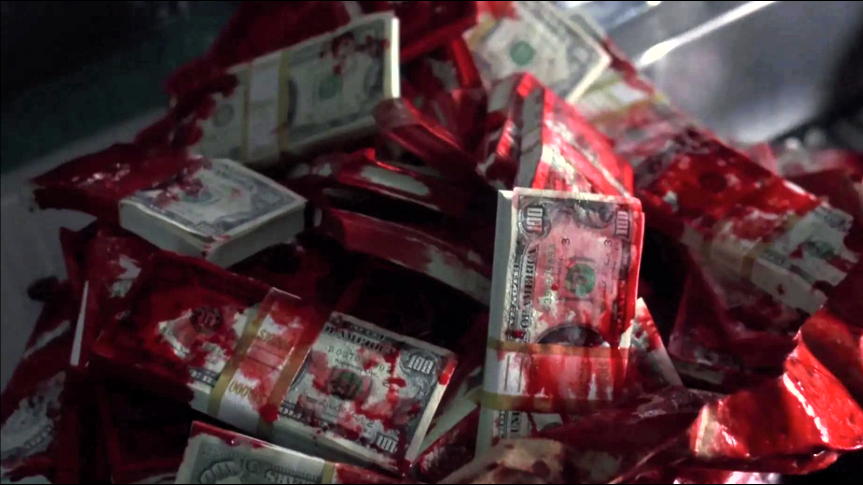
Is Bound an ‘erotic thriller’? I wouldn’t categorise it that way but what is important is the recognition that this was the first film to have a lesbian relationship between two lead characters but not to make that the defining element of the genre categorisation. The first encounters between Violet (Jennifer Tilly) and Corky (Gina Gerson) are certainly alive with erotic tension and do lead to a couple of sequences which no doubt earned the film its ‘R’ rating in the US. IMDb also suggests that there is an ‘Unrated’ version of the film. But the physical sexuality of the couple is mostly confined to the first 25 minutes or so of the narrative. The rest of the narrative is defined by its gangster crime content. Violet is the girlfriend of Chicago mobster Ceasar (

Even though the sex between Violet and Corky is only briefly shown, the film does contribute to a feminist/lesbian attack on the patriarchy. Corky is recognised by the gangsters as a ‘butch dyke’ who they despise, but who they recognise is potentially dangerous. Violet acts as a traditional feminine ‘girlie’ when she is with Caesar. The gangsters therefore underestimate her. She may not have Corky’s experience or toughness, but she isn’t stupid. Taking her to be so will be their undoing. There is a detailed discussion of lesbian responses and criticism of the film on its Wikipedia page, which is well worth accessing. For instance, it turns out that the Wachowskis employed an advisor (what might now be termed an Intimacy Advisor) before such a thing became standard to advise on the sex scenes and generally to to make the relationship between the women more credible. The two actors were initially unsure about the scenes. My impression is that attitudes may have modified since the film’s release in 1996. My own view is that many of the negative comments now don’t run true but I do agree that it would have been interesting to see more of the relationship between the two women and how it developed. Quite a few commentators find the film too violent. I’m not a big fan of ‘ultra violence’ but here I think the torture of one character and the shootings of others has a logic. These are close members of an organised crime group faced with betrayal on the one hand and and an affront to their sense of masculinity. They are going to act violently. Also, the film is a fantasy of sorts. The Wachowskis have said that the central theme was developed around ‘boxes’ – most people accept being in a box and can’t escape by thinking outside the box or knocking down the walls. The gangsters can’t ‘read’ Violet as anything but a sweet ‘girlie’. To emphasise this, virtually all the action takes place in the two apartments. We never see any other people in the apartments or in the gated car parking in front of the apartment block.

The film is also strong in terms of sound and image. Cinematography is by Bill Pope who has recently worked with Edgar Wright on Baby Driver and two other titles and who went on from Bound to shoot The Matrix. He’s had a career rich in credits and his willingness to work quickly and inexpensively on Bound was a real bonus for the production. The music is by Don Davis and includes licensed tracks by Aretha Franklin and Ray Charles plus a couple of well-known songs sung by cast members. For a low budget film it’s pretty classy.
Bound is available on Amazon as well as MUBI in the UK. Here’s the scene when Corky first meets Violet properly, having seen her in the lift:
 itp Global Film
I saw this at the Glasgow Film Theatre when it came out and was impressed; it’s a lot more classy as you say than most ‘erotic thrillers’ and there’s clearly talent there. I’ll give it another shot on your recommendation, good spot!
LikeLike
I did see this on release and enjoyed it but don’t recall it as a particularly erotic thriller, though the chemistry between the two leads was palpable. Joe Pantoliano aka Joey Pants is one of that select group of actors that I recognise as popping up in films that I recognise as ‘quality’ genre offerings, such as this one, the first Matrix and ‘Memento’. He always brings his own distinct sleazy charisma to any role.
LikeLike