
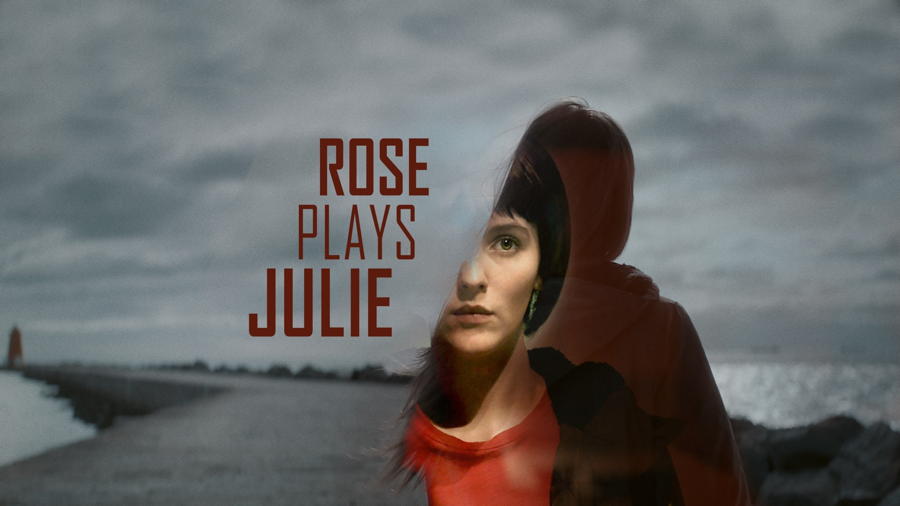
This fiction feature by Christine Molloy and Joe Lawlor preceded their documentary The Future Tense by three years but seems to have had a delayed UK release, presumably because of COVID. I’m very pleased that MUBI are streaming it in their Lawlor-Molloy mini-season under the filmmakers’ ‘The Desperate Optimists’ company name heading. The couple suggest that this is their “most accessible film yet” and in the sense that the genre elements of the narrative and aspects of its aesthetic are more familiar, they are no doubt correct. But it will still be a challenge for those audiences who lack patience and who shy away from deep engagement and simply want ‘entertainment’. I was left stunned by the icy control over the story expressed through the script, performances, cinematography, music and Christine Molloy’s crisp editing. It’s a terrific example of craftmanship and artistry working together.
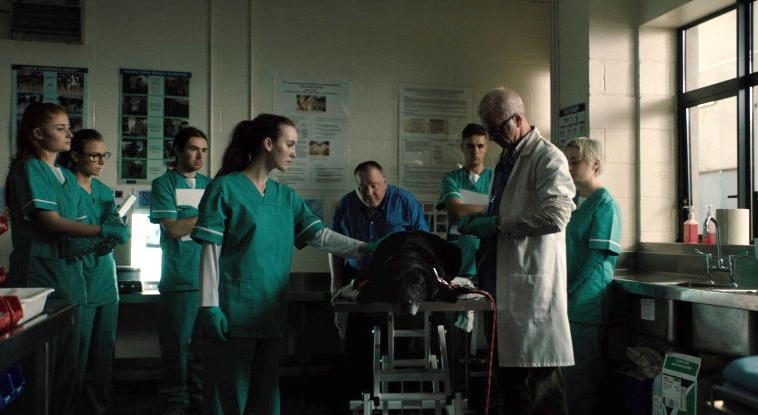
I feel at a slight disadvantage since most reviewers seem unable to discuss the film without recourse to Greek tragedies and mythologies. As someone without a literary background and very little knowledge of classical Greek dramas, I did, however, manage to make sense of this story set in contemporary Ireland. Having said that, this is not a realist film as such. The central character is Rose (Ann Skelly) a young woman in her early twenties studying to be a vet. When we first see her in a lecture theatre she is about to learn about the euthanasia of healthy animals, including those whose owners are unable or unwilling to keep them. This rather dark and distressing study topic will stay with Rose, and us as the audience, for quite a while and it introduces the tone of the narrative. The ‘unreality’ of the narrative is there in the locations. I know the Irish economy is doing fairly well but everywhere Rose goes seems to speak about wealth. Her college has beautiful, spacious study rooms for every student. Rose seems to have enough money to go where she wants when she wants. The places she visits have no crowds, only beautifully-maintained houses etc. As the title suggests, Rose faces a question of identity and she seems prepared to adopt another identity in pursuit of what she needs to find out. In the first shot of the film we see Rose from behind as she looks out over a causeway and a lighthouse (see the poster above). We hear her thoughts addressing the person she wants to seek out.
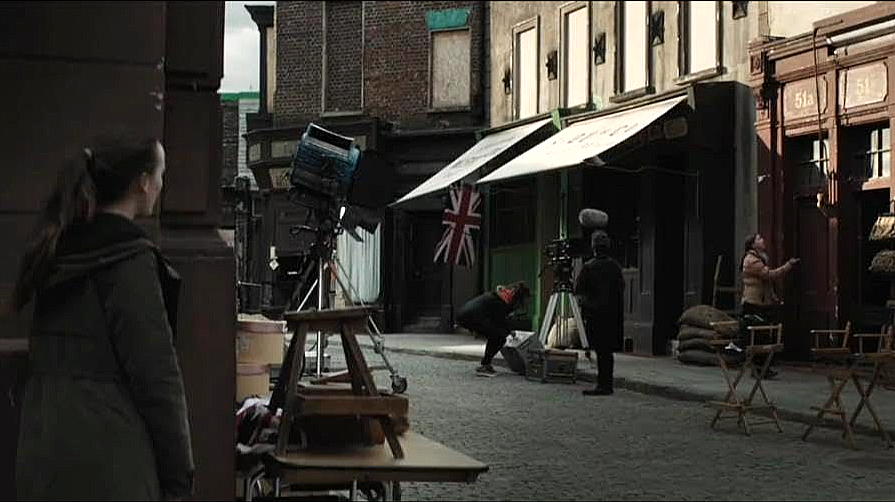
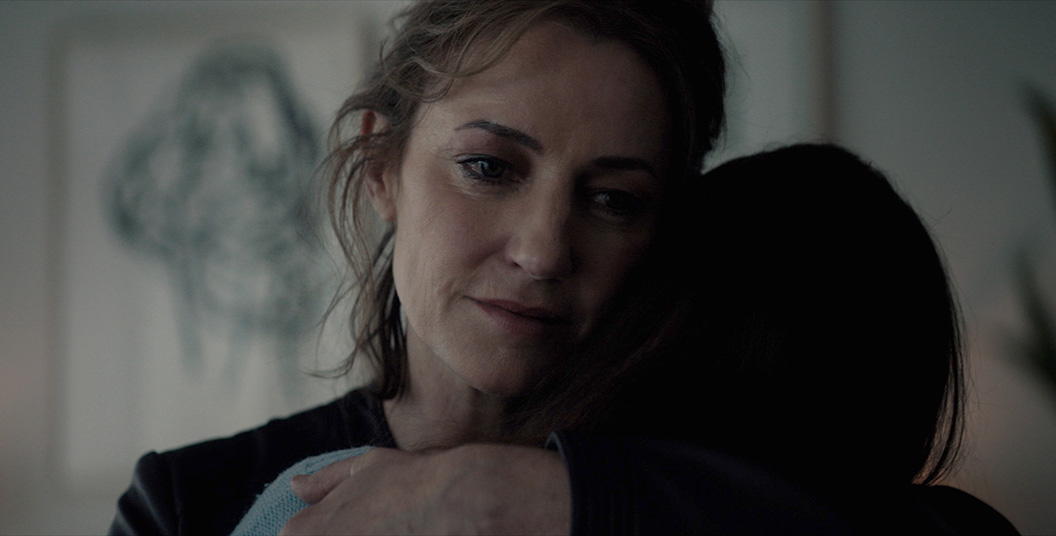
Soon we learn that Rose is an adopted daughter and the person she seeks is her birth mother. Despite her birth mother having signed a declaration forbidding contact with her daughter, Rose is determined to find her. Ellen (Orla Brady) turns out to be an actress who has migrated to England and now works in film and TV. Rose tracks her down and discovers her house. She is a determined investigator and when Ellen takes a job in a period drama that brings her to Dublin, Rose sets out to meet her.
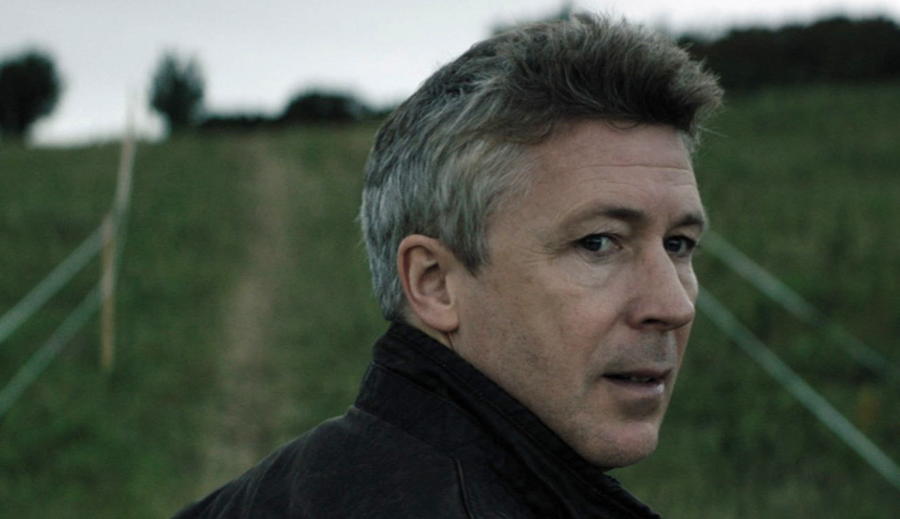
I’m not going to spoil the whole narrative, but Rose prises the identity of her father out of Ellen and, having heard Ellen’s story, she plans to entrap him. He’s played by Aidan Gillen as a celebrity archaeologist, Peter Doyle, and the final section of the film moves into thriller territory as Rose, now wearing a wig to create a bob hairstyle, prepares to become Julie, the name that she was born with. The events of 20+ years ago become a focus for Rose, Ellen and Peter and the film’s resolution is, as many reviewers point out, both anticipated but also shocking and disturbing. The final section works because of the performances. Aidan Gillen (who has appeared on several occasions for Desperate Optimists) uses his voice well, suggesting a rather pathetic character in what is essentially a ‘villain’ role.
My earlier comments about the accessibility or ‘challenge’ of the film are mainly concerned with its slow pace and very still moments. I’m not sure why slow pacing is such a turn-off for many audiences. Is it a function of watching too many Hollywood action movies? The pacing in this film is deliberate. It isn’t as if nothing is happening. Ann Skelly as Rose/Julie is mesmerising and I was startled by the impact of the wig. I appreciated the time allowed to the audience to think about what was happening and the dilemmas presented to us. I did think about how anyone might behave towards their birth parents whom they’ve never known and how they might feel very differently about one rather than the other. Rose might have always ‘felt’ something without knowing what it was. What is particularly impressive is that the slow, deliberate pacing pervades the final section of the narrative as well as the earlier setting up/investigation. The sense of dread works well for a suspense thriller. The calmness of the final section is arguably more disturbing because of this.
I’m trying to summarise the film without revealing plot details and it’s very difficult. I recommend the film very highly and after you’ve seen it I’m sure you will want to ponder a number of issues. One might be the links to #MeToo questions but the film appears to have been in preparation well before the current campaign and the issues raised. Other reviewers suggest that this is a ‘universal story’ (which fits the classical Greek drama references). The script carefully sets up the theme of uncovering histories and identities – archaeology as digging up the past, acting as a career (we see Ellen in two roles on set in historical dramas). ‘Universality’ also precludes issues that might have arisen re Irish social history. This is a disturbing film in several ways.
Rose Plays Julie is available on several streamers. Be careful with trailers that give away narrative details. Here’s Mark Kermode introducing the film for BFI Player in the UK and he is careful not to spoil the narrative:
 itp Global Film
I remember seeing this at the museum a few years back when a few more challenging films found their way into the Cubby Broccoli screen. It took the viewpoint of the disaffected Rose rather well and the various characters in juxtaposition with her also came across as drained of emotion, particularly Aidan Gillen in his final scene. Chilling, and worth seeking out, but not too much in the way of the catharsis that might be expected from a standard revenge flick.
LikeLike