
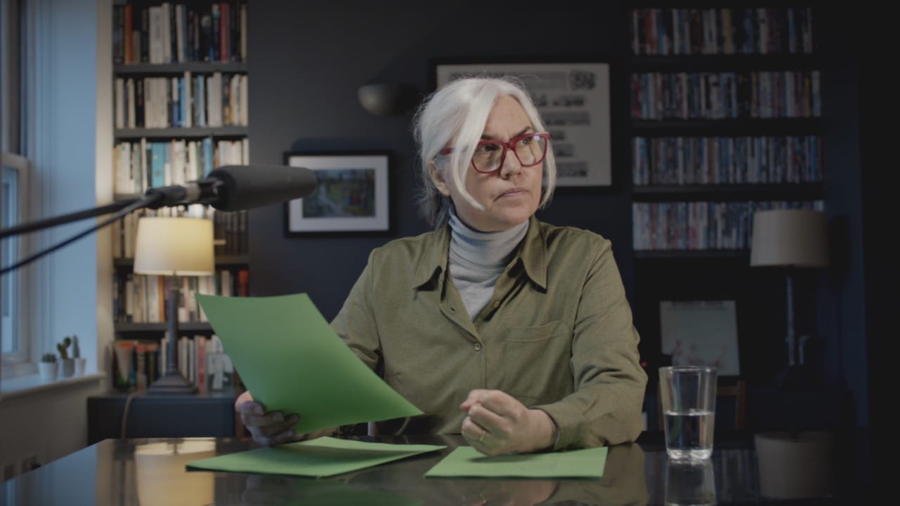
This is a very affecting film for me. Joe Lawlor and Christine Molloy have made several films together since moving from Dublin to the UK, initially to Dartington Hall College of Arts in Devon to study and then to London. They began making short films and video art pieces in a community arts context and then moved to features under their ‘Desperate Optimists’ banner. Now they are considering moving back to Ireland to escape Brexit Britain which, not surprisingly, they see as ‘nuts’. This film is a form of documentary or ‘essay film’ as some reviewers have called it. It is both ‘performative’ and ‘self-reflexive’, about why they might return and what it might mean. The narrative is structured around a flight from Stansted, an airport 42 miles NE of London, to Dublin. Conceived as a film production before Lockdown, Joe and Christine find they can’t employ actors to read their thoughts so they must read them into a microphone themselves. At first Joe seems quite uncomfortable doing this whereas Christine ‘performs’ her reading impressively. But as the film progresses, Joe becomes more fluent.
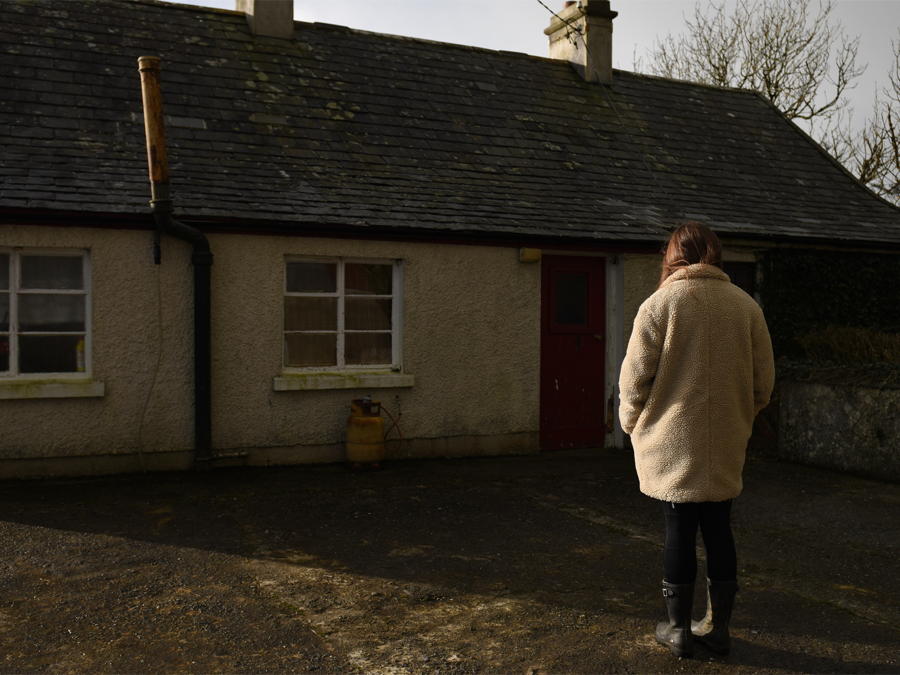
The ostensible purpose of the flight is to allow the filmmakers to scout possible locations for a film about Rose Dugdale, the English débutante from the 1960s who became a fervent supporter of the IRA and stole a number of valuable paintings in Ireland in 1974 in order to help fund IRA activities. The second purpose is to search for a potential new home in Ireland for the Lawlor-Molloy family which includes their daughter Molly, who also stands in for Rose Dugdale during the location recce. But though these are the two main reasons for the trip, both Lawlor and Molloy find themselves thinking about identity and how some places seem to absorb and radiate the ‘human feelings’ of the residents. Because of this, the documentary becomes concerned with important periods in the ‘crisis of Irish identity’ on the one hand and the personal history of John Lawlor’s family on the other. This leads the couple to discuss the possibility of moving to the Aran islands off the coast of County Galway. They also discuss the crisis of the Irish language and Christine bemoans the fact that she can’t speak Gaelic very well despite studying it at school for 14 years. The ‘crisis’ of identity is explored through the 1849-52 Irish famine during which thousands died in the West of Ireland because of British policies and also the tragic story of Joe Lawlor’s mother who experienced primitive mental health treatment. They bring the family history to life with old photographs and video/film footage and interviews.

I have several personal responses to the film. Born on the Lancashire coast of the Irish Sea I would listen to commercial Irish radio as a child and I’ve travelled to Ireland several times for both work and for holidays. I wish I had Irish ancestry but all I’ve found is an ancestor who taught music in Dublin in the 19th century. My brother married an Irish migrant to England, but she wanted to leave all thoughts of Irishness behind her when she arrived in the UK in the 1950s. It’s amazing how strong emotions are about what it means to be on one side of the Irish Sea rather than the other. In landscape terms there are distinct similarities between ‘Great Britain’ and Ireland but the feelings the landscape engenders can be very different.
I realised watching the film that I’ve seen at least two of the films made by Lawlor and Molloy but I don’t seem to have written about them. Their films have been received as forming part of a ‘new wave’ of Anglo-Irish art cinema, financed as this one is by the Arts Councils and state film agencies of both Ireland and the UK. The background to one of their earlier films, Mister John (Ireland 2013) is discussed in The Future Tense and it seems that several of the couple’s films are prompted by their family experiences. I think I enjoyed this documentary more than the earlier films which though interesting were perhaps less engaging for me. With this new film I feel much more connected to the filmmakers’ concerns and I recommend it. It certainly got me thinking about feelings and memories and the power of landscapes. The cinematography by Joe Lawlor and the music by Stephen McKeon are important elements in the presentation of ideas. The Future Tense is released by MUBI in the UK. Here’s a useful trailer:
 itp Global Film