

The French take on #MeToo and the gender disparity of filmmakers able to see their films in distribution may not conform to the Anglo-American model but the rise in the number of début films by women continues unabated. This one by Céline Devaux is an 80:20 French-Portuguese production currently streaming on MUBI and the MUBI channel on Amazon but not yet in UK theatrical distribution. It might be described as a ‘quirky French rom-com’ but if so, I suspect many possible audiences might run for the hills immediately. A better description might be a mix of screwball comedy and romantic drama as suggested by Meredith Taylor from Filmuforia. Here I’ll just outline the ingredients of the story.
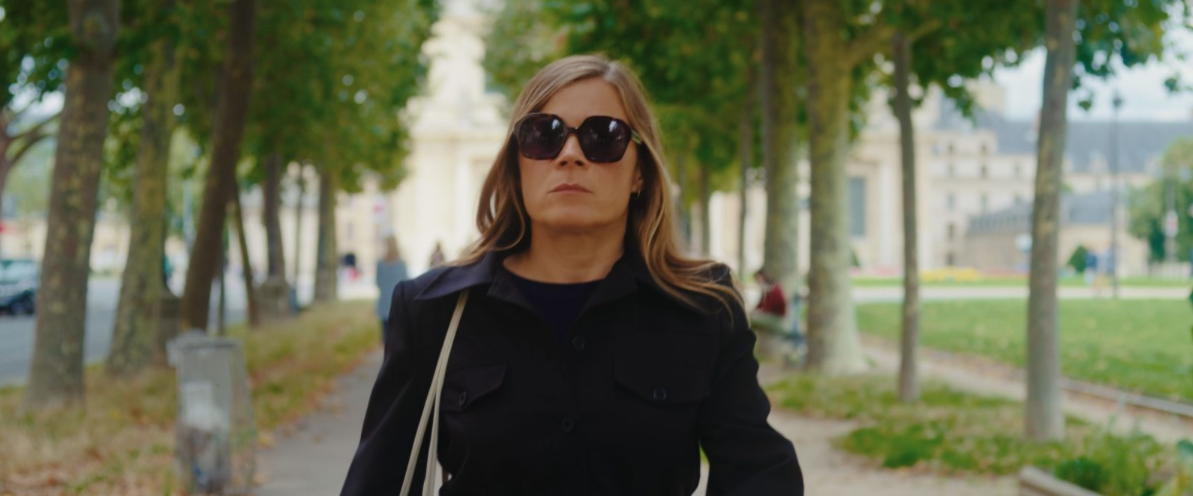

Jeanne (Blanche Jardine) is a single woman in her early forties. At the beginning of the narrative she is recovering from two potentially devastating experiences. Her business venture, a new technology that aims to attract and collect plastic waste in the ocean, fails disastrously in its initial trials and she faces personal bankruptcy. Her mother (a non-speaking part for Marthe Keller) ended her life a year earlier by jumping from a bridge over the Tagus in Lisbon. The outcome of these two events is that Jeanne really only has one choice – to travel to Lisbon to sell her mother’s large flat in which she and her brother Simon spent much of their time growing up. Simon (Maxence Tual) is supportive. On her flight to Lisbon, Jeanne meets Jean (Laurent Lafitte) who at first she doesn’t recognise but who turns out to be an old school classmate and when she arrives in Lisbon she meets Vitor (Nuno Lopes) an old boyfriend. Over the next few days, as Jeanne tries to make sense of the situation she finds herself in, she spends time with both Jean and Vitor (who are aware of each other’s interest in Jeanne). Both men appear at various times to be accompanied by children – their own or relatives and both men are actually married but that doesn’t seem to stop them pursuing Jeanne. The other ingredient in the narrative is the interior voice that Jeanne experiences and which writer-director Deveaux represents through animation sequences appearing full screen across the CinemaScope frame. The figures in the animated sequences are difficult to describe but you can see them in the image here and in the video clips below. It’s also worth pointing out at this stage that Céline Deveaux is a successful animator and that she had already released two prize-winning short films. Tout le monde aime Jeanne was screened at Cannes and nominated for the Camera Prix.


I confess that when Jeanne is first spotted by Jean at the airport and introduces himself I did wonder if I could stand watching his character – he is brilliantly presented but very annoying. I seriously thought of abandoning the film but I had liked everything else in it, so I stuck with it. I never did warm to Jean completely but he did seem to have a positive effect on Jeanne. The issue here is that Céline Devaux is attempting something quite difficult – a comedy about depression. As the director suggests in the Press Notes, Jeanne is a real hero. She wants to save the planet with her invention but she is well aware of all the crap things that are happening in the world all the time. Jeanne recognises that she is depressed, mainly by these two major events, but perhaps also by other aspects of her life. The internal voice, animated on screen, is mocking and accusatory, but also possibly a form of defence mechanism or at least, by stimulating an internal dialogue, a prompt to understand herself? Jean is a character who seems to know about depression and he is capable of disruptive (and possibly criminal) behaviour. His insights, however, do seem to be beneficial for Jeanne. Her mother makes ‘appearances’ in Jeanne’s fantasies around the flat and there is a very moving sequence in which Jeanne remembers her younger years with her mother and Simon, while going through her mother’s wardrobe.
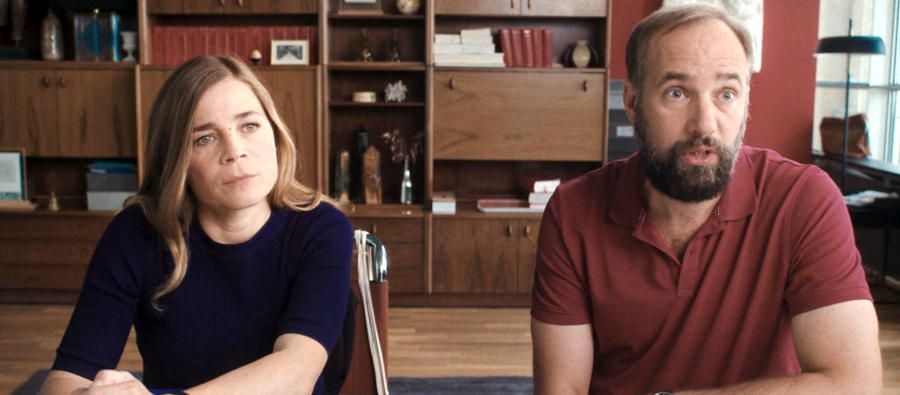

The film has several strengths. The performances or all very good and although the leads are all accomplished actors they do seem like ‘ordinary people’ rather than star actors playing roles. There are also several children in the cast who also seem to be playing themselves. I like the music by Flavien Berger and both the flat with its detailed mise en scène and the photography by Olivier Boonjing of the streetscapes and beaches close to Lisbon is a joy. Deveaux explains that she chose to set most of the film in Lisbon because of the beauty of the city but also because of the quandary the city finds itself in, devastated by economic crises which have required a greater reliance on tourism for income. This perhaps partly explains the role of the flat in the narrative. At one point, an estate agent arrives, a British woman who speaks English to Jeanne but who uses ‘elevator’ to refer to the lift which I thought odd unless she is so used to Americans in the city. Less noticeable is the fact that although Jeanne and Simon must speak Portuguese fairly fluently given their childhood in the city, most of the dialogue in the film appears to be in French.

‘Romcoms’ usually have ‘happy endings’. In this film there is a resolution of sorts that could lead to a conventional happy ending. I won’t spoil the narrative but I note some reviewers seem to think there is a conventional shift in the narrative which “isn’t very feminist”. I’m not sure about this. What I will say is that Simon turns up in Lisbon in the latter stages and he’s a very positive presence. I actually really enjoyed the film and I would recommend it. I hope some enterprising UK distributor picks it up and releases it in UK cinemas.
 itp Global Film