
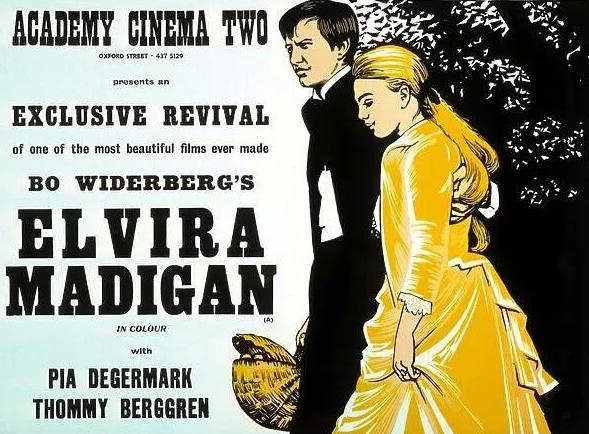
1967 is remembered in Europe and North America as ‘the summer of love’ with its hippy associations. Intriguingly it was also the year in which three romance movies with standout performances and successful musical scores entranced audiences across Europe and North America. Hollywood produced The Graduate with Dustin Hoffman and Katharine Ross, directed by Mike Nichols and with a music score by Simon and Garfunkel. In France, Claude Lelouch directed Anouk Aimée and Jean-Louis Trintignant in Un homme et une femme with a score by Frances Lai (OK, it came out in France in 1966 but it was 1967 before it reached the UK). But my concern here is Elvira Madigan starring Thommy Berggren and Pia Degermark playing two historical lovers in 19th century Scandinavia. The film was directed by Bo Widerberg and featured the Andante from Mozart’s Piano Concerto No. 21 – which then became well-known as the film’s theme tune. Showing at Cannes and in Scandinavia in 1967, the film opened on an exclusive run at the Academy in London in April 1968.

The other two films were major box-office champions which perhaps says something about the drawing power of romance during the period – when it could be clearly linked to the sense of rebellion and changing social conditions. The market for Elvira Madigan was slightly more constrained but Pia Degermark won the Cannes acting prize and the film did well on the arthouse circuit. It could be argued that its director Bo Widerberg (1930-1997) is the second most important Swedish director after Ingmar Bergman – at least in the post-war period. However, he is largely forgotten now and his films, apart from this one, don’t seem to be easily available in the UK or at least they weren’t until a recent re-release of Widerberg’s The Man on the Roof (Sweden 1976).
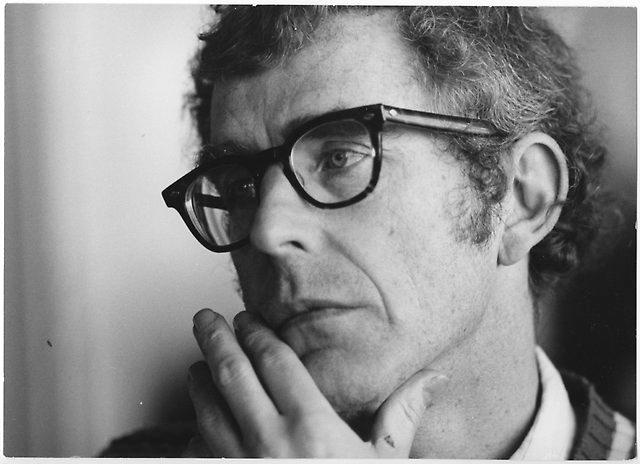
Widerberg came to prominence in the early 1960s with an avowed intent to break away from what he saw as the Swedish tradition. He was initially a novelist and a film critic and has sometimes been seen as aligned to aspects of La nouvelle vague, Truffaut’s work in particular. In 1962 he wrote a ‘manifesto’ for a new Swedish Cinema, Vision in the Swedish Film. His first two features (The Pram, 1962 and Raven’s End, 1963) were black and white depictions of personal stories in the lives of the Swedish working classes in the 1930s. As part of his ‘new vision’, he inevitably attacked Ingmar Bergman and argued for more adventurous and progressive storytelling and more political intent. On the website of the Ingmar Bergman Foundation, Bergman is quoted as expressing admiration for Widerberg. He was at first not overly impressed by Elvira Madigan, partly no doubt because of Widerberg’s aggressive and personal stance towards him. But later Bergman declared the film to be a masterpiece. On another page of the same website, there is a discussion about Bergman’s different reputation inside and outside Sweden, including Widerberg’s contribution to that debate.
I can only really comment on the two films that got relatively wide distribution after Elvira Madigan. Adalen 31 (Sweden 1969) and Joe Hill (US 1971) were the kinds of intensely political but very accessible features that were able to get distribution during that febrile period. Both are now unavailable in any form in the UK as far as I know. (There may be DVD-Rs on ebay or possibly Swedish DVDs.) The first is about a strike at a paper mill in 1931 and the second is a kind of biopic of the Swedish-American labour activist and singer who became one of the heroes of the IWW (International Workers of the World). He was executed by firing squad in 1915. I was highly impressed by these films at the time.
Thommy Berggren who plays the leading man in Elvira Madigan was to some extent a Widerberg discovery and played in most of the early films (he was Joe Hill). The Independent ran quite a useful summary of Widerberg’s career in their obituary column (which does have a small mistake in its discussion of Elvira Madigan.)
Elvira Madigan
The real Elvira Madigan was a 20 year-old performer in her stepfather’s circus when she met Sixten Sparre a 34 year-old Swedish army officer in 1888 during a tour of Sweden. Sparre was married with two children but he immediately fell for Elvira. They kept the romance secret until the following year when they fled together to Denmark. This was scandalous behaviour and it could only end badly. In 1889, Sweden and Norway were in a political union. Elvira’s mother was Finnish of Norwegian heritage, her father was Danish – but she was born in Schleswig Hostein, then in Prussia. Sweden controlled Norway in this period and Sweden and Denmark are physically close. Movement between all the Scandinavian countries at this time was relatively easy (it’s even easier now).

Elvira was a stage name and her real name was Hedvig Jensen. The couple’s deaths constituted a sensational news story across Scandinavia. (This isn’t a spoiler since the film begins with titles stating that they took their lives by shooting themselves in a Danish forest.) The story of the lovers became the basis for arguments about morality, conservatism and liberalism but also entered into popular culture with poetry and songs based on the romance in the late 19th century. Wikipedia’s page on Elvira Madigan, the young woman, includes more on this and also mentions the first Swedish film telling the story in 1943. As well as Widerberg’s film there was also a Danish version of the story in 1967. 1967 was the centenary of Hedvig Jensen’s birth. Widerberg’s film was arguably received differently in Scandinavia and in other international markets. In Scandinavia this was another look at a story many would already know but abroad it might be seen as a particularly beautifully presented tragic love story.
SPOILER warning. Even though this is based on a true story and I’ve already revealed what happened, if you want to watch the film and not to know too much detail, be warned that I am going to quote from parts of the film.
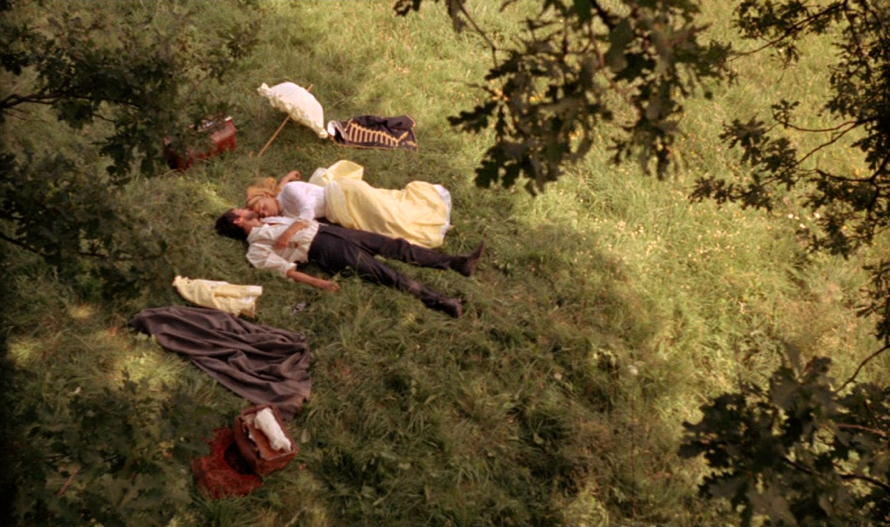
So, what does Widerberg offer us? The main strength of the film is to take this historical tale and tell it in such a way as to engage a modern audience (in 1967) and perhaps most of all a younger audience. Following those opening words about suicide, the opening scenes have a great deal of humour as well as a frank display of sexual passion with couple rolling around in the long grass (and watched by the young girl from the hotel to which they will later make their way and take a room). Swedish films at this point included several controversial films exploring sexuality and offering ‘explicit’ scenes of sexual activity. None of this is evident in Elvira Madigan. The film is presented in colour in the European widescreen ratio of 1.66:1 by Jörgen Persson. Widerberg wrote, directed and edited the film and he includes two brief flashbacks in the opening sequence intercut with the two lovers beneath the tree. These briefly explain the escape from the Swedish Army for Sixten and the circus for Hedvig. At this point we are shown quite intimate moments between the lovers as he attempts to shave off his beard to disguise himself and she playfully uses the mirror to reflect the sun into his eyes – a dangerous manouevre since he is holding an open cut-throat razor. Most of the images here are close-ups and big close-ups. Already in the first few minutes we can feel the vitality of Widerberg’s approach and the Mozart music is already playing when they kiss and smear shaving foam over their faces as they tussle in the grass.

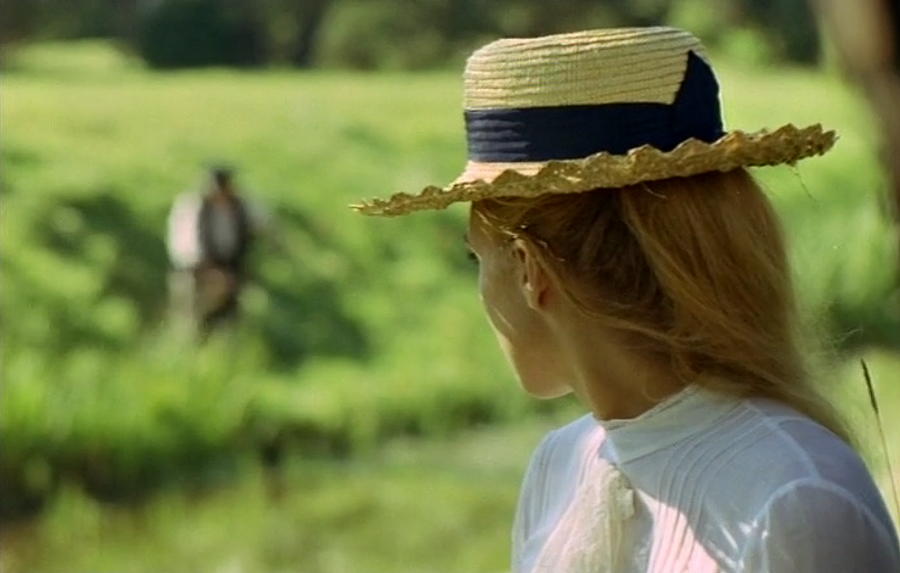
Historical romances/costume dramas have long been a staple of cinema but here Widerberg uses various devices that might be considered ‘New Wave’. These include the close-up sequences balanced by extreme long shots. He uses shallow focus fields at times and is fond of stressing the playfulness of the affair between these two beautiful people with comic scenes as well as what seem like quiet reflexive moments. I wish I was more of a musicologist so I could comment on the use of Mozart. I do feel now that it is perhaps a little heavy-handed but on my first couple of viewings (I think I saw it twice at the Academy, on release in 1968 then re-release in 1973) I hadn’t at that time had as much experience of the use of classical music in French New Wave pictures, e.g. Mozart in Agnès Varda’s Le bonheur (1965). The setting for Widerberg’s film is a Danish summer and the two locations of the woodlands and then the coast look very inviting – we sometimes forget just how important beautiful settings are, especially in 1960s films when most audiences had less experience of overseas travel perhaps.

The sociology of the film is equally important. Hedvig is presented as a modern young woman. She is assertive and playful, certainly not passive. She is a skilled performer as a tightrope walker and we see her practising. When the couple’s funds begin to run out she is the one who comes up with ways to earn money. Sixten, by contrast is more traditional and arguably less equipped for the romance despite his experience as a married man with two children. Where Hedvig spends her time productively knitting and foraging for food he plays a childish game with his army friend who tracks down the couple. At one point he refers to himself as ‘Count Sparre’ so he also has the burden of privilege – some things may be beneath him. But also he recognises that as an officer in an army destined not to fight (Sweden’s neutrality dates back to 1812) his job is possibly seen as of less importance than Hedvig’s which at least entertains people. This is emphasised when Sixten meets a workman and offers to help him but the workman refuses his help. These differences come to a head when Hedvig dances for money but Sixten attacks a man who makes lewd remarks about her. This outburst threatens the couple’s anonymity and Hedvig is unable to claim her fee as they leave the venue. The final sequence is presented cleverly, starting off with a mundane dialogue when Sixten, finally making himself useful by winning the money for a loaf of bread in a pub competition and stealing some eggs, has a discussion about how long the eggs should be boiled for breakfast. I’m being unfair here as he has earlier pawned some of his keepsakes and bought food. The irony is that he must do the terrible deed with his revolver, finally firing a shot in anger. The actual final act uses a very New Wave device, the freeze frame (perhaps inspired by Truffaut’s 400 Blows?).

Much as with the lasting pleasures of Romeo and Juliet, which in its Zefferelli version with the two young actors Olivia Hussey and Leonard Whiting, came out in March 1968 in the UK, audiences appeared to be uplifted rather than brought down by Elvira Madigan. I’ve looked at contemporary and some later reviews to find out what reviewers/critics thought about the film. Roger Ebert (2004) makes an important point when he argues that the film isn’t simply beautiful – every image could be an art postcard – but that the photography, editing and performances make the scenes move and create an intensely cinematic narrative. This idea of ‘the most beautiful film’ appears in several reviews and became an integral part of the film’s promotion (see the poster at the head of this blog entry). Bosley Crowther in the New York Times calls the film ‘exquisite’ and argues that Widerberg is able to create images as beautiful and as evocative of rural scenes in the style of Pierre-Auguste Renoir’s paintings and Jean Renoir’s films. Monthly Film Bulletin (May 1968) describes the film as ‘breathtakingly beautiful’ and makes an interesting comment about Widerberg’s use of shallow focus, how for, instance, in looking at a blade of grass the world around us becomes blurred. This is also a comment on a specific moment in the film.
In his book on ‘New Waves’, Revolution! The Explosion of World Cinema in the 60s (2004), Peter Cowie devotes two lengthy paragraphs to Bo Widerberg’s film revealing that, although the film is a standard length of around 90 minutes, Widerberg provided his actors with only around 25 pages of script, asking them to improvise certain scenes. Cowie neatly sums up the film with the suggestion that both Hedvig and Sixten are “afraid of their own identity” and feel they have no place in society. Instead they retreat into a world of “idyllic pastoral bliss” even as they gradually spend what money they have and become aware that they can never return.
In his entry on ‘Widerberg and Swedish Cinema since 1960’ in Richard Roud (ed), Cinema: A Critical Dictionary (1980), Edgardo Cozarinsky suggests that in Elvira Madigan:
. . . though the lovers are there as early instances of drop-outs, and several contemporary readings effortlessly emerge, Widerberg’s real concern is with the sensuous presence of cream and berry juice on lips and fingertips, with showing Elvira and her Count chasing butterflies in slow motion to Mozart’s music: this affirmation of beauty in the face of death, carries, for him the weight of a modest but combative ideological point.
I wonder now what today’s audiences might make of the film. It doesn’t, I think, appear in the lists of the 100 or 250 ‘Best Films’ that are currently creating a stir but Widerberg was a major talent and this is a beautiful film. The narrative is timeless, but the vitality of the filmmaking is impressive. If you haven’t seen it, it is definitely worth seeking out. There are DVDs on Amazon and ebay. It isn’t on streamers but you can find it online in a reasonable print with English subs, if you look hard enough.
Elvira Madigan is one of the case study films in a project exploring ‘European Foreign Language films in the UK 1965-75’ which will appear on this blog in the next few months.
 itp Global Film
Loved this film and Adalen 31 even better.
LikeLike