
This stunningly good film by Andrey Konchalovsky sneaked out in the UK during lockdown in early 2021 on a release by Curzon. Now it is streaming on MUBI and the other major streaming platforms/digital downloads. Konchalovsky (born 1937) studied music then film in Russia, becoming a writer and director in the 1960s. He was a successful filmmaker in the Soviet system but held back by censorship issues and he moved to the US in 1980, making six films there and one in the UK before returning to Russia after the fall of the Soviet Union. Since then he has made Russian films and some with other European producing partners.
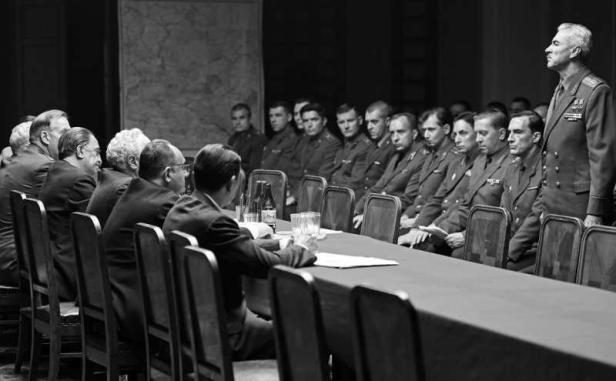
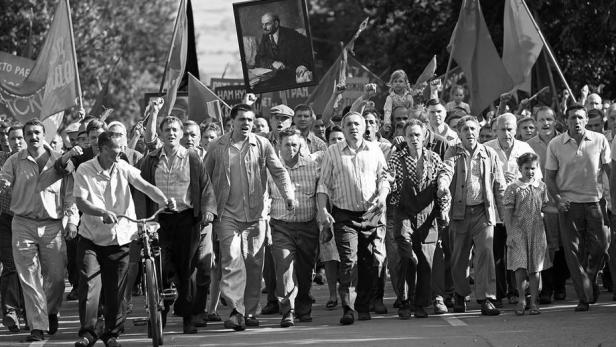
Dear Comrades! is a form of almost documentary-drama about the events surrounding the 1962 strike at the railway locomotive factory in Novocherkassk which led to a major confrontation between workers and the Army and KGB working under the direct control of the Communist Party in Moscow. At least 26 people were killed and 87 injured when troops opened fire. Ironically, the recent threat to the authority of Vladimir Putin centred on the Wagner Group’s ‘occupation’ of the major city of Rostov. Novocherkassk is also in the Rostov Oblast in the area of North Ossetia. It is also a centre for the Cossacks of the region. Cossacks have always had an ambivalent attitude towards Russia, the Soviet Union and then Russia again, fighting against Moscow at different times. This is the broad historical background to the events. In the film, it is also suggested that many of the workers in the city in 1962 were ex-prisoners of the Soviet state.
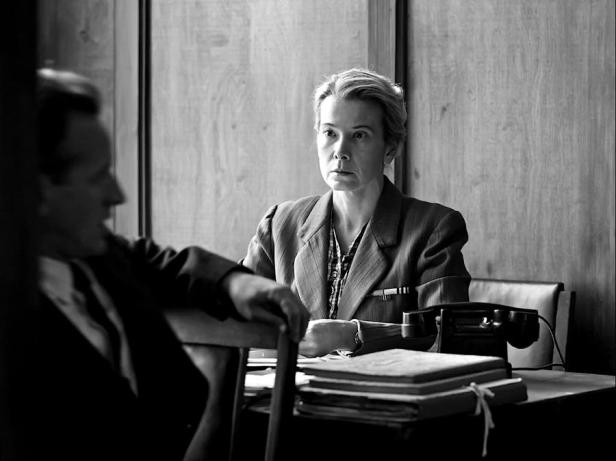
Konchalovsky made several important decisions in the presentation of events. Formally, the film is presented in black and white and in the traditional square-ish Academy Ratio. I thought the images captured by the cinematographer Andrey Naydenov were compelling. Konchalovsky cast his own wife Yuliya Vysotskaya as the central character in the film, Lyudmila Semina. Vysotskaya was actually born in Novocherkassk in 1973, eleven years after the events in the film. Konchalovsky and his co-writer Elena Kiseleva (a frequent collaborator with the director) start the narrative with an intimate scene in which Lyudmila has been spending time in bed with her immediate boss on the local Party committee. We then see her being given privileged access to food in a local shop where people are queuing for basics and finally returning home to her teenage daughter and her father.The intimate scenes are not prurient in any way but they do convey a sense of relative freedom and open-ness that contrasts with what follows. Though they look ‘authentic’ for in Soviet Cinema in the 1960s, they would not have been allowed at the time.
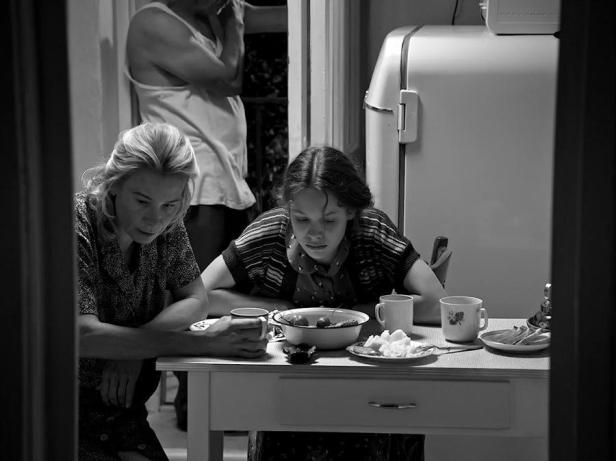
The industrial unrest comes about because two separate decisions suddenly make the workers worse off. Nationally, there is a shortage of meat and cereals and Kruschev decides that in effect rations will be cut. Locally the factory leaders increase the production quotas, effectively lowering the pay rates for workers. Lyudmila is implicated in these decisions. She is a loyal party member, but perhaps still not convinced by Kruschev. At one point we hear her arguing that this kind of thing would not have happened in Stalin’s time. When senior Party officials from Moscow arrive she argues for harsher treatment of the ringleaders behind the strike and the general unrest. But she falls out with her daughter Svetka, who joins the strikers, and with her father who appears to have been one of the Cossacks who fought against the Red Army in the Civil War after 1918 as part of the ‘White Russian’ forces.
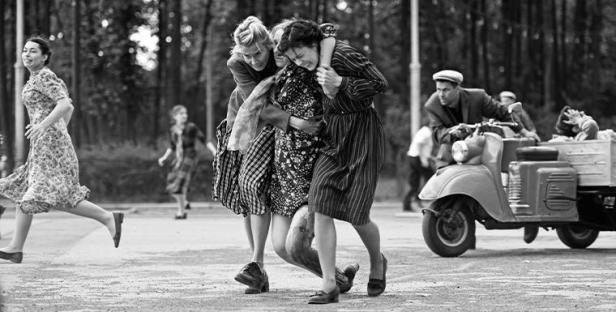
Konchalovsky marshalls a large cast very effectively. Especially considering they are mostly non-professionals with professional actors only for key roles. The images are shocking but oddly beautiful, making them even more memorable. I’m no expert on CGI and I assumed that these scenes are filmed using many extras. The last section of the narrative shows the authorities trying to close down the city, allowing no-one to leave and ‘persuading’ those trapped inside to swear they will remain silent, but Lyudmila is determined to find her daughter. She persuades a KGB officer to help her. Her anguish about her daughter is real, but what she has also lost is her confidence in the system. She has spent her life believing in and supporting the Party. She only knows Soviet communism. If these things can happen what else is there to believe in? It wouldn’t have happened in Stalin’s time she repeats. It’s worse somehow because we know Stalin used all the same methods and this lack of awareness in the character we learn most about is tragic. It is a staggering performance by Yuliya Vysotskaya.
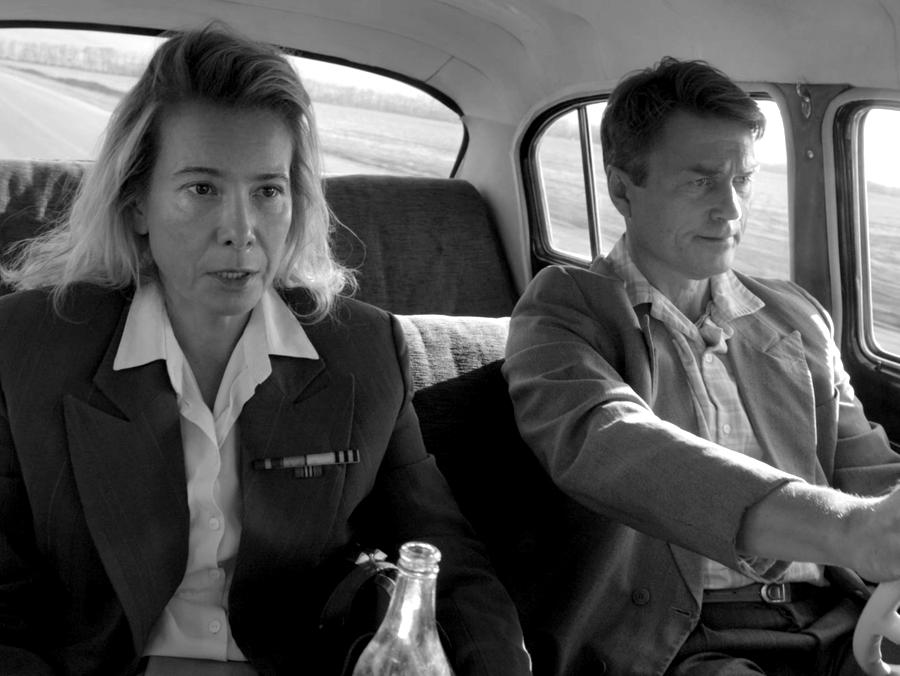
As far as I can make out, Konchalovsky sticks to the facts about the strike and the repressive action by the Army and the KGB. He consulted Yuri Bagrayev, the prosecutor who oversaw the 1992 investigation into what happened in Novocherkassk. I assume Lyudmila is a fictional creation, but I also assume that there were Party members like her who had similar experiences. What sense do we make of the film? Some reviews seem to gleefully suggest that it proves communism and socialism are evil systems. But others recognise that the behaviour of all those involved can be found in similar situations in all parts of the world under all kinds of political systems. By selecting a middle-ranking Party official, Konchalovsky and Kiseleva are able to seamlessly show us both how the state responded to the threat of the protest and what it meant to the people of the city. Konchalovsky discusses this in the interview posted on MUBI. He also tells us that in 1962 a few weeks after the events in the film, he was excited about attending the Venice film festival with Andrey Tarkovsky for the screening of Ivan’s Childhood at the start of his career. He had heard only rumours of ‘something in the South’. To then make such a calm, assured but very powerful, film about those events nearly sixty years later is quite an achievement. I highly recommend this film.
 itp Global Film