

‘Nostalgia’ (I believe it is the same word in English and Italian) is the title of this literary adaptation of a work by Ermanno Rea (1927-2016), a writer born in Naples. The director Mario Martone is also a Neapolitan. He has been active in cinema since the mid-1980s but this is the first film I’ve seen by him. He has often made films set in Naples and in one case adapted a novel by Elena Ferrante. His previous film was a biopic of a Neapolitan theatrical legend and the cast were mainly Neapolitan. But since he never likes making the same kind of film twice, this time the Neapolitan returning to his birthplace after forty years is now a man in his mid-fifties and played by a Roman actor, Pierfrancesco Favino. He’s in that strange position of being an outsider in what to his memory, and perhaps to his body generally, feels like a familiar place.
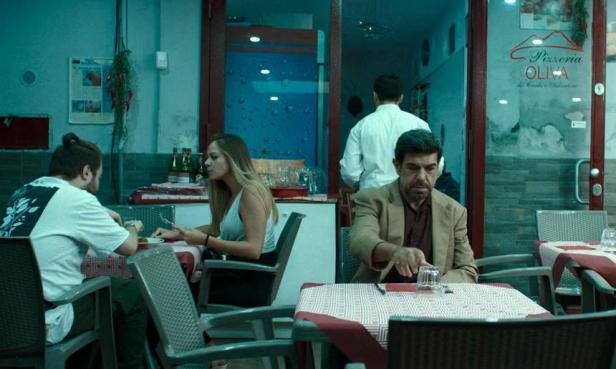

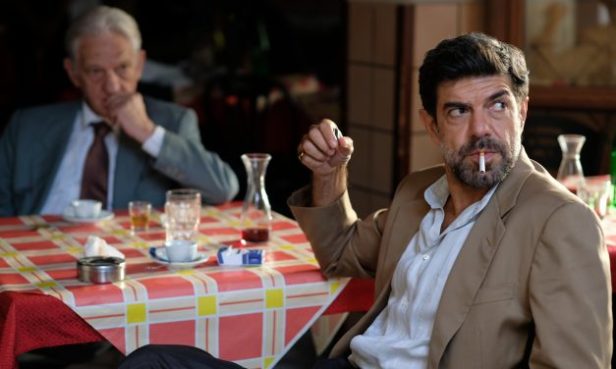
Felicé Lasco (Favino) grew up in Rione Sanità (‘Neighbourhood of Health’), a district just North of the city centre, with narrow winding roads between tall buildings as well as broader boulevards and piazzas. Though developed for the aristocracy centuries ago, the area is now run-down and has the reputation of being controlled by the Camorra. Most of the narrative is confined to this area which has featured in many Italian films and one of the strengths of the film is the cinematography of Paolo Carnera. As Martone suggests the film in the first half feels almost like a documentary, exploring the streets, cafes and shops of the district as ‘Feli’ begins to try to merge his memories with the new realities. He’s arrived in order to see his aged mother, perhaps for the last time. His wife back in Cairo, Arlette (Sofia Essaïdi), has encouraged him to make the trip. He eventually finds his mother, but not where he expected, and they share some intimate and moving moments, featuring a great performance by Aurora Quattrocchi. We gradually begin to learn a little of Feli’s story. His mother was moved out of her apartment by Feli’s old best friend Oreste (Tommaso Ragno) who Feli hasn’t seen since he left all that time ago.
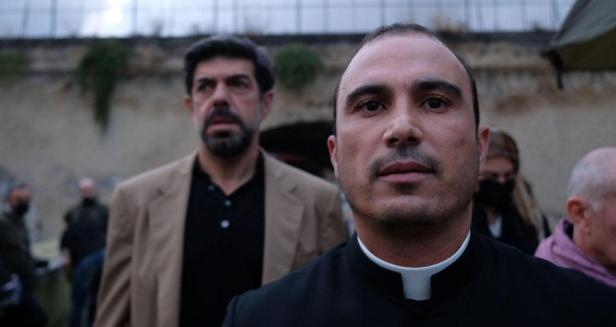
It emerges that Feli wants to see Oreste, their original parting still troubles him. It’s not giving too much away to reveal that Oreste was always likely to become a major criminal figure and we see some of the antics of Oreste and Feli as young teenagers in a series of flashbacks shot on 16mm or 8mm film. The way to find/meet Preste now is through Father Luigi, the priest from large and impressive local church. When I first sighted Father Luigi (Francesco Di Leva), I thought that he looked more like a leader in the Camorra than a priest. I wasn’t surprised then to discover that he had played a political/crime boss, in the same setting, in an earlier film by Mario Martone – The Mayor of Rione Sanità (2019). Father Luigi is in some ways the most intriguing figure in the film. He knows all the families in his neighbourhood and all their children. He has taken the teenagers under his wing and welcomes the interest of Feli. The fourth central character is Arlette who stays in Cairo for most of the time, but who does speak to Feli through video messaging. She is an attractive woman, a dozen years younger than Feli, who lives in a beautiful house and works in a hospital laboratory. Her telephone conversations with Feli seem warm and intimate and she enjoys seeing what he is getting up to but that is all we know about her. (I later realised that Sofia Essaïdi was the star of the French TV serial La Promesse (France 2020) – she was born in Casablanca.)
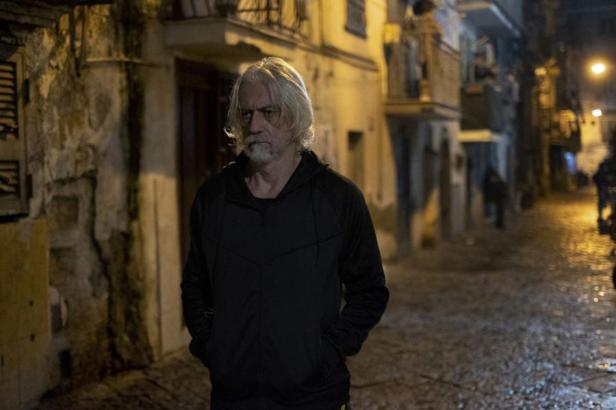
The film is leisurely paced and we have time to notice all the details of everyday life in the district. There is also a point when we feel that the ostensible purpose of the trip has been fulfilled. Feli decides to stay on and the narrative takes a different turn. Father Luigi takes centre stage, questioning Feli and perhaps giving him advice that he doesn’t want to take. Here is the philosophical question about nostalgia – can it be good for you? What dangers does it hold? ‘Never go back’ is a well known bit of advice. But something is compelling Feli to stay. Inevitably he must meet Oreste. I confess that I did find the conclusion to the narrative disappointing, but then I often think it’s what happens in the narrative overall that matters. What do we learn? What kinds of pleasures are offered?
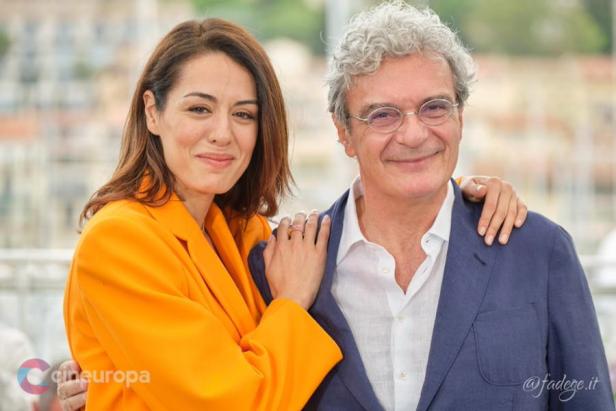
Nostalgia is a beautiful film. The combination of great performances, camerawork (in ‘Scope) and music is wonderful. I was engaged throughout and I thought a great deal about my own experience of nostalgia. The film was screened in competition at Cannes in 2022 and seems to have got wide international distribution. I would certainly watch another film by Mario Martone. I do wonder though, How much the international audience misses in this film about a specific local community. One scene that may puzzle audiences occurs when Feli is taken on a tour of the city’s catacombs by a young woman (one of Father Luigi’s protégées). The catacombs are a local highlight of the city’s heritage with long lines of skulls. Later Feli will take a skull and begin to clean it. It was only by accident that I discovered this is a local cult practice, in which a skull of the ‘pezentelle’ (‘little wretches’) is cleaned and positioned properly in the ossuary in the hope that the soul of the ‘wretch’ will respond to such devotion by conferring good fortune on the family which cares for it. I later realised that I had come across this practice before in a work of Italian crime fiction. There are other mysteries as well. Early on we are aware that Feli has converted to Islam, something evident to Father Luigi, who nevertheless presses wine upon Feli. What prompted that conversion? Was it something practical about living in Cairo or an act of rejection of the life he had left behind?
I watched the film as a BFI Player rental. It is also available in the UK on Amazon and Apple and I assume the later streamers outside the UK. It’s definitely worth a look.
 itp Global Film