
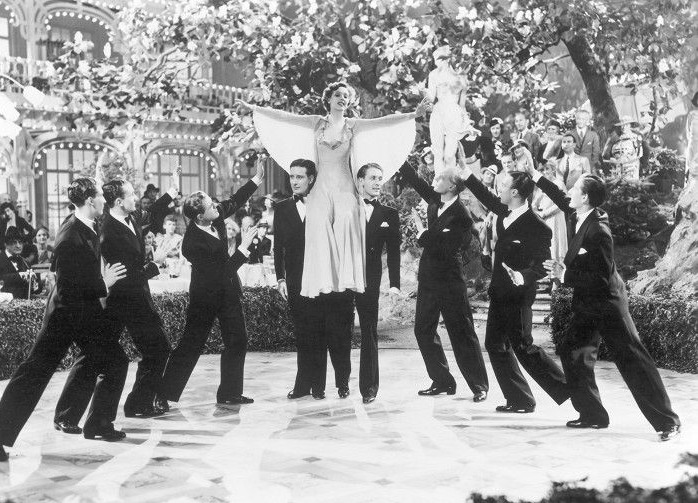
In 1937 Jessie Matthews was one of the most popular stars in British cinema. Her musicals/romantic comedies had started to build a profile in North America where she was known as ‘The Dancing Divinity’. Stories persisted about a possible move to the US and a partnership with Fred Astaire. That possibility is one of the potential elements of this film directed by her husband Sonnie Hale. Hale had taken over directing his wife’s films from Victor Saville who had moved from Gaumont-British to work for Alexander Korda at Denham. Saville did go to Hollywood eventually.
Compared to their Hollywood equivalents, the musicals made at G-B’s Lime Grove studios in Shepherd’s Bush were low-budget affairs but didn’t lack creativity. Head Over Heels is designed by the great Alfred Junge and photographed by Glen MacWilliams, a Hollywood cinematographer who had already shot three previous Matthews movies. Head Over Heels is an adaptation of a French play, Pierre ou Jack, by Francis de Croisset whose plays Arsene Lupin and A Woman’s Face were adapted more than once and became Hollywood ‘A’ pictures.
The plot is quite simple. Jeanne Colbert (Jessie Matthews) is a nightclub entertainer in Paris and shopping in the market one day she meets Pierre (Robert Flemyng), a slightly eccentric character (who seems more English than French). Pierre is an inventor and earns a living as a sound engineer in a radio station. He falls immediately in love with Jeanne but doesn’t know how to woo her. When he visits the club where she sings and dances, he sees that she is quite taken with her partner Marcel (Louis Borell) and despairs. Marcel is a ‘cad’ who drops Jeanne when a Hollywood glamour queen Norma Langtry (Whitney Bourne) appears and invites him to America. Pierre sees his chance and eventually gets Jeanne a job in the radio studio but Marcel is destined to return and a struggle between the two men over Jeanne is inevitable.
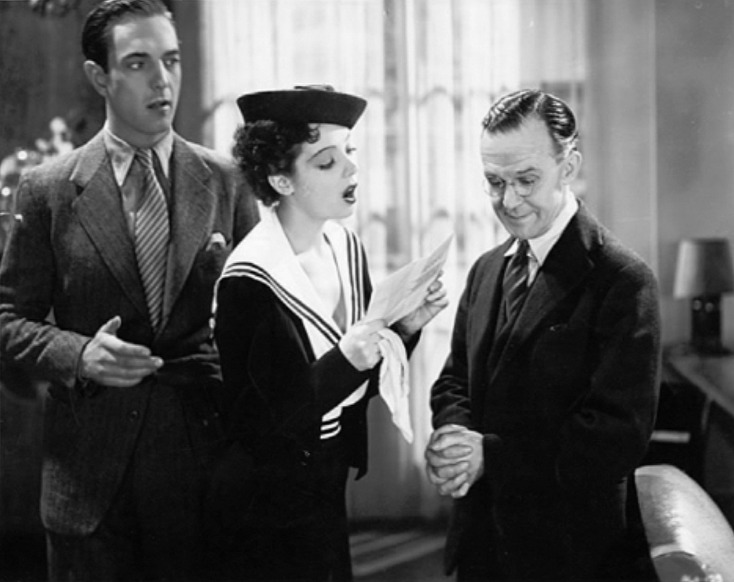
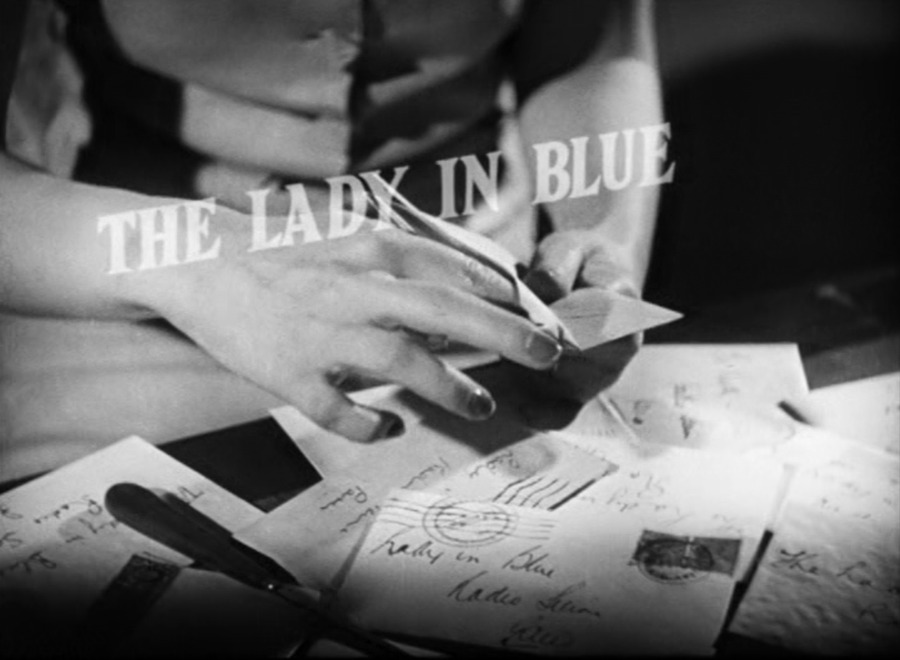
The radio angle of the film is very interesting. During the 1930s radio was fast becoming the major medium of entertainment for the mass audience. In the UK it was a BBC monopoly and the Director-General John Reith had firm control over its broadcasting policy. Already in the 1930s many Brits turned to continental radio stations for popular music, including Radio Luxembourg which broadcast in English and featured sponsorship of programming like American radio. Pierre sells the idea of Jeanne as ‘The Woman in Blue’ to his radio bosses. She sings advertising jingles and becomes a star. The filmmakers present this in a montage of radio-related images which I found striking. Another interesting technique is the superimposition of Jeanne’s face over footage of Pierre’s hopeless trudging around the nighttime Paris streets in search of her after a break-up. Techniques like this inject some visual excitement into a film which is otherwise limited to three main locations – the nightclub, the radio studio and the dingy apartment Pierre shares with his friend Matty. The nightclub with its outdoor garden for performances is the setting for the dancing in the film, though there is less than in most musicals. There are a number of notable songs by Mack Gordon and Harry Revel, the best of which is ‘There’s That Look in Your Eyes Again’. All the songs are sung by Ms Matthews.

If you’ve never seen Jessie Matthews before, you may be surprised by her cut-glass accent which now sounds way over the top. The irony is that Jessie was a working-class girl from Berwick Street, famous for its fruit and veg market in Soho. She was the seventh of eleven children and a genuine Cockney who felt compelled to change her accent dramatically to suit the middle-class voices of 1930s British stage and cinema screen. Her forced identity shift is the mirror opposite of the middle-class young women who had to find voices to play working-class girls. Why did she do it? Possibly because she was headed for the London stage while her musical rival (as a singer only) Gracie Fields didn’t suffer from keeping her Lancashire accent.
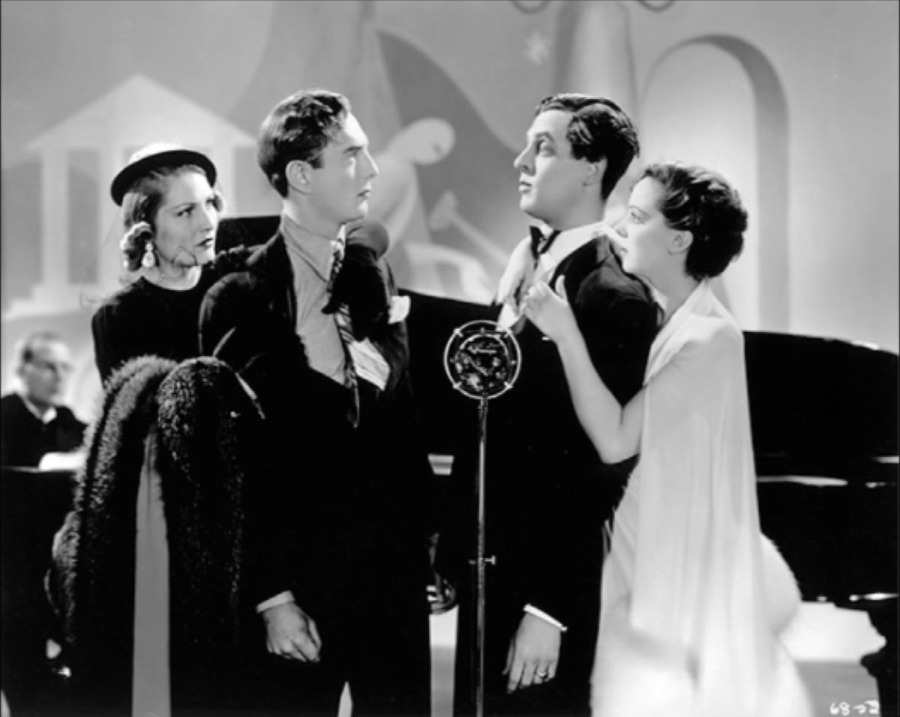
In this film the focus is on Jessie as actor and singer and she accomplishes both well. Her Jeanne is a rounded figure, assertive and assured but also vulnerable. But she certainly isn’t prepared to put up with nonsense and her fightback in the too brief final reel is very enjoyable. Part of Jeanne’s trouble is that by breaking her contract (because of the action of Marcel) on two occasions she is barred from working in Paris for three months each time which seems a heavy penalty. All film actors were treated badly by studios and impresarios but independent women seemed to suffer more than most.

It’s a long time since I read a biography of Ms Matthews but her marriage to the comedian Sonnie Hale was difficult and at this stage of her career she began to experience stress and various problems that would affect her career. Hale pressurised her and she wasn’t convinced of his directorial qualities. Some of the ideas discussed above may have come from the experienced crew rather than Hale. I must do some more research before any other Matthews posts. Head Over Heels is on Volume 3 of The Jessie Matthews Revue DVD from Network.
In the clip below Jeanne sings “Head Over Heels’ in her act until she sees her partner Marcel betraying her with the Hollywood star.
 itp Global Film