
89 minutes Spanish with English subtitles.
The title presumably refers to an area in Southern Chile where the film is set. However, ‘huacho’ or ‘guacho’ also has an Andean usage of ‘orphan’ or ‘waif’.
The film follows 24 hours in the lives of a peasant family. The cast is non-professional,
“I chose non-professional actors because I wanted to go against the peasant stereotype in Chile, for instance, you have clear accents depending on your class, the region of the country and the work or activity you do … We chose non-professionals because when you have an actor doing anything physical he cannot avoid ‘acting’ the action, …..” (Director and screenwriters, Alejandro Fernández Almendras).
The choice worked well and one of the pleasures of the film is the natural way in which characters prepare food, chop wood or play a game machine. The style of the film is observational. We watch the characters as they eat, relax, work and worry over the difficulties of their lives.
The film follows each of the four family members in turn over the space of one night to the next. At first I thought I was watching a sequence of events over several days and then realised I was watching parallel actions, but presented one after the other.
The film starts at the evening meal and the electricity goes off. The film ends at the meal on the following night when the electricity comes back on. In between the family members participate in some communal activities but also in their own individual chores and duties.
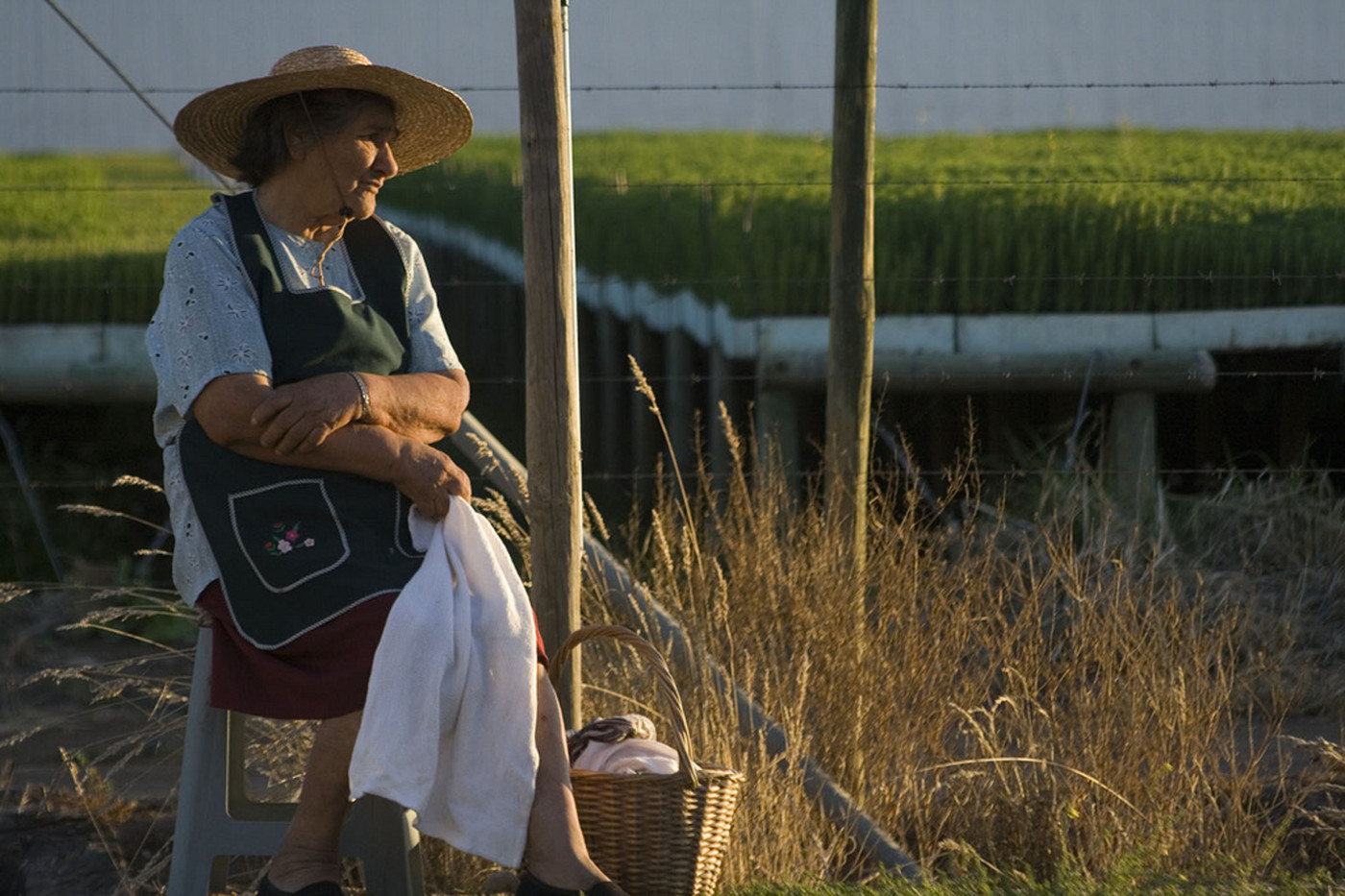
Clemira collects milk: turns it in to cheese and attempts to sell it on the edge of a busy road. She waits there with a group of fellow women also selling their cheese. They have agreement about price, but this breaks down. The customers, all in cars, tell her some of her follows have dropped their price. However, since the driver are clearly attempting to manipulate the price they pay, their claims are suspect. Clemira herself is not completely honest with would-be customers. Nevertheless she loses out in the bargaining.
Maria, the mother, works as a cook on a tourist farm. It is her failure to pay a bill that has led to the cutting off of the electricity. So, after work, she has to travel to the nearby town to settle the bill. This involves her in redeeming the price of a dress that she returns to a store. It is unclear whom the dress belongs to, but it does not seem to belong to Maria.
Manuel, the son, attends his school and plays with his friends. He also sneaks into town to play games at the entertainment arcade. So his mother is surprised when he joins her on the bus home after her expedition.
Cornelio is the grandfather; he has become rather absent-minded and likes to tell the family rather long stories from his youth. He has some sort of job erecting fencing on a nearby farm, but he notes wishfully that he works a lot slower than he used to.
At the end of the film they are once again eating round their cramped table by candlelight when the electric lights come back on. They show little surprise or emotion at this final turn round.
It is a simple film, presented in a relatively leisurely manner. The four stories are all the type of simple tale that Zavattini would have approved of. A sort of modern neo-realist film. I found it completely absorbing and enjoyable. Another well-crafted and notable South American film.
It was partly funded by the Global Film Initiative who have an excellent record in their choices for support: it is worth checking out their website
 itp Global Film